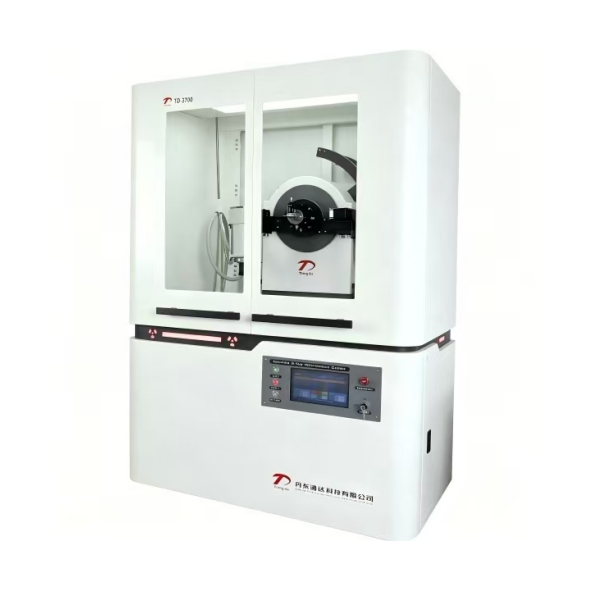
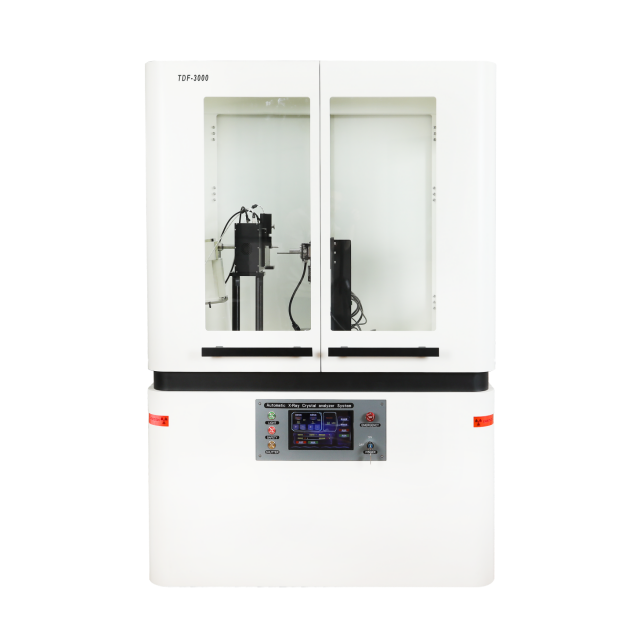
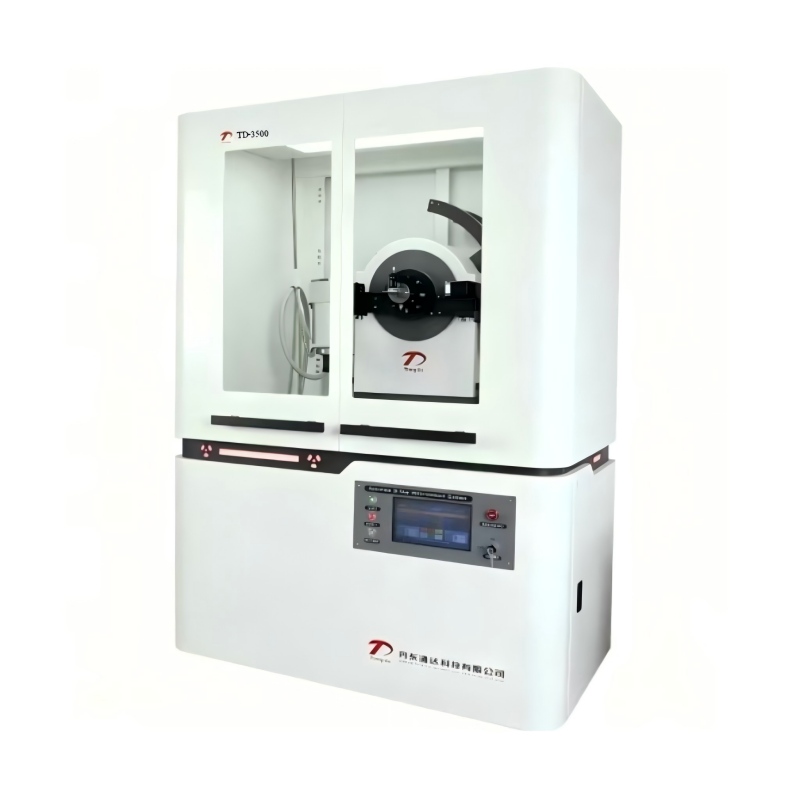
Dandong Tongda offers universal X-ray diffractometers for new materials R&D. Supporting powders, bulk, thin films, and more, our systems deliver phase analysis, crystallinity, and stress measurement. Modular design, PLC control, and comprehensive software meet diverse research needs in universities and institutes worldwide.
EmailMore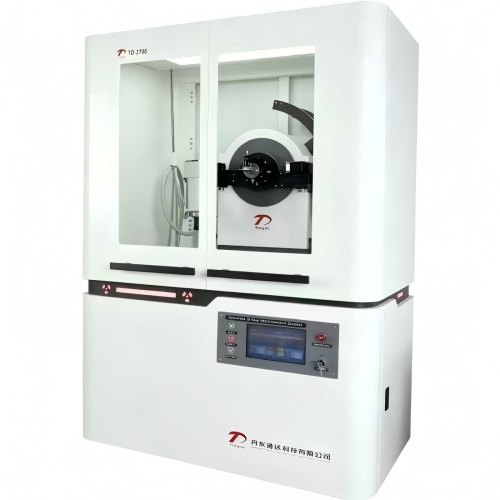
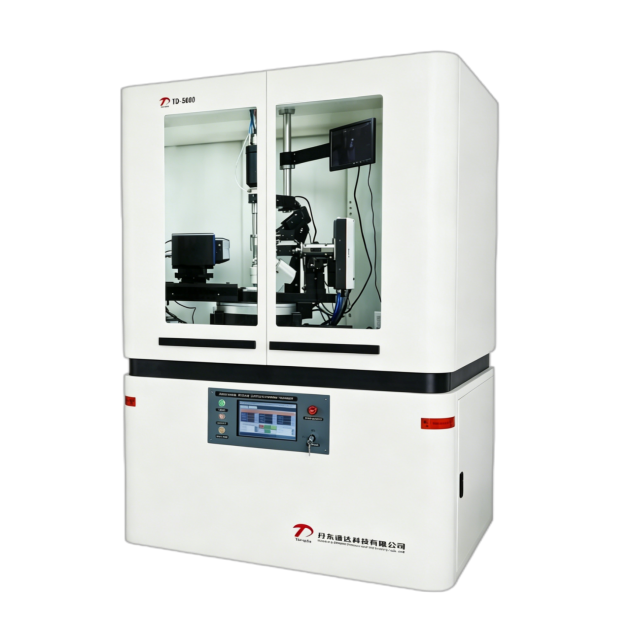
Dandong Tongda's multifunctional residual stress meters provide high-precision testing for aerospace, automotive, and new energy industries. Featuring multi-material compatibility and portable designs, they ensure component safety and durability, gaining global recognition with full international compliance and support.
EmailMore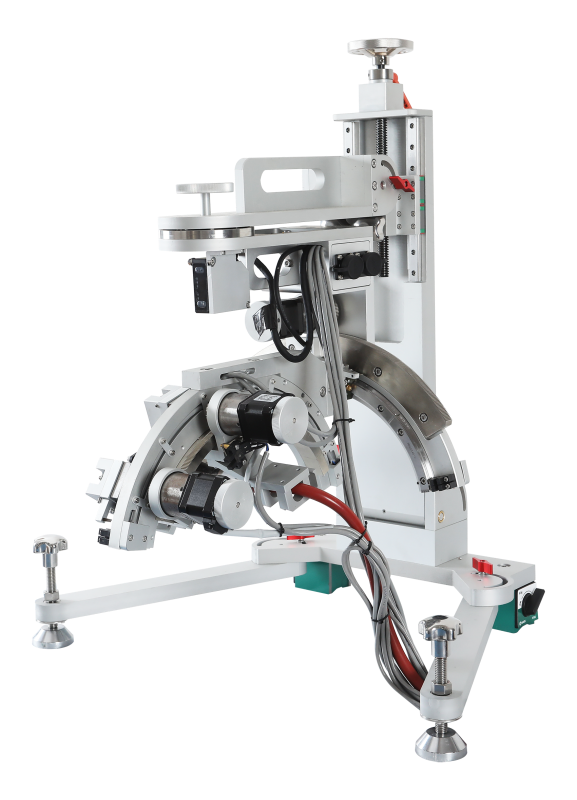
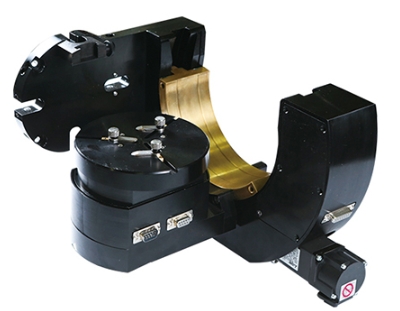
The Multifunctional Integrated Measurement Attachment from Dandong Tongda is a high-precision sample analysis platform mounted on wide-angle goniometers to significantly enhance X-ray analytical capabilities. This multi-axis system enables sophisticated material analysis, including phase identification, residual stress testing, and thin film in-plane structure characterization. Featuring α-axis tilt (-45°-90°), β-axis 360° rotation, and XYZ translation (±10mm) with 0.001°/.001mm resolution, it supports both transmission/reflection pole figure measurements and iso-/side-inclination stress methods. Essential for advanced materials research, it facilitates texture analysis, stress evaluation, and multilayer film studies on metals, ceramics, and various substrates, making it a powerful tool for both research and industrial inspection applications.
EmailMore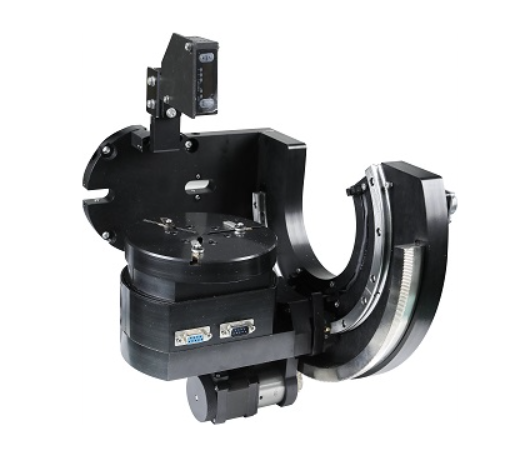
In the field of materials science research, precise measurement serves as the key to unlocking material properties. The multi-functional integrated measurement accessory developed by Dandong Tongda Science and Technology Co., Ltd. is a high-precision tool designed to enhance X-ray diffraction analysis capabilities. This multi-functional integrated measurement accessory is specifically designed for installation on wide-angle goniometers. Its core mission is to accurately analyze plate materials, bulk materials, and thin films deposited on substrates. The accessory can perform various measurement tasks, including crystal phase detection, orientation degree analysis, and stress testing. It supports texture analysis, residual stress determination, and in-plane structure testing of thin films, providing comprehensive data support for materials research. The core technical features of this accessory are reflected in its multi-axis coordinated precision mechanical system and highly adaptable measurement methods. The multi-functional integrated measurement accessory supports pole figure measurements using either transmission or reflection methods, offering flexibility for different samples and testing requirements. For stress testing, it can employ both the side-inclination method and the normal-inclination method. For thin film samples, the accessory also enables in-plane rotation testing, allowing for in-depth analysis of film structures. Its precision mechanical system ensures high measurement accuracy and repeatability, with minimum step increments of 0.001° (for rotation axes) and 0.001mm (for translation axes). The application scope of the multi-functional integrated measurement accessory is extremely broad, covering almost all advanced manufacturing and R&D fields that require material structure analysis. In the field of metal materials, it is used for evaluating the collective organization of metals such as rolled plates; in ceramics, it focuses on assessing ceramic orientation. For thin film materials, the accessory can analyze the preferred crystal orientation of film samples and test the residual stress of multilayer films (evaluating properties such as film peeling). It can also analyze surface oxidation and nitridation films on high-temperature superconducting material films and metal plates, as well as multilayer films on glass, silicon, and metal substrates. Notably, it can also be applied to the analysis of macromolecular materials, paper, lens plating materials, and more, demonstrating its interdisciplinary application potential. Measurement Accessory
EmailMore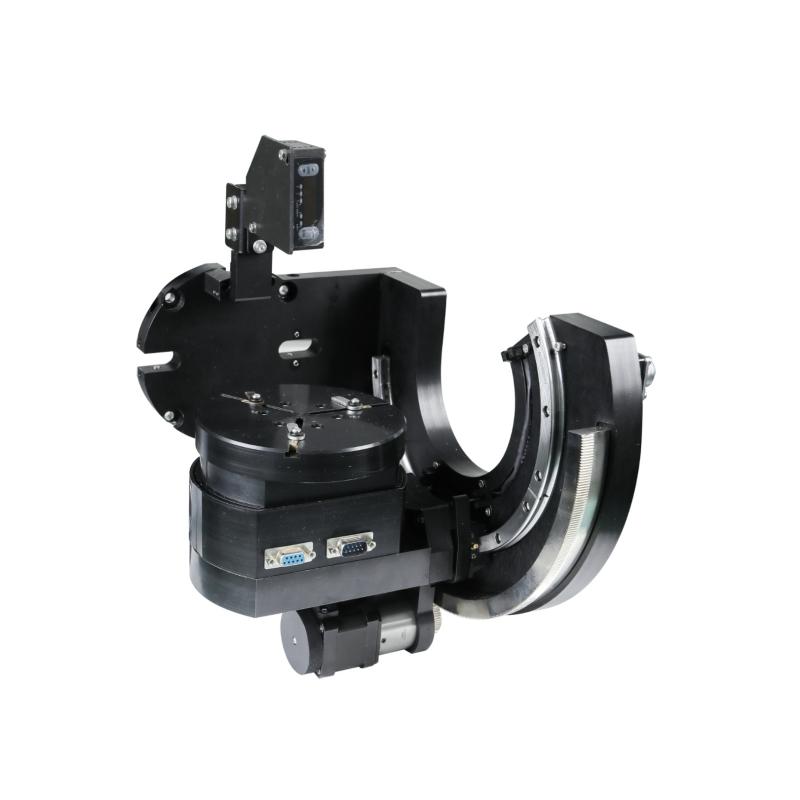
As a well-known enterprise in the field of domestic precision instruments, Dandong Tongda Technology Co., Ltd. has launched a series of multi-function sample holder products. With high precision, modular design, and extensive application scenarios, these products have become one of the core equipment in material analysis, X-ray diffraction (XRD), and other fields. Core Functions: Meeting Diverse Analytical Needs Material Structure Analysis: Used for crystalline phase detection, orientation degree (texture) analysis, and residual stress testing, supporting the analysis of materials such as metals, ceramics, and thin films. In-plane rotation (β-axis) eliminates preferred orientation, ensuring the reproducibility of diffraction intensity data. Environmental Simulation Function: Optional high-temperature, low-temperature, or vacuum atmosphere modules (e.g., liquid nitrogen temperature control devices) support variable temperature testing from -196°C to 1000°C, meeting special requirements for high-temperature superconducting materials, metal surface treatment, and more. Automation and Intelligence: Supporting software enables automatic scanning, multi-point measurement, and data linkage analysis, improving detection efficiency. Application Fields: From Scientific Research to Industrial Testing Dandong Tongda sample holder are widely used in the following fields: Materials Science: Texture evaluation of rolled metal sheets, orientation analysis of ceramics, and residual stress testing of thin films. Semiconductor Industry: Analysis of multilayer films on silicon substrates (e.g., magnetic films, hardened coatings). Energy and Environmental Protection: Microstructural research on high-temperature superconducting films, battery materials, and catalysts. Higher Education and Scientific Research: Experimental teaching and research projects in crystallography, quantitative phase analysis, and more. Conclusion: An Indispensable Tool for Material Microanalysis The Dandong Tongda Multi-Function Sample Holder, with its high-precision motion control, modular flexibility, and broad environmental adaptability, has become an indispensable tool for material microanalysis. Its technical advantages are deeply rooted in the company's years of accumulated expertise in X-ray diffraction technology, combining research-grade precision with industrial-grade reliability to help users unlock the secrets of material properties at the microscopic scale. The multi-function sample stage serves as the "hands and feet" of modern precision observation and measurement, precisely presenting samples within the "field of view" of analytical instruments. Its selection directly determines the feasibility, efficiency, and reliability of experiments. Understanding its basic principles, functional classifications, and technical specifications is key to selecting and effectively utilizing this equipment.
EmailMore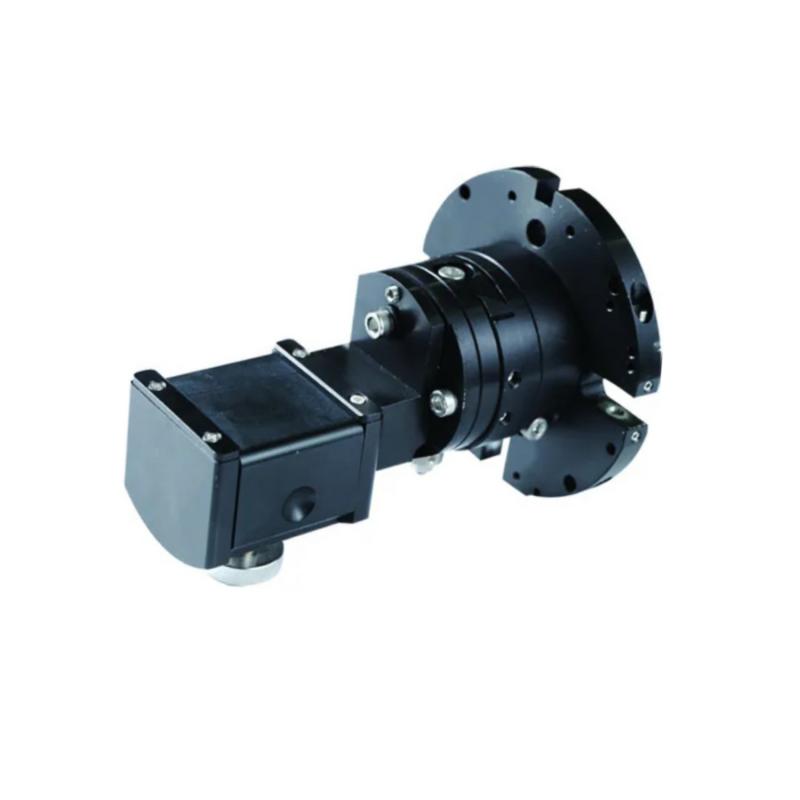
The multi-functional residual stress analyzer developed by Dandong Tongda Technology Co., Ltd. is designed to meet the needs of fast and accurate measurements in both laboratory and field environments. Based primarily on the X-ray diffraction principle, it enables non-destructive testing of the residual stress state inside materials. Versatile All-in-One Analysis This analyzer integrates multiple material analysis functions, significantly enhancing equipment utility and efficiency: Residual Stress Analysis: Supports various measurement modes such as standard同倾法 (omega-inclination), standard侧倾法 (psi-inclination), and standard摇摆法 (oscillation), capable of determining principal stresses and shear stresses for a comprehensive stress state evaluation. Retained Austenite Analysis: Employs the four-peak method for retained austenite testing, with fully automated data calculation for quick results. Diffraction Phase Analysis: Used to analyze crystal structures, chemical composition content, and distribution, helping researchers gain deeper insights into material constitution. Grain Size Analysis: Supports grain size evaluation from nanoscale to sub-micron scale, particularly suitable for fine grains ≤200 nm. Technical Features and Performance This instrument boasts multiple technical features aimed at ensuring precision, stability, and ease of use: High-Precision Measurement and Control: Utilizes a high-precision fully closed-loop vector drive servo system to ensure measurement accuracy and repeatability. Efficient Data Acquisition: Equipped with a multi-channel silicon strip linear array detector, which provides noise-free performance, high-intensity measurement, and rapid data collection to enhance detection efficiency. Portable Design: Features a lightweight construction, making it suitable not only for laboratory environments but also for on-site rapid measurements, adapting to various testing scenarios. User-Friendly Operation: Integrates Windows OS or automation functions, supporting one-click testing and real-time result display, lowering the operational barrier. Modularity and Safety: Employs a PLC control system with modular design for ease of operation and stable performance. Safety-wise, its low-power X-ray design complies with relevant safety standards, with radiation levels significantly below the annual public dose limit. Broad Application Fields Dandong Tongda’s multi-functional residual stress analyzer has extensive applications, covering almost all industrial sectors and research institutions requiring evaluation of material mechanical properties: Manufacturing Quality Control: Used to detect residual stresses in stamped, cast, and rolled parts during processing. Automotive Industry: Tests residual stresses in critical components such as camshafts and connecting rods to ensure reliability and durability. Aerospace: Evaluates working loads in critical areas of aerospace materials to assess safety. Materials Science Research: Applicable to various metal materials (e.g., carbon steel, alloy steel, titanium alloy, nickel-based materials), glass, and composite materials for residual stress, retained austenite, phase, and grain size analysis. Dandong Tongda Technology Co., Ltd.’s multi-functional residual stress analyzer demonstrates the company’s technical expertise in the field of material testing by integrating multiple analytical functions. This instrument provides engineers and researchers with a window into the intrinsic stress state of materials, helping to control product quality at the source, optimize process parameters, and thereby enhance product reliability and durability.
EmailMore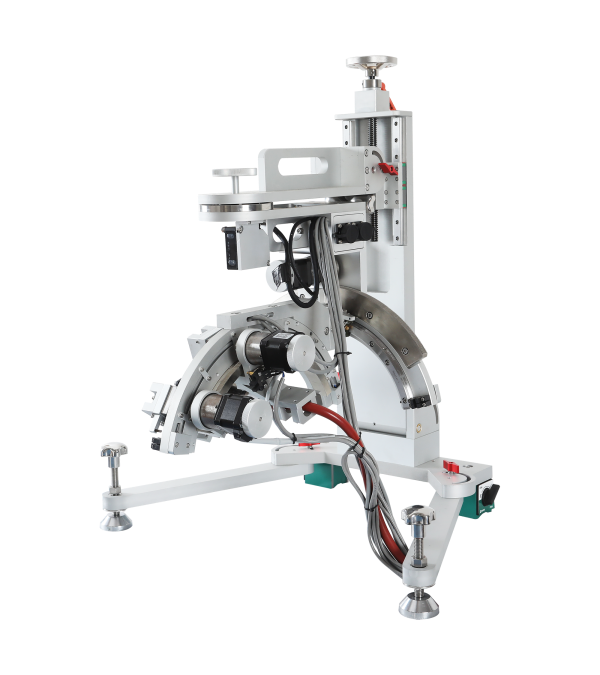
A multifunctional sample stage is an experimental or testing platform that integrates multiple functional modules, used to carry, manipulate, and test different types of samples (such as materials, biological samples, electronic components, etc.). It usually has flexible configuration and scalability to meet different experimental needs, and is widely used in scientific research, industrial testing, medical and other fields. 1. Core functions and features of multifunctional sample stage (1) Multi dimensional adjustment of multifunctional sample stage Motion control: Supports precise movements such as X/Y/Z axis translation, rotation, and tilt, and is compatible with automatic scanning or manual fine-tuning. Environmental simulation: It can integrate modules such as temperature control (-196 ° C to several thousand degrees), humidity control, vacuum/atmosphere environment (such as inert gas, corrosive gas), etc. Force/electric/magnetic loading: Some models support the application of mechanical force, current, magnetic field, etc., used to study the performance of samples under extreme conditions. (2) Compatibility and Scalability of Multi functional Sample Stand Adapt to multiple analytical instruments Modular design allows users to add functions according to their needs, such as heating stations, cooling stations, fluid infusion systems, etc. (3) High precision and stability of multifunctional sample stage Nano level displacement accuracy, anti vibration design, suitable for in-situ observation or long-term experiments. Some models support in-situ characterization (such as real-time observation of sample changes during stretching, compression, and heating processes). (4) Automation and Intelligence of Multi functional Sample Stand Automated testing is achieved by controlling motion trajectories and environmental parameters through software. Integrated sensors and data acquisition system, real-time recording of sample reactions (such as deformation, resistance changes, etc.). 2. Typical application scenarios of multifunctional sample table: (1) Materials Science of Multi functional Sample Stand Study the performance of materials in high/low temperature, stress, and corrosive environments. In situ SEM/TEM observation of material deformation, phase transformation, or crystallization processes. (2) Biomedical multifunctional sample stage Cell culture and drug permeation experiments require temperature control, humidity control, and gas environment. Cooperate with microscopic imaging to observe the dynamic changes of living samples. (3) Electronics and Semiconductors for Multi functional Sample Stand Chip testing: Provides functions such as probe positioning, thermal shock, and electrical performance testing. Sample positioning and processing in photolithography or coating processes. (4) Chemical/Energy Research on Multi functional Sample Stand In situ monitoring of catalytic reactions (such as surface reactions under illumination and heating conditions). Battery electrode testing (simulating expansion/contraction during charging and discharging processes).
EmailMore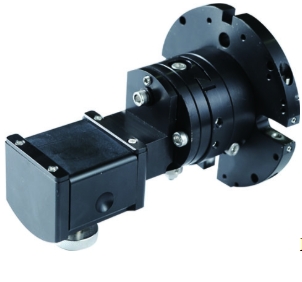
The multifunctional integrated measurement accessory of X-ray diffractometer (XRD) is a key component for achieving multi scene and multi-scale analysis. Through modular design, it can meet the needs of powder diffraction, small angle scattering, residual stress analysis, in-situ testing, etc. The following are common multifunctional integrated measurement accessories and their core functions: 1. The multifunctional integrated measurement accessory is a temperature and environmental control accessory (1) Function: Supports sample testing under high temperature, low temperature, and humidity control, used to study the crystal structure changes of materials under different temperature or humidity conditions. (2) Characteristics: Temperature range: from room temperature to 1500 ℃; Automatic temperature control and humidity regulation, suitable for in-situ catalysis, phase change analysis and other experiments. (3) Application: Phase transition of metal materials, analysis of polymer crystallinity, research on thermal stability of inorganic materials. 2. Automatic sampler and sample stage for multifunctional integrated measurement accessories (1) Function: Implement automatic switching and precise positioning of multiple samples to improve testing efficiency. (2) Characteristics: Supporting accessories such as sample rotation tables and micro diffraction tables for directional testing of complex samples; Collaborate with intelligent software to optimize measurement parameters and automatically identify sample configurations. (3) Application: Batch sample testing, thin film or micro area analysis. 3. Multi functional integrated measurement accessories suitable for two-dimensional detectors and high-speed one-dimensional detectors (1) Function: Support multi-dimensional data collection to enhance the analysis capability of complex samples. (2) Features: High speed one-dimensional detector, suitable for conventional powder diffraction; Two dimensional semiconductor array detector that can switch between zero dimensional, one-dimensional, or two-dimensional modes, expanding micro area or dynamic in-situ testing capabilities. (3) Application: 2D material crystal orientation analysis, in-situ reaction dynamic monitoring. 4. The multifunctional integrated measurement attachment is a residual stress and micro area diffraction attachment (1) Function: Conduct directional testing on the stress distribution or small areas on the surface of materials. (2) Features: Combining the θ/θ optical system with a microfocus X-ray source to achieve sub millimeter level micro diffraction; Non destructive measurement, used for stress analysis of metal workpieces and semiconductor devices. (3) Application: Fatigue testing of aerospace components, stress characterization of semiconductor thin films. 5. The multifunctional integrated measurement accessory is an intelligent calibration and automation control accessory (1) Function: Ensure testing accuracy and consistency through component recognition and automatic calibration technology. (2) Features: QR code automatic recognition attachment configuration, software guided optimal testing conditions; Fully automatic calibration program to reduce human operation errors. (3) Application: Complex attachment switching (such as high temperature+AXS mode), beginner friendly operation. The accessory design of modern X-ray diffractometers emphasizes modularity, intelligence, and automation. Through software and hardware collaboration, accessories can be quickly switched, parameters optimized, and data standardized. Future trends include higher precision micro area analysis capabilities, integrated solutions for in-situ dynamic testing, and intelligent accessory management systems driven by artificial intelligence.
EmailMore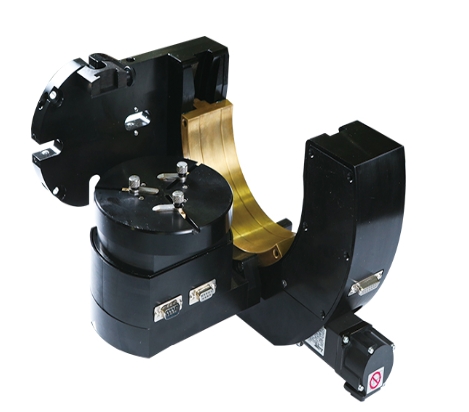
The multifunctional sample stage is a highly integrated experimental equipment mainly used in the fields of materials science, semiconductor manufacturing, electron microscopy analysis, etc. Its core features are modular design, multifunctional integration, and high-precision control. 一、 The core functions and structural characteristics of the multifunctional sample stage 1. Modular design of multifunctional sample stage: Multiple functions are achieved through different module combinations, such as self rotation coupling module (speed 0~20 revolutions per minute, with zero limit), lifting module (standard stroke 50mm/100mm, customizable), heater module (maximum temperature up to 1100 ℃), etc. Support DC/RF power supply connection to meet the needs of thin film growth, sample cleaning, or auxiliary film formation. 2. High precision control and sensors for multifunctional sample stage: Equipped with temperature, pressure and other sensors, real-time monitoring of sample environmental parameters, and adjusting heating, cooling and other operations through the control system. Some models integrate pneumatic baffle modules for easy operation. 3. Compatibility and adaptability of multifunctional sample stage: Suitable for testing irregular samples such as trace powders, sheet materials, and large-sized samples, avoiding the damage caused by traditional cutting or grinding. Supports sample sizes below 6 inches and customizable flange interfaces. 二、 Application Fields of Multi functional Sample Stand 1. Thin film technology for multifunctional sample stage: used for advanced thin film growth technologies such as MBE (molecular beam epitaxy), PLD (pulsed laser deposition), magnetron sputtering, as well as substrate annealing, high-temperature degassing and other processes. 2. Electron microscopy analysis of multifunctional sample stage: Cold field scanning electron microscope: Fix the sample with long screws and adjust the conductivity with compatible brass washers. TEM/FIB system: integrates in-situ delamination, nanoprobe testing, and TEM analysis to avoid contamination or damage caused by sample transfer. 3. Failure analysis of multifunctional sample stage: Integrating atomic site stripping, electrical testing and analysis processes in FIB and TEM systems to improve success rate and efficiency. 三、 Technical advantages of multifunctional sample stage 1. Integration and automation of multifunctional sample stage: reduces manual operation complexity through modular design, supports overall movement and precise positioning in vacuum environment. 2. High reliability of the multifunctional sample stage: using standard flange interfaces (such as CF50/CF40) to ensure sealing and compatibility. 3. Customization of multifunctional sample table: Heating material, stroke length, and sample holder type (such as 3-jaw bayonet type, bottom fork type) can be selected according to needs. Overall, the multifunctional sample stage is a key equipment for material research and micro analysis, commonly used in X-ray diffraction instruments. Its value lies in functional integration, operational flexibility, and adaptability to complex experimental requirements. The specific selection needs to match the corresponding modules and performance parameters according to the actual application scenarios (such as thin film technology, electron microscopy analysis, or failure analysis).
EmailMore
Multifunctional Integrated Measurement Attachment enables precise texture, stress and thin-film analysis. Supports pole figure mapping, biaxial stress measurement and in-plane rotation. Ideal for metals, ceramics, coatings and polymers. Features 0.001° step precision and Φ100mm sample capacity.
EmailMore