

Products

Featured products

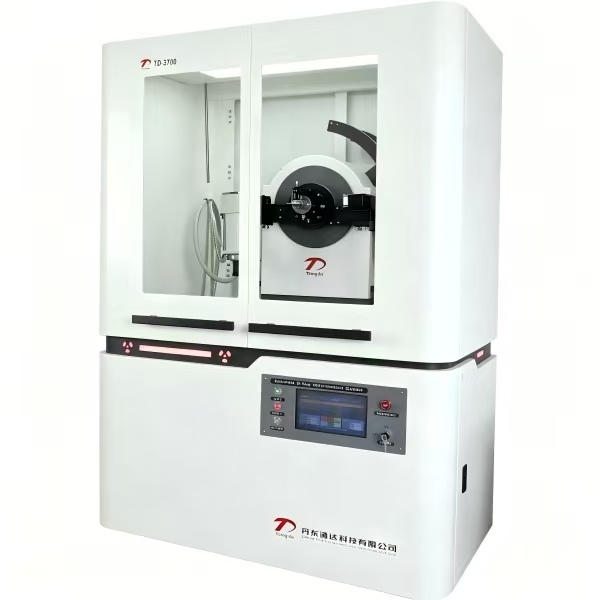
  • Diffractometer
    Diffractometer
    1. The accuracy of Diffractometer is high. 2. The application range of Diffractometer is wide. 3. Diffractometer is easy to operate, convenient and efficient.
    More
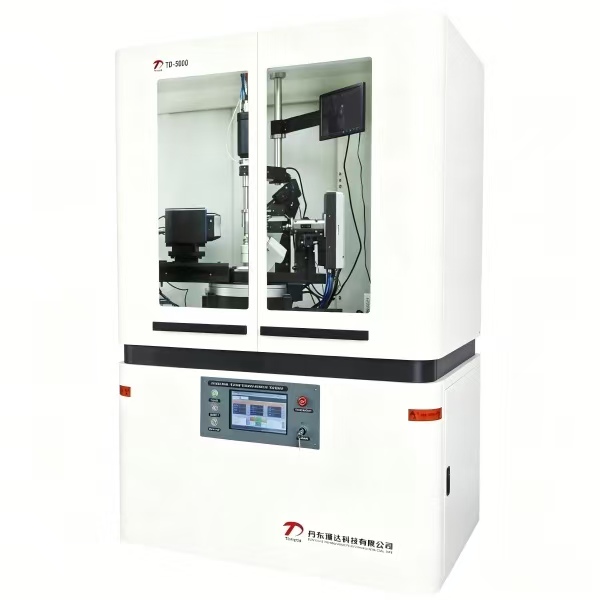
  • Single Crystal XRD
    Single Crystal XRD
    1.The single crystal machine adopts PLC control technology. 2.Modular design, accessories plug and play. 3.Electronic lead door interlocking equipment with double protection. 4.Single crystal X-ray tube: a variety of targets can be selected, such as Cu, Mo,etc. 5. Single crystal adopts four-circle concentric technology to ensure that the center of no goniometer remains unchanged.
    More
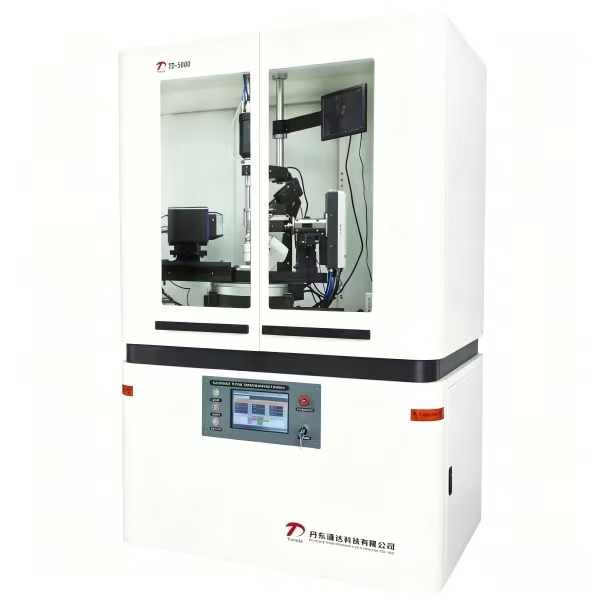
  • A 2D X-ray Diffractometer
    A 2D X-ray Diffractometer
    Advantages: Continuously adjustable X-ray penetration depth Capability to observe the distribution of crystal planes with different orientations Analysis of orientation distribution in samples such as fibers, thin films, and powders Examination of structural characteristics like lattice distortion and crystallite size
    More
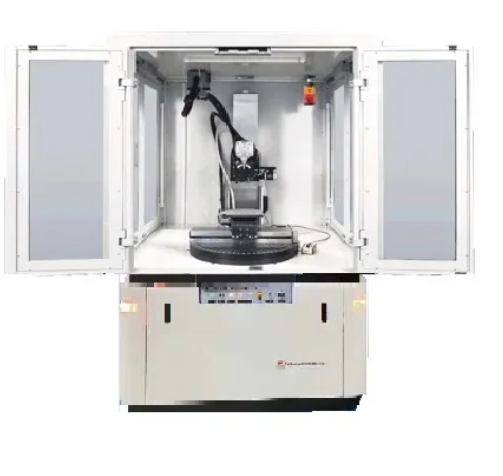
  • X-ray Diffraction Residual Stress Analyzer
    X-ray Diffraction Residual Stress Analyzer
    TD-RSD XRD Residual Stress Analyzer ±7MPa accuracy, dual-detector innovation, full-auto operation & powerful software. Optimize processes, enhance product reliability. Compact, efficient, leading solution.
    More

Contact us

Application of in-situ XRD in cell research

2024-04-01

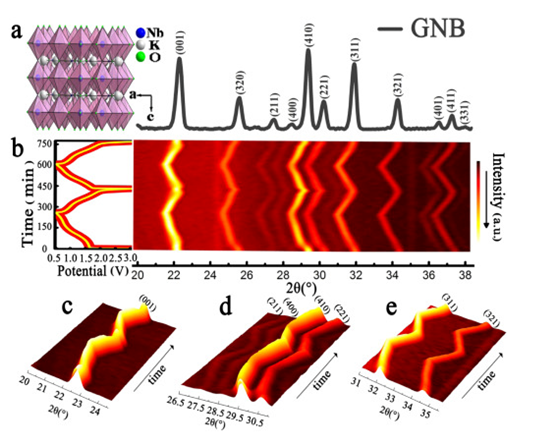
In-situ XRD technology has been widely used in the study of electrode materials. According to the position and intensity changes of in-situ XRD diffraction peaks, the intermediates generated during the cycle can be inferred, and the reaction mechanism can be further derived from these intermediates.


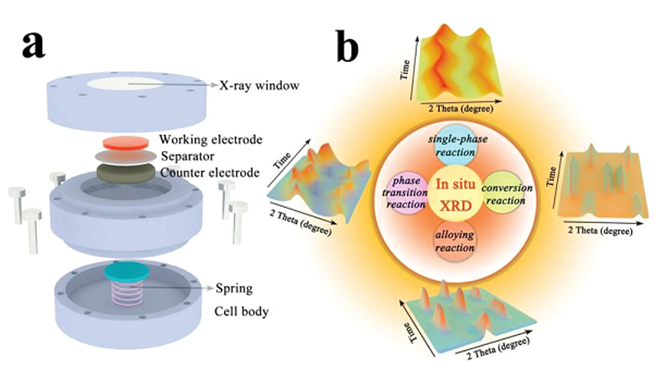
In situ XRD test, there are two different modes of reflection and transmission. Due to the requirement of X-ray source intensity, synchrotron radiation source is used as the diffraction source in this mode.
in-situ XRD

There are four main reaction mechanisms of electrode materials characterized by in-situ XRD: single-phase reaction, phase transition reaction, transformation reaction and alloying reaction. Fig b is a schematic diagram of the typical characteristics of them. In the single-phase reaction, no new peak appears and only the original peak shifts. In the phase transition reaction, not only the displacement of the original peak occurs, but the most obvious phenomenon is that the strength of the original peak weakens and a new peak appears during the cycle. The phase transition that occurs is generally reversible or quasi-reversible and does not bring about particle pulverization after cycling. In the conversion reaction, the new phase is formed during the ion embedding process, and the original phase disappears, indicating that the original substance is transformed into other substances.
X-ray

Get the latest price? We will reply as soon as possible (within 12 hours)

top