

Products

Featured products

  • Diffractometer
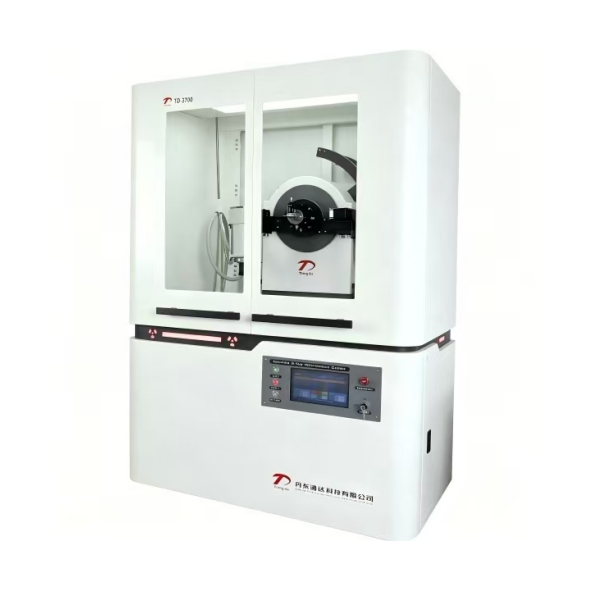
    Diffractometer
    1. The accuracy of Diffractometer is high. 2. The application range of Diffractometer is wide. 3. Diffractometer is easy to operate, convenient and efficient.
    More
  • Single Crystal XRD
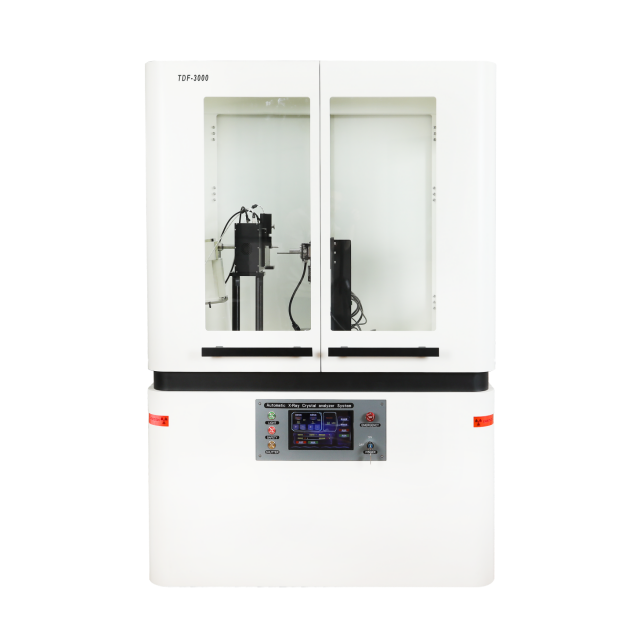
    Single Crystal XRD
    1.The single crystal machine adopts PLC control technology. 2.Modular design, accessories plug and play. 3.Electronic lead door interlocking equipment with double protection. 4.Single crystal X-ray tube: a variety of targets can be selected, such as Cu, Mo,etc. 5. Single crystal adopts four-circle concentric technology to ensure that the center of no goniometer remains unchanged.
    More
  • A 2D X-ray Diffractometer
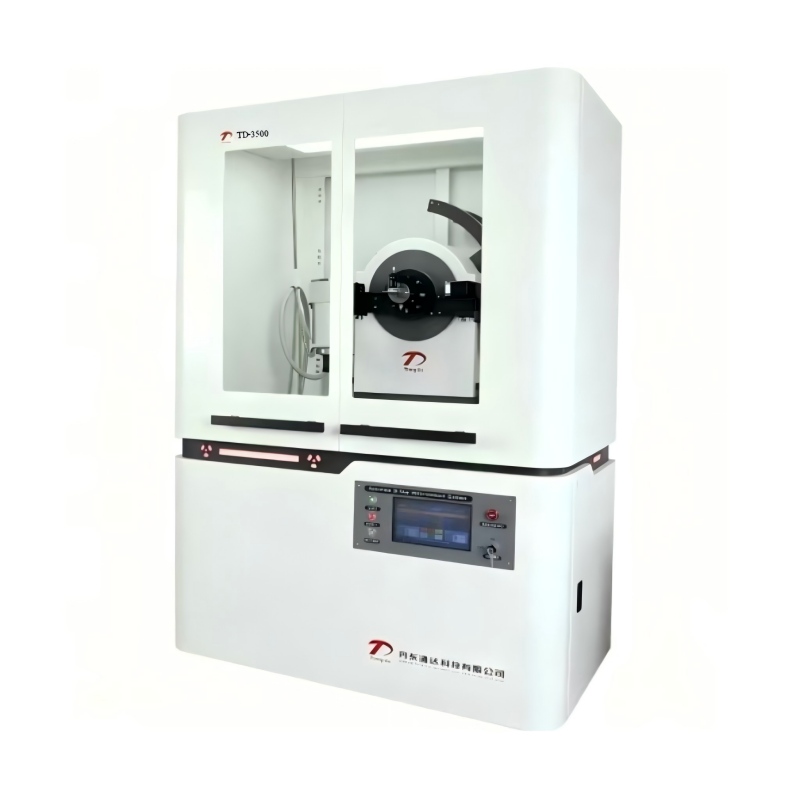
    A 2D X-ray Diffractometer
    Advantages: Continuously adjustable X-ray penetration depth Capability to observe the distribution of crystal planes with different orientations Analysis of orientation distribution in samples such as fibers, thin films, and powders Examination of structural characteristics like lattice distortion and crystallite size
    More
  • X-ray Diffraction Residual Stress Analyzer
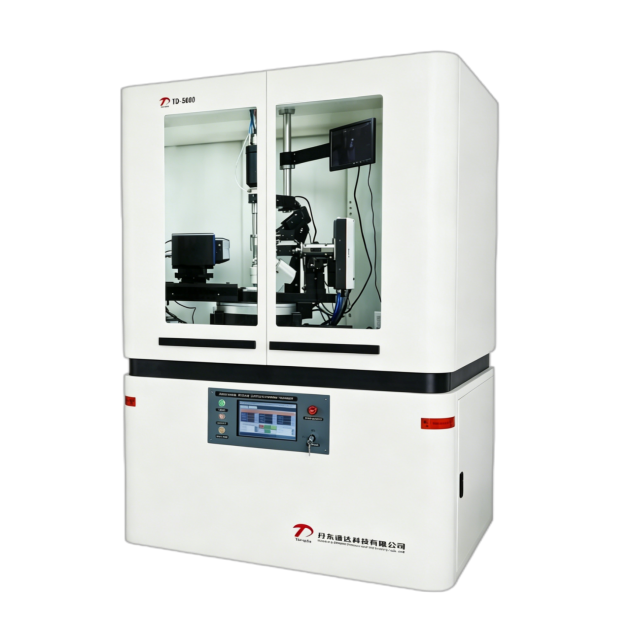
    X-ray Diffraction Residual Stress Analyzer
    TD-RSD XRD Residual Stress Analyzer ±7MPa accuracy, dual-detector innovation, full-auto operation & powerful software. Optimize processes, enhance product reliability. Compact, efficient, leading solution.
    More

Contact us

The residual stress was analyzed by XRD

2024-03-27

Residual stress has a great impact on the dimensional stability, stress corrosion resistance, fatigue strength, phase change and other properties of materials and components. Its measurement has been widely concerned by academia and industry.
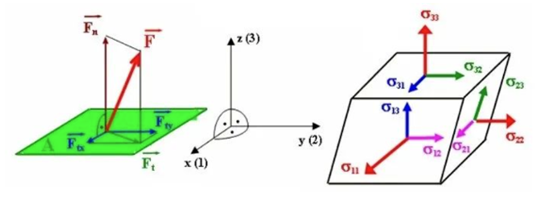
X-ray diffraction

The basic principle of X-ray diffraction measurement of residual stress is based on measuring the deviation of the diffraction Angle, obtaining the strain, and then calculating the residual stress through elastic mechanics.


In the unstressed state, the diffraction Angle 2θ does not change with the change of the azimuth ψ of the crystal face. When there is residual stress in the sample, the distance between crystal faces will change. When Bragg diffraction occurs, the diffraction peak will also move, and the moving distance is related to the stress.
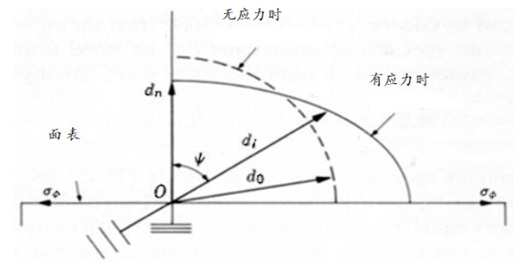
diffraction

In the tensile stress state, the larger the crystal plane azimuth ψ, the larger the crystal plane spacing d, and the smaller the diffraction Angle 2θ according to Bragg's law. On the contrary, in the state of compressive stress, the larger the crystal face azimuth ψ, the smaller the crystal face spacing, and correspondingly, the larger the diffraction Angle 2θ.
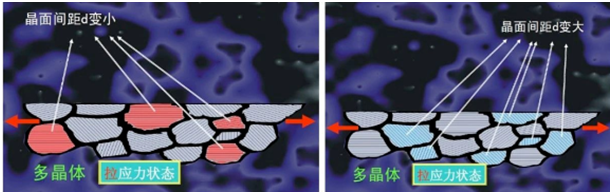
crystal

According to Bragg's Law and elasticity theory, it can be deduced:
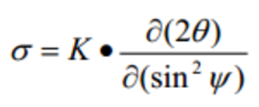
X-ray diffraction

Get the latest price? We will reply as soon as possible (within 12 hours)

top