

Products

Featured products

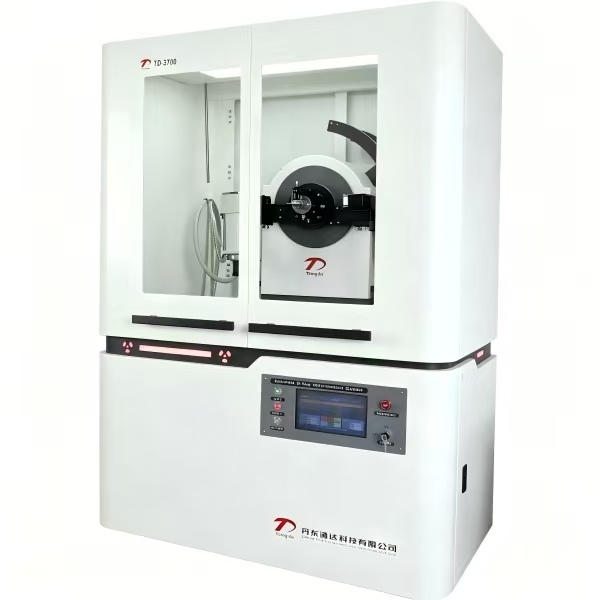
  • Diffractometer
    Diffractometer
    1. The accuracy of Diffractometer is high. 2. The application range of Diffractometer is wide. 3. Diffractometer is easy to operate, convenient and efficient.
    More
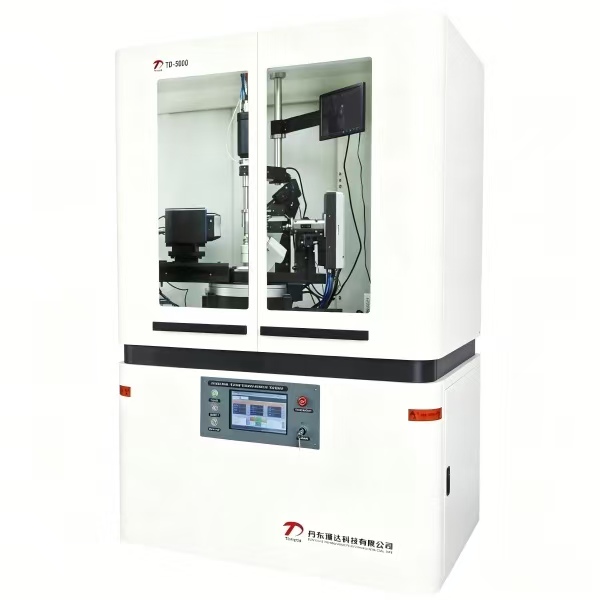
  • Single Crystal XRD
    Single Crystal XRD
    1.The single crystal machine adopts PLC control technology. 2.Modular design, accessories plug and play. 3.Electronic lead door interlocking equipment with double protection. 4.Single crystal X-ray tube: a variety of targets can be selected, such as Cu, Mo,etc. 5. Single crystal adopts four-circle concentric technology to ensure that the center of no goniometer remains unchanged.
    More
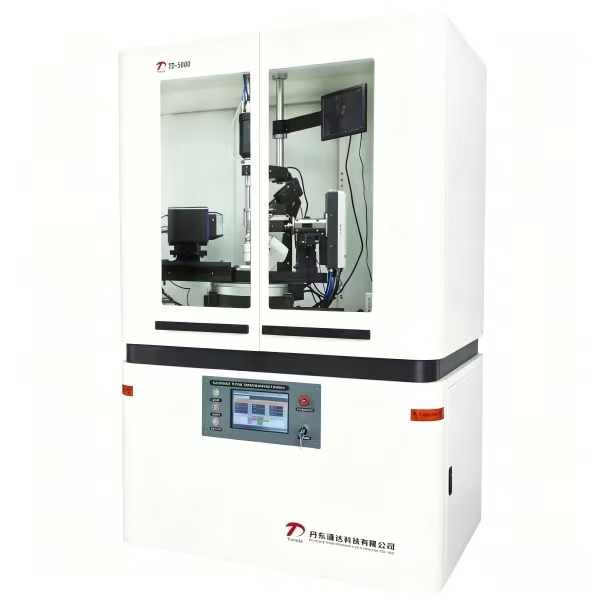
  • A 2D X-ray Diffractometer
    A 2D X-ray Diffractometer
    Advantages: Continuously adjustable X-ray penetration depth Capability to observe the distribution of crystal planes with different orientations Analysis of orientation distribution in samples such as fibers, thin films, and powders Examination of structural characteristics like lattice distortion and crystallite size
    More
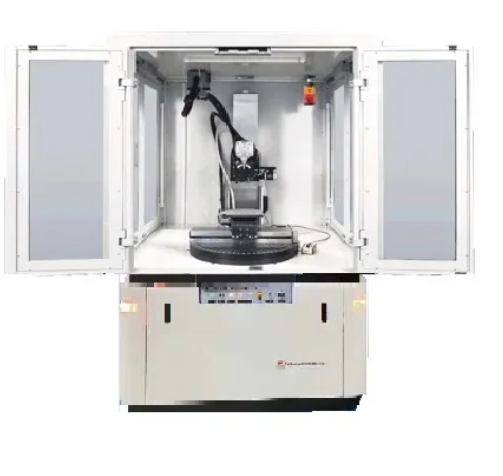
  • X-ray Diffraction Residual Stress Analyzer
    X-ray Diffraction Residual Stress Analyzer
    TD-RSD XRD Residual Stress Analyzer ±7MPa accuracy, dual-detector innovation, full-auto operation & powerful software. Optimize processes, enhance product reliability. Compact, efficient, leading solution.
    More

Contact us

XRD - How do you determine if a sample has formed an alloy

2023-12-27

In this paper, the formation of alloys or not as an example to show the importance of the XRD pattern itself. XRD is a common means of determining whether it has formed an alloy. The basis of the judgment is not based on the JCPDS standard pattern, but only on the XRD diffraction pattern.


Basic principle: After the two metals form an alloy, their lattice will change, and according to the basic principle of crystal diffraction, their XRD diffraction pattern will also change accordingly. Therefore, this change can be used to confirm whether the two are forming alloys.


For example:
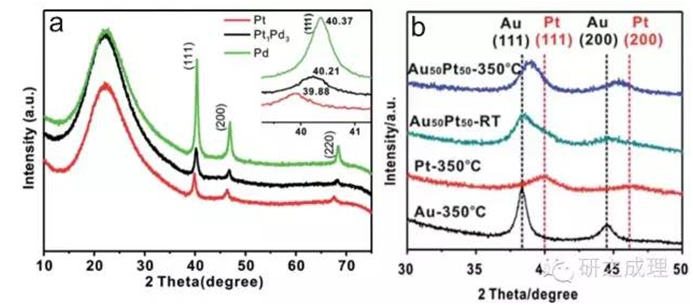
XRD

The XRD patterns of Pd/m-SiO2, Pd/m-SiO2 and Pt1Pd3/ m-SiO2 are shown in Figure a. Note: In many cases, the full XRD spectrum is difficult to visualize the change in the diffraction pattern, and in order to better illustrate the situation, a characteristic peak (usually the main peak) is generally amplified, and then the diffraction peak position is compared. As can be seen from the illustration in Figure a (amplification of the characteristic peak of 111), the diffraction peak of Pt1Pd3 is between Pd and Pt, and the peak shape is symmetrical, indicating that PtPd alloy is formed.


In Figure b, Au50Pt50-RT does not form an alloy structure, and its characteristic diffraction peaks are composed of the superposition of the diffraction peaks of Au and Pd. The characteristic diffraction peaks of Au50Pt50-350 are symmetrical and between Au and Pt, indicating that a uniform single-phase alloy structure is formed.


Get the latest price? We will reply as soon as possible (within 12 hours)

top