


What is X-ray diffraction (XRD)
X-Ray Diffraction (XRD) is a major method for studying the phase and crystal structure of a substance. When a substance (crystal or non-crystal) is diffraction analysis, the substance is irradiated by X-rays to produce different degrees of diffraction phenomenon, material composition, crystal type, intramolecular bonding mode, molecular configuration, conformation and other material characteristics determine the specific diffraction pattern of the substance.
XRD technology has the advantages of no damage to the sample, no pollution, fast, high measurement accuracy, and can obtain a lot of information about crystal integrity. Therefore, XRD, as a modern scientific method of material structure and composition analysis, has been widely used in the research and production of various disciplines.
Basic principles of X-ray diffraction (XRD)
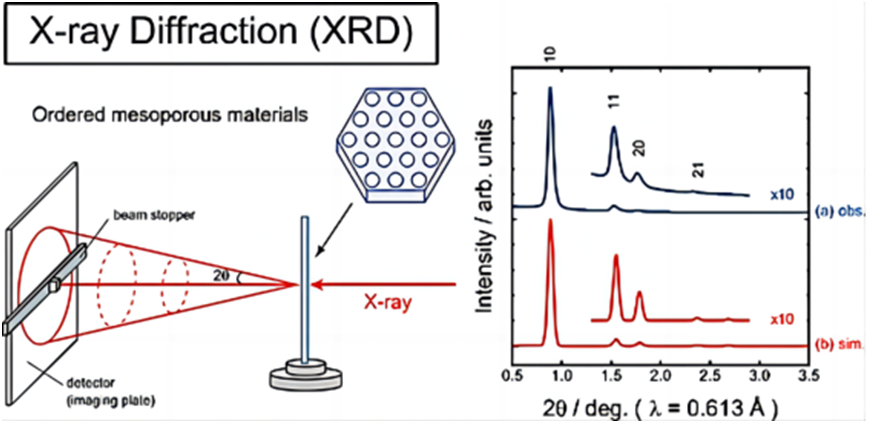
When a monochromatic X-ray is incident on a crystal, because the crystal is composed of a cell of atoms arranged regularly, the distance between these atoms arranged regularly has the same order of magnitude as the wavelength of the incident X-ray, so the X-rays scattered by different atoms interfere with each other, resulting in strong X-ray diffraction in some special directions, and the azimuthing and intensity of the diffraction lines in the spatial distribution. It is closely related to the crystal structure.
According to its principle, the diffraction pattern of a crystal has two main characteristics: the distribution of the diffraction line in space and the intensity of the diffraction beam. The distribution of the diffraction line is determined by the size, shape and orientation of the cell, and the intensity of the diffraction line depends on the type of atoms and their position in the cell. Therefore, different crystals have different diffraction patterns.
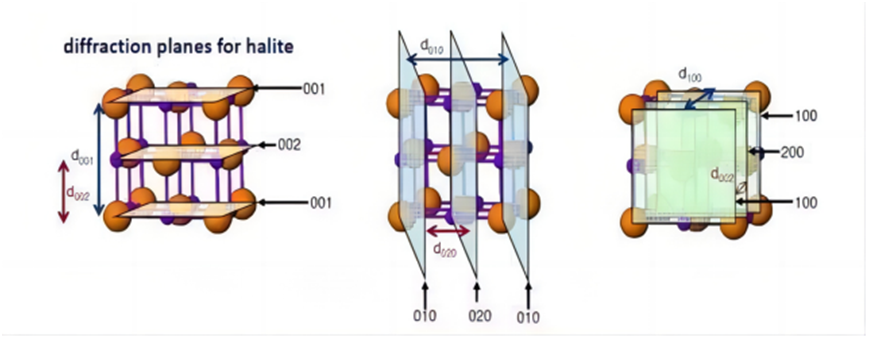
Bragg's law: the wavepath difference between two waves is 2dsinθ, and when the wavepath difference is an integer multiple of the wavelength, that is, 2dsinθ=nλ (n= 0,1,2,3...) When θ is the incident Angle, d is the crystal plane spacing, n is the diffraction order, λ is the incoming ray wavelength, and 2θ is the diffraction Angle, the scattered wave phase is the same and mutually reinforcing. All scattered waves that satisfy Bragg's law are in exactly the same phase, and their amplitudes reinforce each other so that diffraction lines appear in the direction of the incoming ray at an Angle of 2θ. The amplitudes of the scattered lines in other directions cancel each other out, and the intensity of the X-rays is reduced or equal to zero.
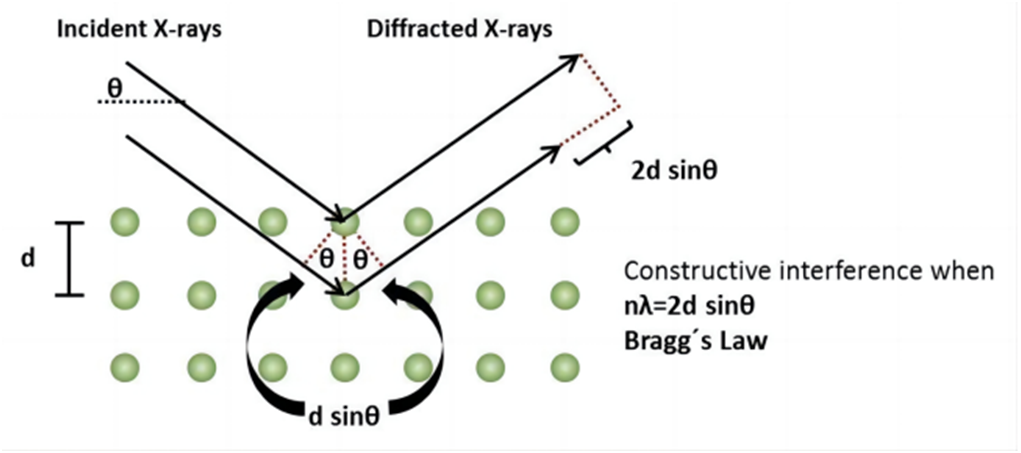
The Bragg equation gives the diffraction direction of the X-ray in a concise way. That is, when the Angle between the incident X-ray and a crystal plane (hkl) in the crystal satisfies the Brager equation, diffraction lines will be generated in the direction of the reflected ray, and vice versa.
X-ray diffraction (XRD) equipmen
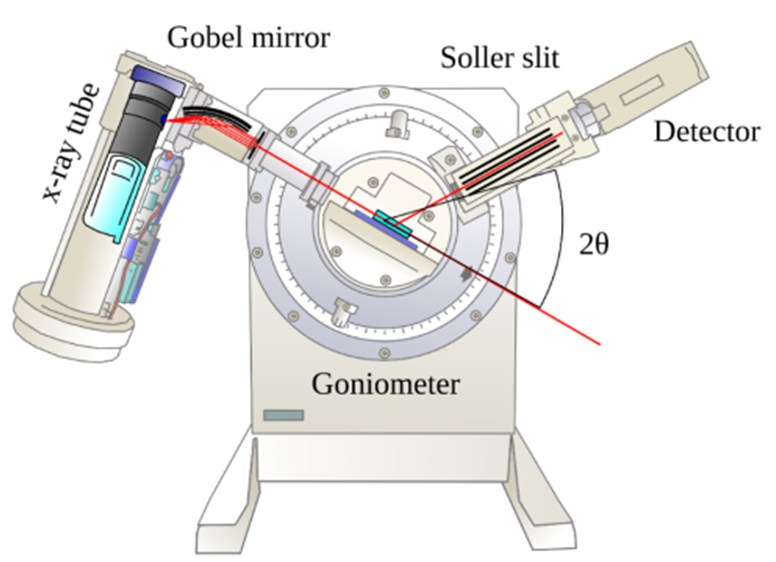
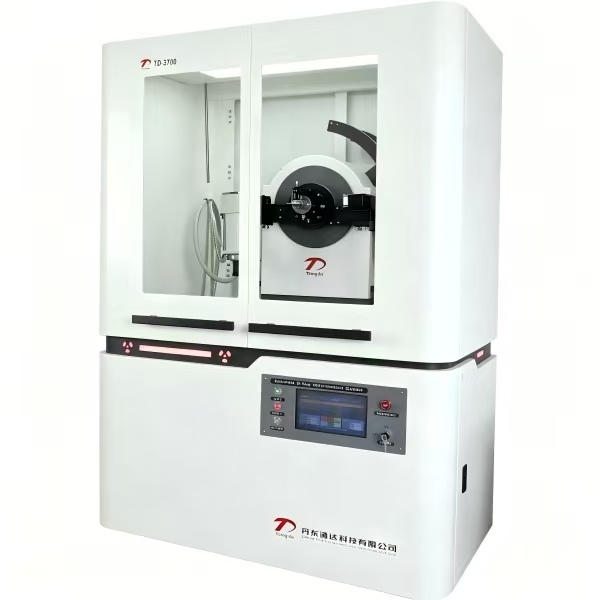
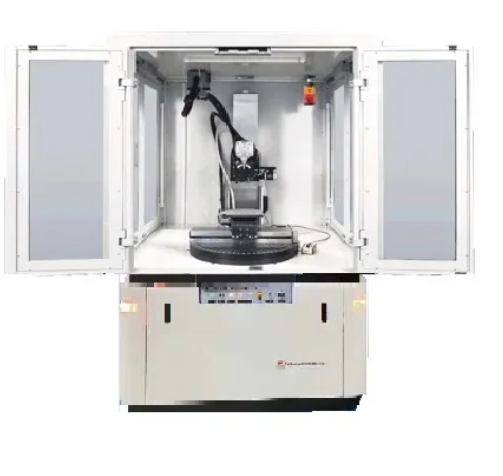
The X-ray diffractometer equipment consists of an X-ray generation system (producing X-rays), an Angle measurement and detection system (measuring 2θ and obtaining diffraction information), a recording and data processing system, all of which work together to output the diffraction pattern. The goniometer is the core component, which is complicated to make and directly affects the accuracy of experimental data.