
Products

Featured products

  • Diffractometer
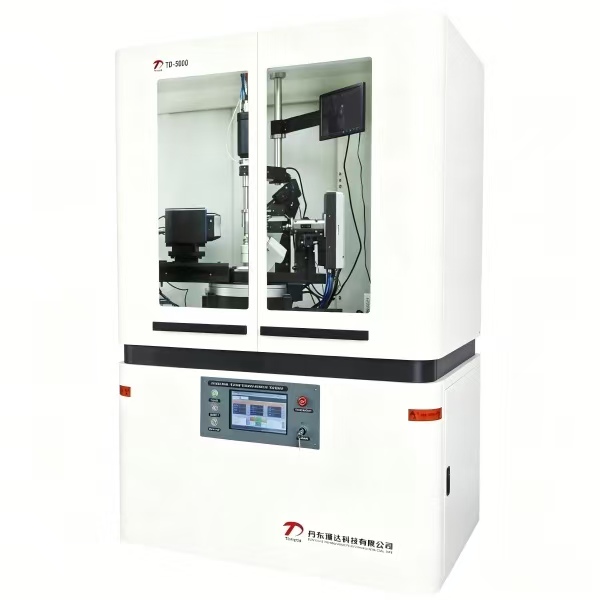
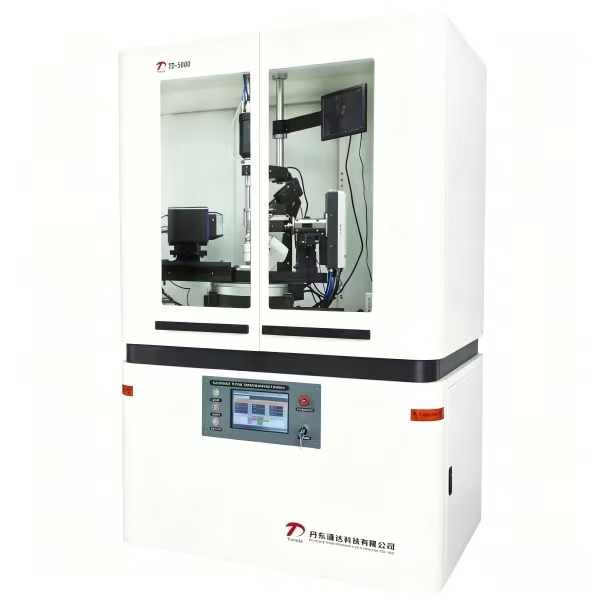
    Diffractometer
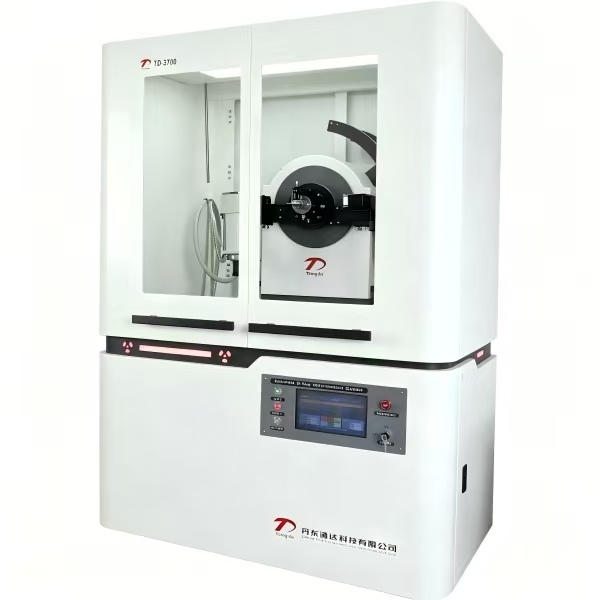
    1. The accuracy of Diffractometer is high. 2. The application range of Diffractometer is wide. 3. Diffractometer is easy to operate, convenient and efficient.
    More
  • Single Crystal XRD
    Single Crystal XRD
    1.The single crystal machine adopts PLC control technology. 2.Modular design, accessories plug and play. 3.Electronic lead door interlocking equipment with double protection. 4.Single crystal X-ray tube: a variety of targets can be selected, such as Cu, Mo,etc. 5. Single crystal adopts four-circle concentric technology to ensure that the center of no goniometer remains unchanged.
    More
  • A 2D X-ray Diffractometer
    A 2D X-ray Diffractometer
    Advantages: Continuously adjustable X-ray penetration depth Capability to observe the distribution of crystal planes with different orientations Analysis of orientation distribution in samples such as fibers, thin films, and powders Examination of structural characteristics like lattice distortion and crystallite size
    More
  • X-ray Diffraction Residual Stress Analyzer
    X-ray Diffraction Residual Stress Analyzer
    TD-RSD XRD Residual Stress Analyzer ±7MPa accuracy, dual-detector innovation, full-auto operation & powerful software. Optimize processes, enhance product reliability. Compact, efficient, leading solution.
    More

Contact us

micro-XRD

2023-12-07

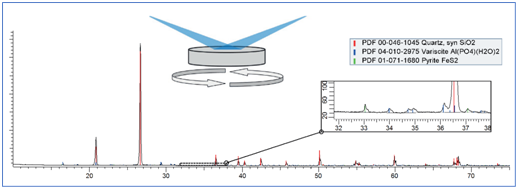
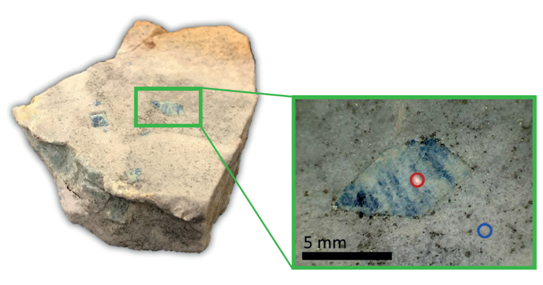
For the XRD test of bulk samples, the bulk sample is often ground into an isotropic powder state, and then the sample is tested and analyzed by diverging linear X-rays. However, it is not practical for some bulk samples to be ground into powder, and micro-XRD analysis technology provides a powerful tool for such samples to analyze the original state of the sample and carry out phase analysis of various parts of the sample. In this paper, a geological sample lapis Lazuli is taken as an example to further illustrate the effect of micro-diffraction.
diffraction

                                       FIG1

XRD

                                                     FIG2

crystalsdiffraction

                                            FIG3

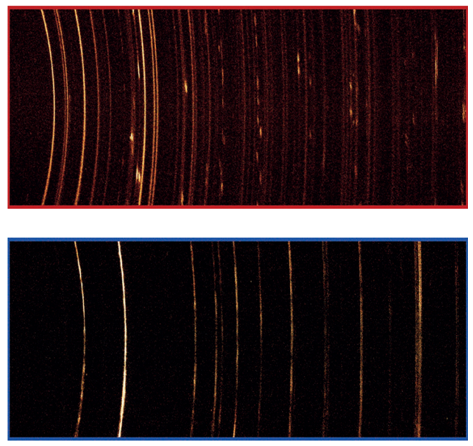
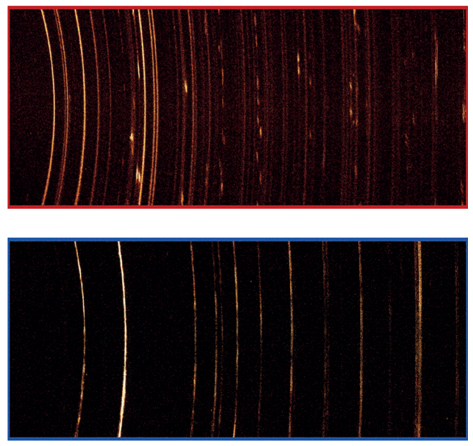
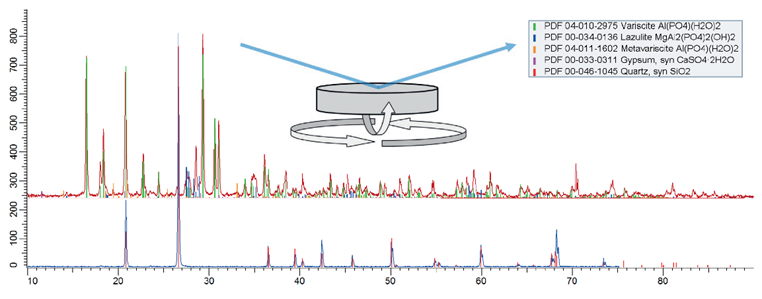
2D microdiffraction is used to better characterize the structure of lapis lazuli. In situ measurements of lapis lazuli crystals and quartzite matrix were made using 0.5 mm spot spot and EIGER2 detector 2D mode (FIG. 1, FIG. 3). During the measurement, the sample rotates at phi of 3rpm and oscillates at psi from 0° to 35° for more reflection. Microdiffraction confirms that the matrix is predominantly fine-grained quartz (blue circles), while lapis lazulis crystals (red circles) contain symbionts of polycrystalline diaspore, metalumite, and gypsum (Figure 4).
XRD

                                                         FIG4


Get the latest price? We will reply as soon as possible (within 12 hours)

top