

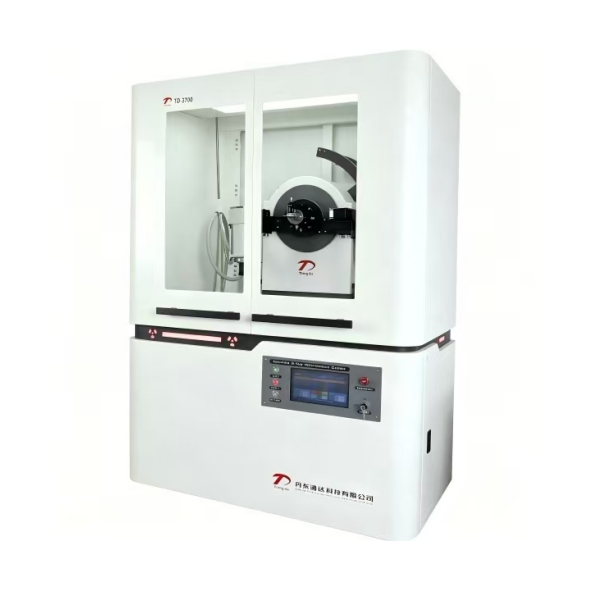
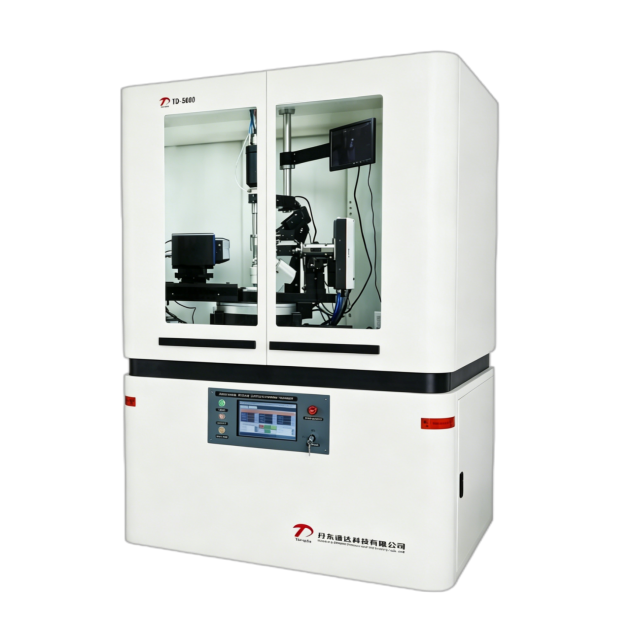
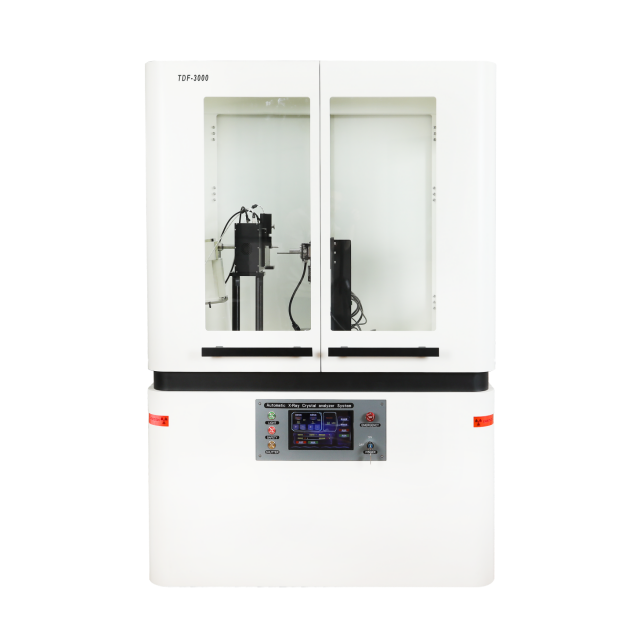
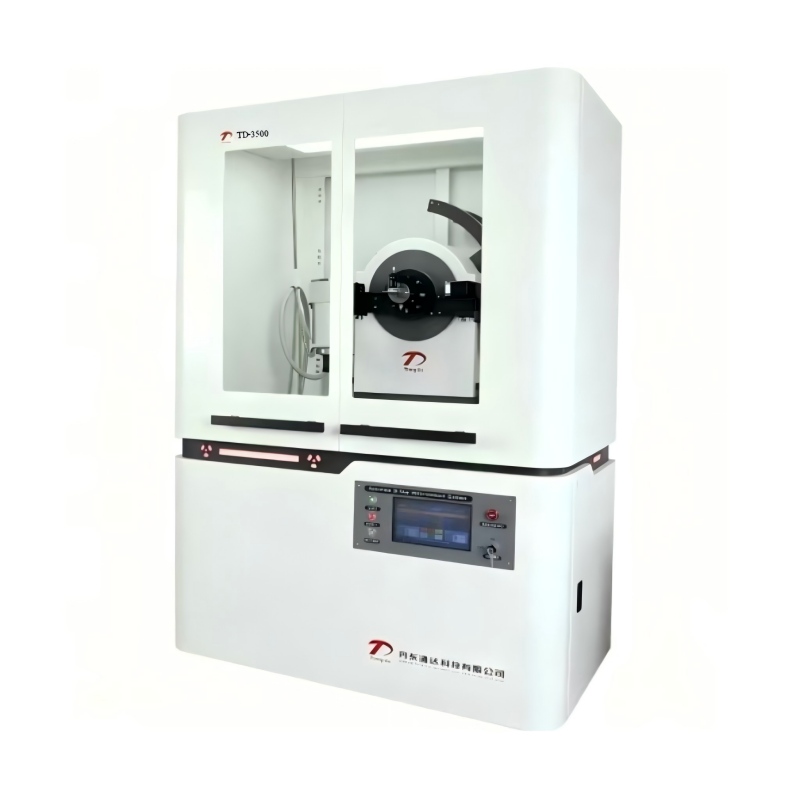
Desktop X-ray diffractometers, as essential analytical instruments, play an indispensable role in various fields such as pharmaceuticals, materials science, and geology. They provide critical information about the crystal structure, grain size, micro-stress, and crystallinity of solid samples. However, extracting valuable insights from these complex diffraction data requires mastering a series of data analysis and interpretation techniques.
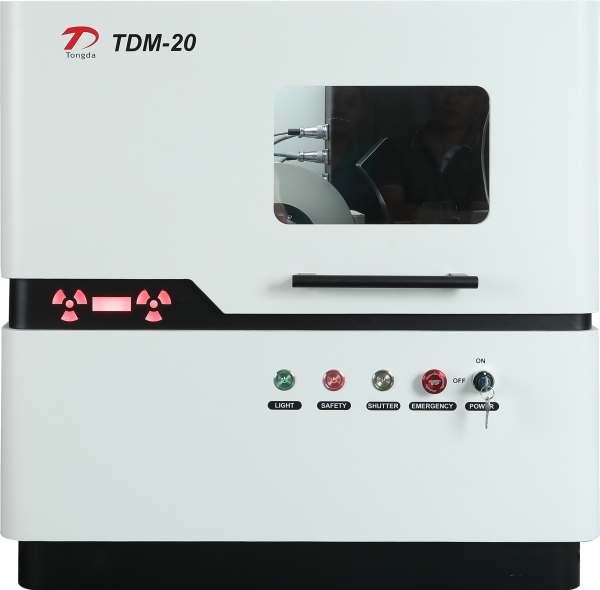
Firstly, during the collection of diffraction data, it is crucial to ensure accuracy and completeness. Desktop X-ray diffractometers generate X-rays through a specific X-ray generation system. These rays interact with the crystal structure of the sample, producing diffraction phenomena. The goniometer is responsible for precisely measuring diffraction angles, while the detector records the diffraction intensity at each angle. Therefore, instrument calibration and maintenance are vital to ensure the reliability of measurement results.
Next is the data preprocessing stage. Raw diffraction data often contain noise and background signals, which can interfere with the analysis of genuine diffraction peaks. Thus, smoothing and background subtraction are necessary to eliminate these interfering factors. Smoothing can be achieved using filtering algorithms or moving average methods, while background subtraction requires selecting appropriate techniques based on the specific characteristics of the diffraction pattern.
After completing data preprocessing, peak identification can begin. Peak identification is a critical step in X-ray diffraction data analysis, involving the inference of the sample's crystal structure based on information such as the position, shape, and intensity of diffraction peaks. For samples with known crystal structures, peak identification can be performed by comparing them with standard patterns. For samples with unknown crystal structures, comprehensive analysis in conjunction with other analytical methods (such as electron microscopy, infrared spectroscopy, etc.) is required.
Building on peak identification, detailed analysis of each diffraction peak is necessary. This includes determining parameters such as peak position, intensity, and width, as well as analyzing the relative intensity relationships between peaks. These parameters provide insights into crystal structure, lattice constants, interplanar spacing, and grain size, among other aspects. By analyzing trends in these parameters, a deeper understanding of the sample's microstructure and properties can be achieved.
Finally, presenting the analysis results in graphical form facilitates intuitive analysis and understanding by researchers. Common chart types include diffraction patterns, crystal structure diagrams, and lattice constant tables. Through these charts, researchers can visually observe the crystal structure characteristics of the sample and their variations under different conditions.
It is important to note that the analysis and interpretation of X-ray diffraction data is a complex and meticulous task, requiring researchers to possess solid professional knowledge and extensive practical experience. Additionally, with technological advancements and instrument upgrades, new data analysis methods and interpretation techniques will continue to emerge. Therefore, continuous learning and mastery of new knowledge and skills are essential.
The data analysis and interpretation of desktop X-ray diffractometers is a comprehensive process involving data collection, preprocessing, peak identification, parameter analysis, and result presentation, among other aspects. Only by mastering a series of data analysis and interpretation techniques can valuable information be extracted from complex diffraction data, providing robust support for scientific research and industrial production.