



- Home
- >
News
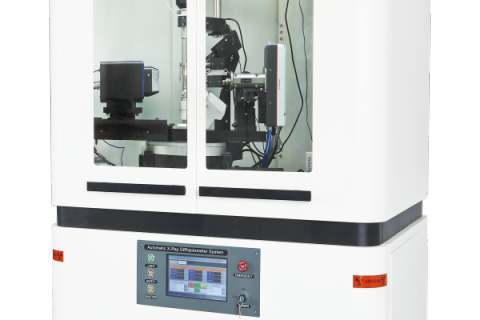
Single-crystal X-ray diffraction is essential in materials science for crystal structure analysis, phase identification, and stress analysis. It enables precise atomic-level characterization, supports rational material design, and is advancing with new technologies like synchrotron radiation and AI-assisted structure determination.
X-ray diffraction (XRD) is a key non-destructive technique for identifying and characterizing new materials. By analyzing diffraction patterns from crystal lattices, it determines phase composition, crystal structure, and microstructure. Critical for developing catalysts, batteries, and biomaterials, XRD enables precise analysis of thin films and structural changes, driving innovation across materials science.
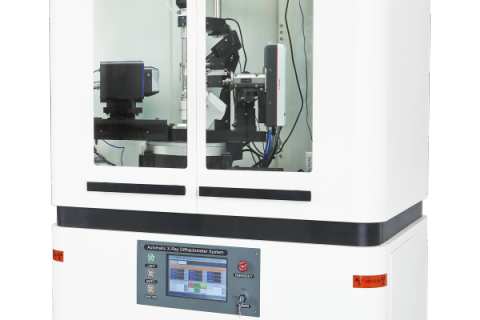
A guide on selecting a single-crystal diffractometer for structural analysis, covering key factors: defining needs, evaluating performance and software, and considering support and cost for an informed choice.
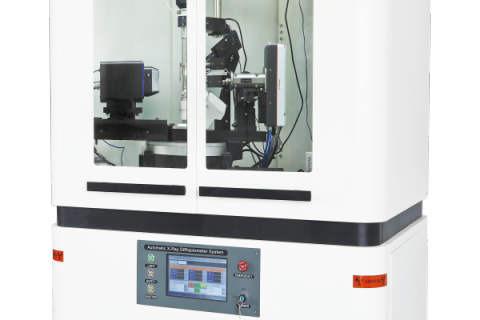
X-ray single crystal diffractometers require systematic maintenance to ensure long-term stability and reliable data. Daily cleaning prevents dust and oil from affecting accuracy or damaging components. Critical parts like the X-ray source and detectors need regular inspection and timely professional servicing. Calibration eliminates error accumulation and maintains measurement precision. Operational details—such as avoiding magnetic interference and proper storage during inactivity—are equally important. Together, these practices support instrument longevity and dependable research performance.
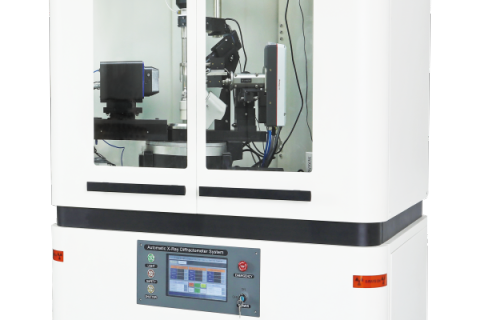
Enhance resolution by upgrading to a high-resolution detector, optimizing crystal quality, employing precise data collection strategies, utilizing advanced software, and ensuring regular instrument maintenance.
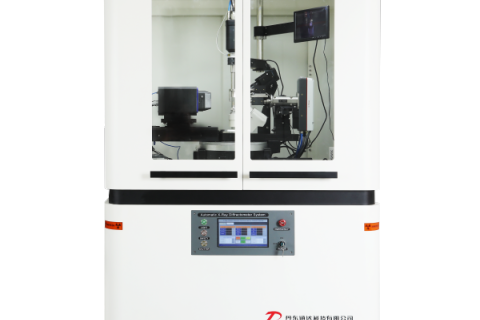
A single-crystal X-ray diffractometer reveals 3D atomic structure by analyzing X-ray diffraction patterns (Bragg's Law). Through data collection, Fourier transformation, and model refinement, it generates electron density maps to determine molecular configurations.
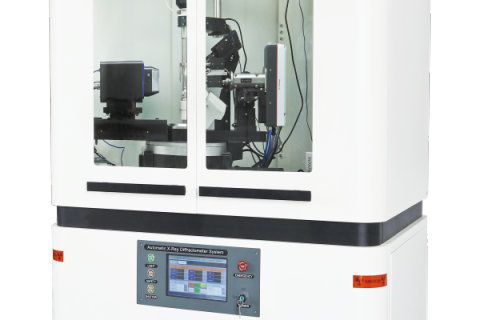
This article details a comprehensive three-pronged strategy to eliminate higher-order diffraction interference in X-ray single-crystal analysis. The methods involve hardware filtration at the source using monochromators and slits, parameter optimization during data collection to suppress detection, and software correction algorithms for residual effects in data processing. This combined approach ensures high-precision crystal structure determination by controlling intensity errors.
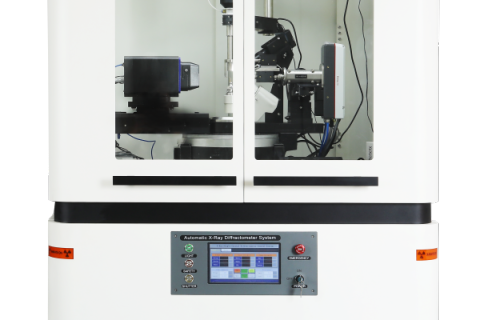
Dandong Tongda Science & Technology Co., Ltd., achieved a breakthrough by independently developing the TD-5000 X-ray single crystal diffractometer through collaboration with Academician Chen Xiaoming. This success, stemming from a national R&D project, signifies China's leap in high-end scientific instruments, gaining both domestic and international market recognition.
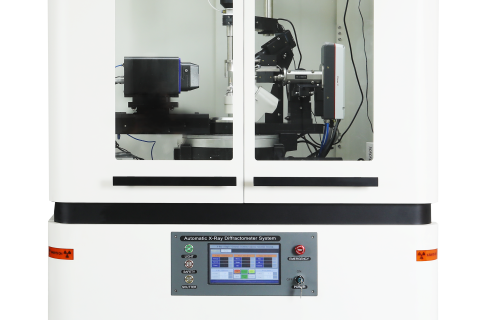
The TD-5000 X-ray single crystal diffractometer is a high-performance analytical instrument developed and produced by Dandong Tongda Technology Co., Ltd. The following is a detailed introduction to the instrument: 1. Structure and technical characteristics of single crystal diffractometer (1) Core technical support Adopting the four circle concentric angle measuring instrument technology ensures that the center position of the angle measuring instrument remains constant during rotation, improving data integrity and accuracy. Equipped with a hybrid pixel detector, combined with single photon counting and hybrid pixel technology, it achieves low noise and high dynamic range data collection, suitable for challenging sample analysis. High power X-ray generator (3kW or 5kW), supporting the selection of Cu/Mo and other target materials, with a focal size of 1 × 1mm and a divergence of 0.5~1 mrad, meeting different experimental requirements. (2) Modularization and operational optimization The whole machine adopts PLC control technology and modular design to achieve plug and play of accessories, reducing the calibration process. The touch screen monitors the instrument status in real-time, and the one click acquisition system simplifies the operation process. The electronic lead door interlocking device provides dual protection, with X-ray leakage ≤ 0.12 µ Sv/h (at maximum power). 2. Technical parameters of single crystal diffractometer (1) Accuracy and repeatability 2 θ angle repeatability accuracy: 0.0001 ° Minimum step angle: 0.0001 ° Temperature control range: 100K~300K, control accuracy ± 0.3K. (2) Detector performance Sensitive area: 83.8 × 70.0 mm ² Pixel size: 172 × 172 μ m ², pixel spacing error<0.03% Maximum frame rate: 20 Hz, readout time of 7 ms, energy range of 3.5~18 keV. (3) Other key parameters X-ray tube voltage: 10~60 kV (1 kV/step), current 2~50 mA or 2~80 mA. Liquid nitrogen consumption: 1.1~2 L/hour (low-temperature experiment). 3. Application fields of single crystal diffractometer (1) Main research direction Crystal structure analysis: Analyze the atomic arrangement, bond length, bond angle, molecular configuration, and electron cloud density of single crystal materials. Drug crystallography: Study the crystal morphology of drug molecules, evaluate stability and biological activity. New material development: Analyze the three-dimensional structure of synthesized compounds to support material performance optimization. Nanomaterials and Phase Transition Research: Exploring the Characteristics of Nanocrystals and the Mechanism of Material Phase Transition. (2) Typical users School of Materials Science and Technology at Huazhong University of Science and Technology, Zhejiang University, University of Science and Technology of China, and other universities. Research institutions such as China Aerospace Science and Technology Corporation and China Shipbuilding Industry Corporation. 4. After sales service of single crystal diffractometer Provide original spare parts, home maintenance, remote diagnosis, and software upgrade services. Regular calibration services (in compliance with international standards) and providing users with operational and application training. 5. Accessories and extended functions for single crystal diffractometer (1) Optional attachments Multi layer film focusing lens (divergence of 0.5~1 mrad). Low temperature device (liquid nitrogen cooling). (2) Compatible devices It can be used in conjunction with X-ray fluorescence spectrometer (XRF), scanning electron microscope (SEM), etc. to achieve multi-scale material analysis. Overall, as a high-end single crystal diffractometer, the performance of TD-5000 has approached international standards, making it particularly suitable for universities, research institutes, and high-end material development needs. For more details, please refer to the official website of Dandong Tongda Technology Co., Ltd.
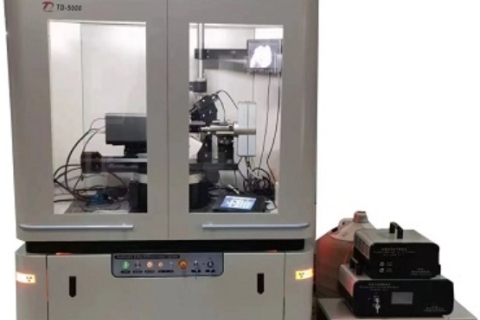
1. Function of single crystal diffractometer: The TD-5000 X-ray single crystal diffractometer is mainly used to determine the three-dimensional spatial structure and electron cloud density of crystalline substances such as inorganic, organic, and metal complexes, and to analyze the structure of special materials such as twinning, non commensurate crystals, quasicrystals, etc. Determine the accurate three-dimensional space (including bond length, bond angle, configuration, conformation, and even bonding electron density) of new compound (crystalline) molecules and the actual arrangement of molecules in the lattice; X-ray single crystal diffractometer can provide information on the crystal cell parameters, space group, crystal molecular structure, intermolecular hydrogen bonding and weak interactions, as well as structural information such as molecular configuration and conformation.X-ray single crystal diffractometer is widely used in analytical research in chemical crystallography, molecular biology, pharmacology, mineralogy, and materials science. The X-ray single crystal diffractometer is a high-tech product funded by the Ministry of Science and Technology of China's National Major Scientific Instrument and Equipment Development Project, led by Dandong Tongda Technology Co., Ltd., filling the gap in the development and production of single crystal diffractometers in China. 2. Characteristics of single crystal diffractometer: The whole machine adopts programmable logic controller (PLC) control technology; Easy to operate, one click collection system; Modular design, plug and play accessories, no need for calibration; Real time online monitoring through touch screen, displaying instrument status; High power X-ray generator with stable and reliable performance; Electronic lead door interlocking device, dual protection. 3. Accuracy of single crystal diffractometer: 2 θ angle repeatability accuracy: 0.0001 °; Minimum step angle: 0.0001 ° Temperature control range: 100K-300K; Control accuracy: ± 0.3K 4. Angle measuring instrument used in single crystal diffractometer: The use of four concentric circles technique ensures that the center of the angle measuring instrument remains unchanged regardless of any rotation, achieving the goal of obtaining the most accurate data and obtaining higher completeness. Four concentric circles are a necessary condition for conventional single crystal diffractometer scanning. 5. High speed two-dimensional detector used in X-ray single crystal diffractometer: The detector combines the key technologies of single photon counting and mixed pixel technology to achieve the best data quality while ensuring low power consumption and low cooling. It is applied in various fields such as synchrotron radiation and conventional laboratory light sources, effectively eliminating the interference of readout noise and dark current. The mixed pixel technology can directly detect X-rays, make the signal easier to distinguish, and efficiently provide high-quality data. 6. Low temperature equipment used in X-ray single crystal diffractometer: The data collected through low-temperature equipment yields more ideal results. With the help of low-temperature equipment, more advantageous conditions can be provided to enable undesirable crystals to obtain ideal results, as well as ideal crystals to obtain more ideal results. Temperature control range: 100K~300K; Control accuracy: ± 0.3K; Liquid nitrogen consumption: 1.1~2 liters/hour; 7. Optional accessory, multi-layer film focusing lens: X-ray tube power: 30W or 50W, etc; Divergence: 0.5~1 mrad; X-ray tube target material: Mo/Cu target; Focal spot: 0.5~2mm.

The TD-5000 X-ray single crystal diffractometer is mainly used to determine the three-dimensional spatial structure and electron cloud density of crystalline substances such as inorganic, organic, and metal complexes, and to analyze the structure of special materials such as twinning, non commensurate crystals, quasicrystals, etc. Determine the accurate three-dimensional space (including bond length, bond angle, configuration, conformation, and even bonding electron density) of new compound (crystalline) molecules and the actual arrangement of molecules in the lattice; It can provide information on the crystal cell parameters, space group, crystal molecular structure, intermolecular hydrogen bonding and weak interactions, as well as structural information such as molecular configuration and conformation. X-ray single crystal diffractometer is widely used in analytical research in chemical crystallography, molecular biology, pharmacology, mineralogy, and materials science. Single crystal XRD is a high-tech product under the National Major Scientific Instrument and Equipment Development Project of the Ministry of Science and Technology, led by Dandong Tongda Technology Co., Ltd., filling the gap in the development and production of single crystal x-ray diffractometer in China.
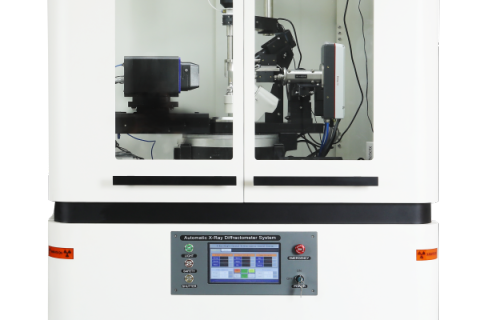
TD-5000 X-ray diffractometer breaks international monopoly in high-end scientific instruments. This Chinese innovation delivers exceptional precision (0.0001° accuracy) and advanced detection capabilities, serving researchers in pharmaceuticals, materials science, and chemistry through comprehensive structural analysis.