



How Does a Single-Crystal X-ray Diffractometer Reveal the Three-Dimensional Structure of Molecules?
2026-01-15 10:15The single-crystal X-ray diffractometer reveals the three-dimensional structure of molecules by harnessing the interaction of X-rays with the regularly arranged atoms within a crystal, combined with precise instrumentation and mathematical computation. Its fundamental principles and workflow are outlined below.
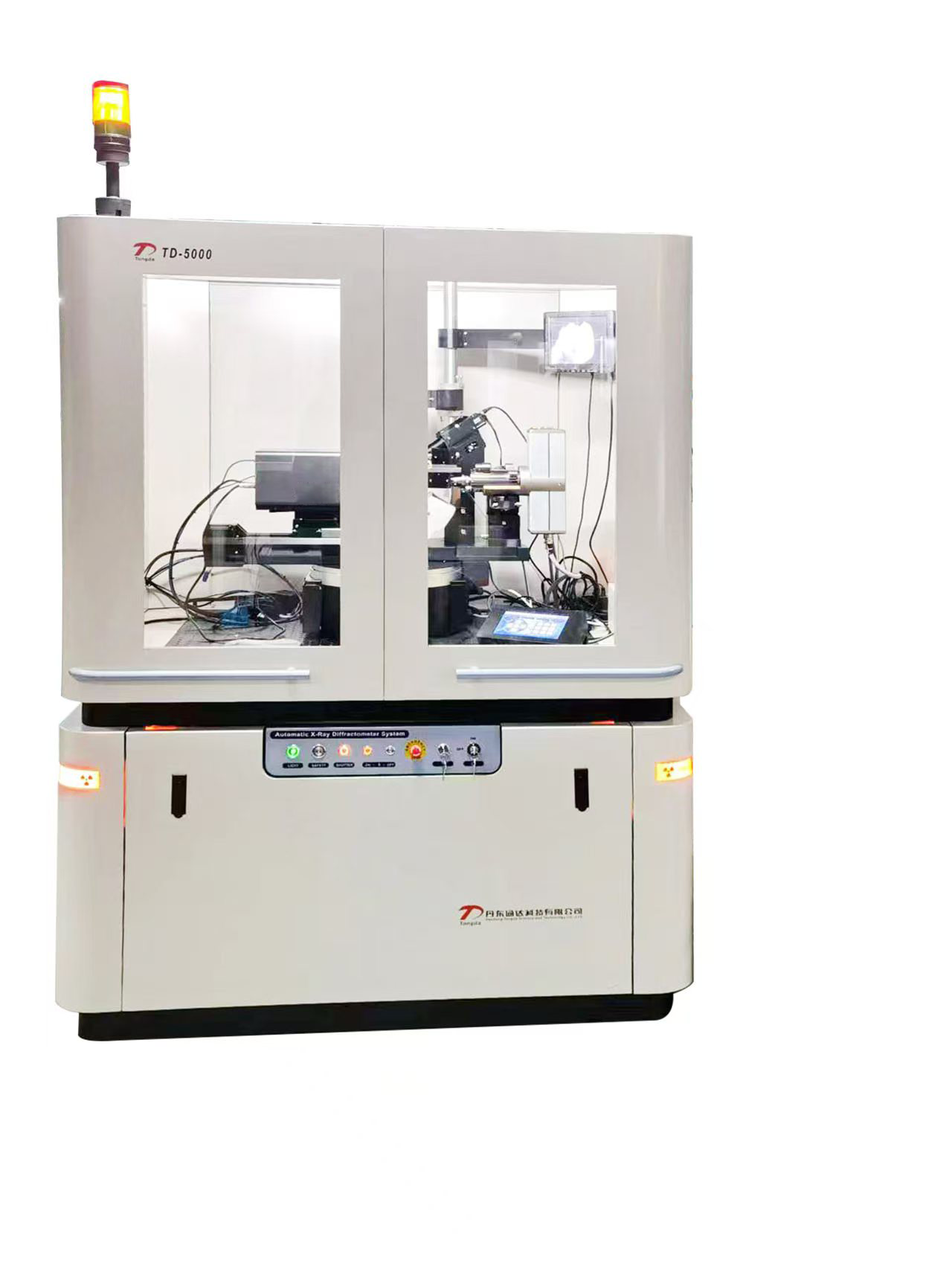
Core Principle: X-ray Diffraction and Bragg's Law
When a monochromatic X-ray beam (e.g., CuKα radiation from a copper target) strikes a single crystal, the spacings between the regularly arranged atoms are on the same order of magnitude as the X-ray wavelength. The X-rays scattered by the atoms interfere with each other, producing strong diffraction in specific directions—those that satisfy Bragg's Law: nλ = 2d sinθ. Here, λ is the X-ray wavelength, d is the interplanar spacing, θ is the incident angle (Bragg angle), and n is the order of diffraction. The diffraction directions are directly correlated with the crystal structure, with each crystal type producing a unique diffraction pattern.
Key Steps: From Diffraction Data to 3D Structure
Data Collection:
The instrument uses a high-precision goniometer (e.g., a four-circle diffractometer) to rotate the crystal, bringing different sets of crystal planes successively into a diffracting position that satisfies Bragg's Law. A detector (e.g., a photon-counting CCD) captures the diffraction signals, recording the position and intensity of each diffraction spot, thereby generating a two-dimensional diffraction pattern that contains the structural information of the crystal.
Mathematical Inversion:
The intensity of a diffraction spot is related to the distribution of atoms within the unit cell. Through Fourier transformation, the diffraction data are converted into a three-dimensional map of electron density within the unit cell. Atomic positions correspond to peaks in the electron density, allowing for the determination of parameters such as atomic coordinates, bond lengths, and bond angles.
Structure Verification and Refinement:
The initial structural model is refined by incorporating chemical knowledge (such as expected bond length ranges) and symmetry analysis, culminating in the precise determination of the molecule's exact three-dimensional configuration.
Technical Advantages and Application Scenarios
Atomic-Level Resolution: Capable of precisely determining atomic positions, it elucidates molecular stereochemistry, chirality, and crystal packing modes.
Broad Applicability: The technique can solve structures ranging from simple inorganic compounds to complex biological macromolecules, such as protein-ligand complexes.
Critical Applications: In drug development, it is used to determine drug polymorphs and optimize molecular design. In materials science, it aids in the design of materials with specific properties, such as Metal-Organic Frameworks (MOFs) or Covalent Organic Frameworks (COFs).