



Cutting-Edge Applications of Single-Crystal X-Ray Diffraction in Materials Science
2026-03-26 08:46Single-crystal X-ray diffraction is widely and deeply applied at the forefront of materials science, providing indispensable technical support for materials research and development. It has become a critical tool for modern materials characterization.
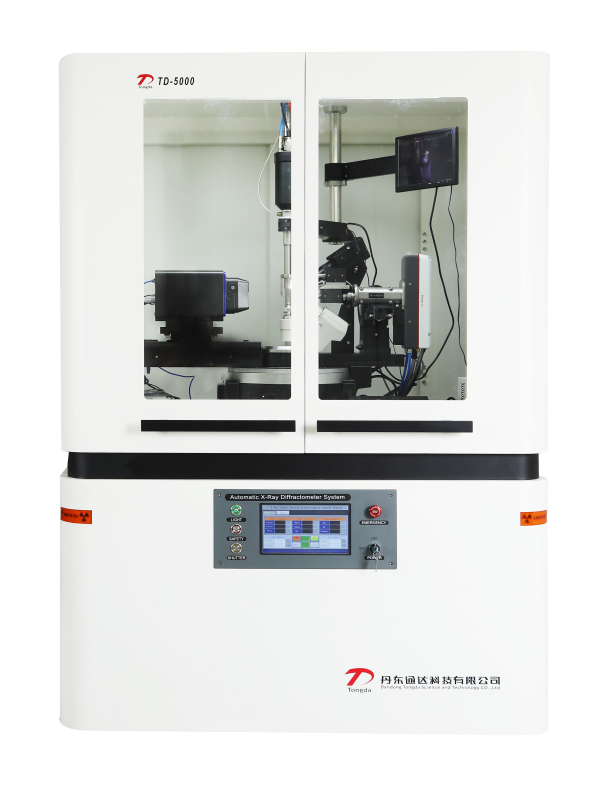
First, single-crystal X-ray diffraction plays a key role in crystal structure analysis. The crystal structure determines the intrinsic properties of a material. This technique allows for precise determination of unit cell parameters, atomic coordinates, bond lengths and angles, and space groups, thereby revealing structure–property relationships at the atomic level. Based on this, scientists can gain a deeper understanding of the physical and chemical properties of materials, providing a solid theoretical foundation for the rational design of novel functional materials. For example, in inorganic materials, single-crystal X-ray diffraction is used to resolve the fine structures of high-temperature superconductors, catalytic materials, and metal–organic frameworks. In the field of organic materials, it is widely applied in the confirmation of pharmaceutical polymorphs, co-crystals, and organic optoelectronic materials. In nanomaterials research, even when crystal sizes shrink to the submicron scale, high-quality data collection and structure determination can still be achieved using advanced microfocus and synchrotron radiation sources.
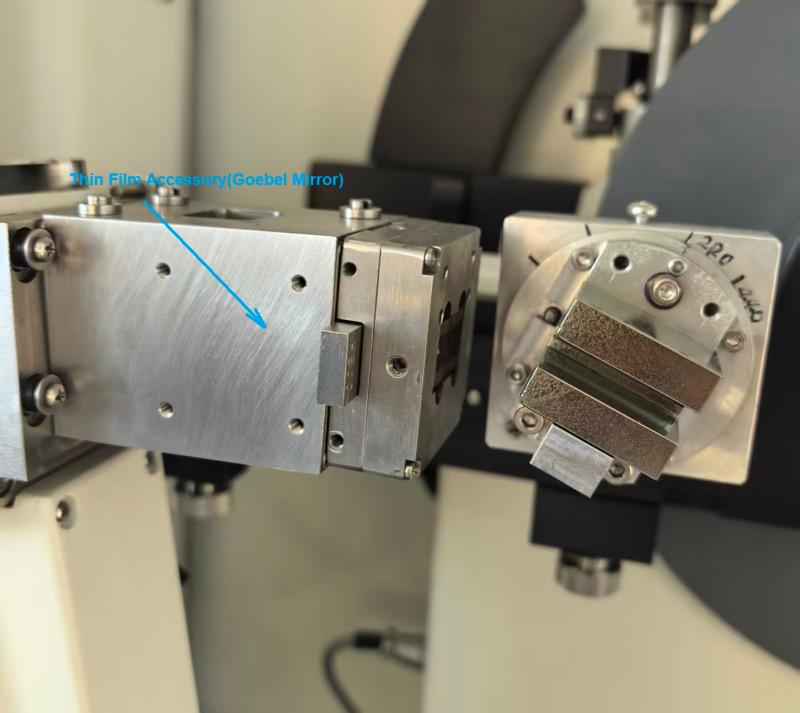
Second, single-crystal X-ray diffraction also holds significant value in phase analysis. By analyzing the distribution, intensity, and systematic absences of diffraction points, the phase composition and relative content of materials can be accurately identified, covering stable phases, metastable phases, solid solutions, and multiphase coexistence systems. This is essential for process optimization, impurity identification, and the study of phase transition mechanisms during the preparation of new materials, providing a scientific basis for optimizing material properties and stabilizing fabrication processes.
Furthermore, single-crystal X-ray diffraction plays a unique role in stress analysis. By precisely measuring the shift and broadening of diffraction peaks, the internal microstress, dislocation density, and crystal integrity of materials can be quantitatively assessed. This capability is indispensable for investigating residual stress distributions in structural materials, thin films, coatings, and semiconductor heterojunctions, as well as for evaluating mechanical properties and processing stability.
In summary, single-crystal X-ray diffraction encompasses multiple dimensions in materials science, including crystal structure determination, phase identification, and stress analysis, offering strong support for foundational research and cutting-edge exploration. With continuous advancements in light source technology, detector performance, and data processing algorithms, this technique promises even broader application prospects in areas such as in-situ characterization under extreme conditions, analysis of nano- and metastable materials, and AI-assisted structure determination.