Products
Featured products
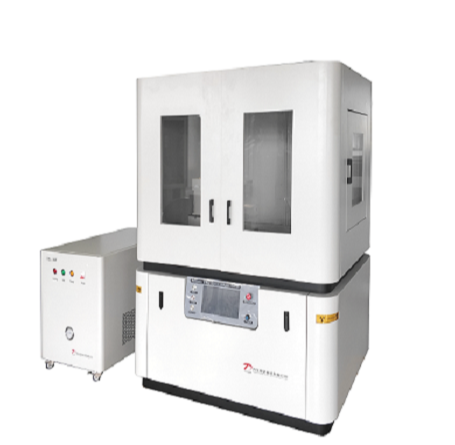
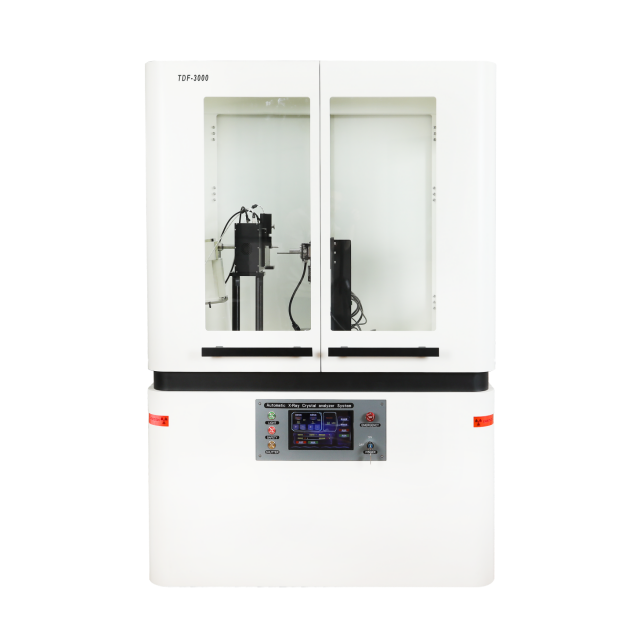
 Diffractometer1. The accuracy of Diffractometer is high. 2. The application range of Diffractometer is wide. 3. Diffractometer is easy to operate, convenient and efficient.More
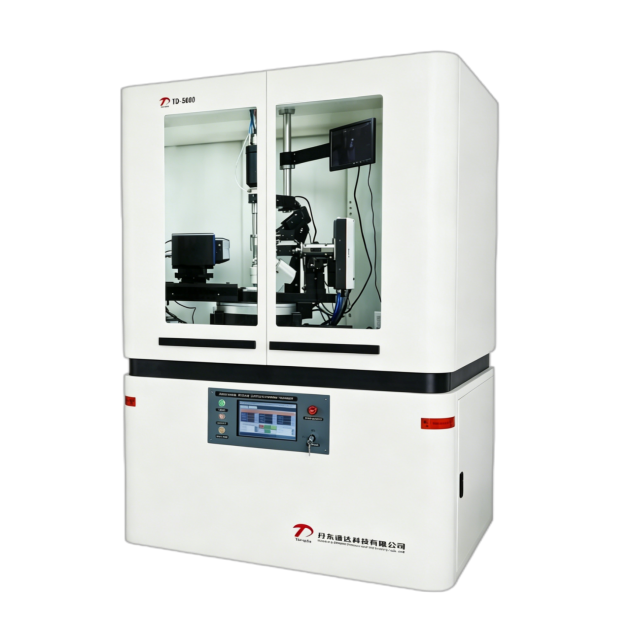
- Single Crystal XRD1.The single crystal machine adopts PLC control technology. 2.Modular design, accessories plug and play. 3.Electronic lead door interlocking equipment with double protection. 4.Single crystal X-ray tube: a variety of targets can be selected, such as Cu, Mo,etc. 5. Single crystal adopts four-circle concentric technology to ensure that the center of no goniometer remains unchanged.More
- Series X-ray Crystal Analyzer1. X-ray instrument is easy to operate and fast to detect. 2. X-ray instrument is accurate and reliable, with excellent performance. 3. X-ray instrument has various functional accessories to meet the needs of different testing purposes.More
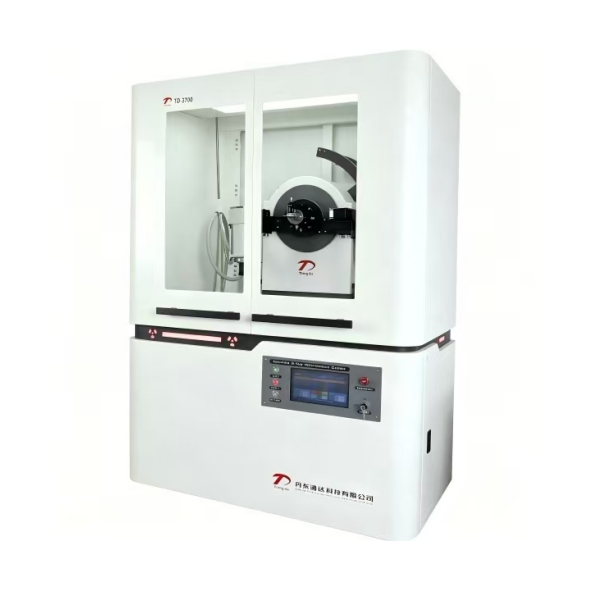
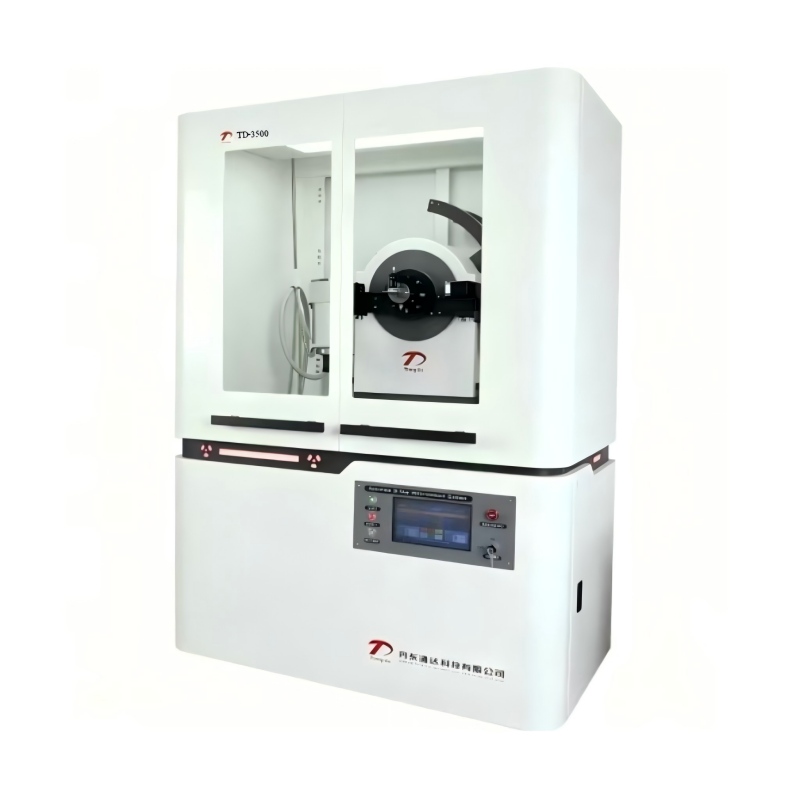
- Powder Diffractometer1. Detector type: Array detector or SDD detector; 2. PLC automatic control calculus, Integration mode conversion, PLC automatically performs PHA, dead time correction 3.Sample measurement type: powder sample, liquid samples, melt-state samples, viscous samples, loose powders, bulk solid samples 4.Available with a variety of diffractometer accessories 5.Maximum output powder: 3kWMore
Contact us
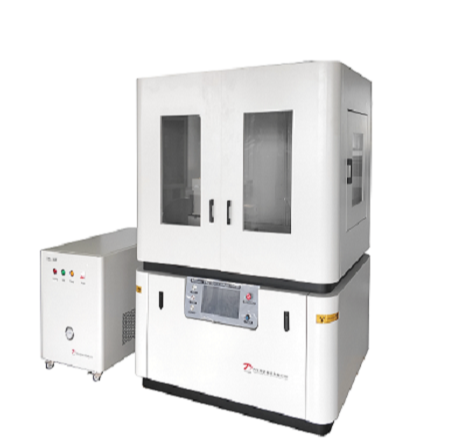
X-ray absorption fine structure XAFS
- Tongda
- Liaoning, China
- 1—2 months
- 100 units per year
| Parameter | Description | |
| Comprehensive Performance | Energy Range | 4.5-25keV |
| Spectrum Acquisition Mode | Transmission Mode | |
| Photon Flux at the Sample | >4×10⁶ photons/(s·eV) | |
| Energy Resolution | XANES:0.5-1.5eV EXAFS:1.5-10eV | |
| X-ray Path | Helium purge path to minimize air absorption | |
| Repeatability | Reproducible energy drift < 50 meV | |
| Structure | The dual Rowland circle configuration eliminates the need for light source switching during XAFS measurements. Utilizing a single dedicated XAFS X-ray source to generate a dual X-ray beam, the system provides two energetically monochromatic X-rays through dual Rowland circles and dual monochromators. This enables simultaneous characterization of two metal elements within the same sample, permitting parallel analysis of the local atomic structures of both metallic elements. | |
| X-ray Source | Power | 2.0 kW; High voltage: 10-40 kV; Current: 1-50 mA |
| Target | Standard with W/Mo targets; other target materials available as options | |
| Monochromator | Type | Spherical analyzer crystal with 500 mm radius of curvature and 102 mm size |
| Detector | Type | Large-area SDD with a 150 mm² active area |
| Additional Configurations | Sample Changer | 18-position sample changer for continuous automated testing of multiple samples |
| In Situ Sample Cell | In situ cells for various conditions: electrocatalysis, temperature-varying, multiphysics fields, and mechanical testing | |
| Analyzer Crystal | Specialized crystal monochromator for specific-element analysis |
Core Advantages:
Highest Photon Flux: Our product delivers a photon flux exceeding 4,000,000 photons/s/eV, offering spectrum acquisition efficiency several times higher than comparable systems. This enables data quality on par with synchrotron radiation sources.
Exceptional Stability: The instrument features excellent monochromatic light intensity stability, with variations of less than 0.1%. Reproducible energy drift during repeated acquisitions is maintained below 50 meV.
1% Detection Limit: The combination of high flux, superior optical path optimization, and exceptional source stability ensures the acquisition of high-quality EXAFS data, even for elemental concentrations as low as 1%.
Instrument Principle:
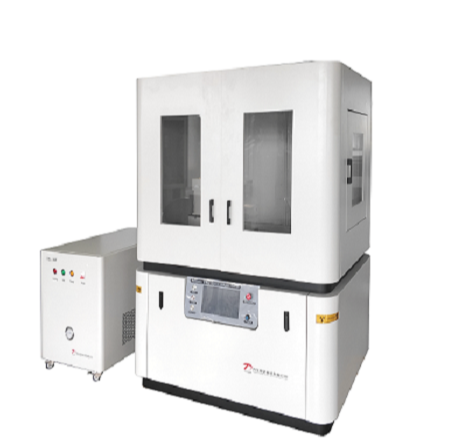
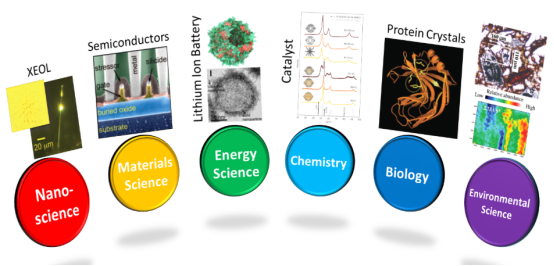
The X-ray Absorption Fine Structure (XAFS) spectrometer is a powerful tool for investigating the local atomic and electronic structure of materials. It is widely applied across various prominent fields, including catalysis, energy research, and nanoscience.
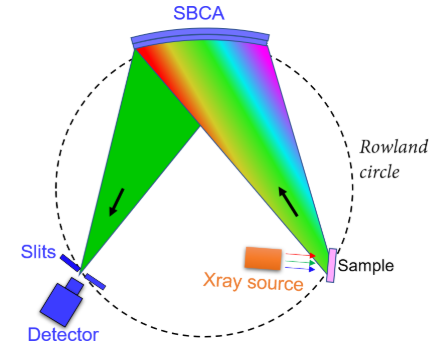
Laboratory Monochromator XES Testing Geometry
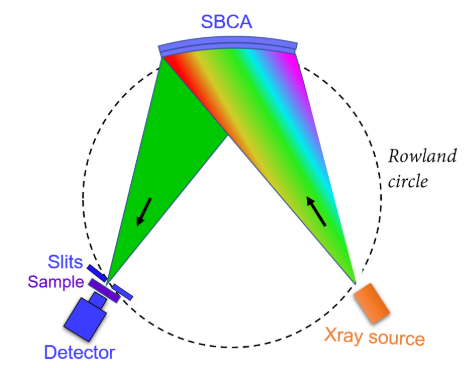
Laboratory Monochromator XAFS Testing Geometry
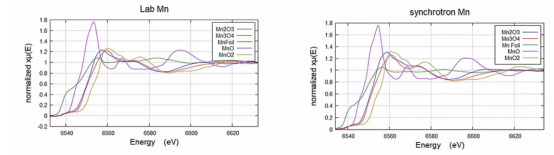
Manganese (Mn) Data and Mn K-edge XAFS Data: Consistent with Synchrotron Radiation Source Quality

Kβ Emission Spectrum Data of Iron (Fe) Sample: Core-to-Core XES and Valence-to-Core XES
Test Data
Foil EXAFS Data

Applications
This XAFS spectrometer finds wide-ranging applications, empowering clients to make breakthroughs across multiple fields:
New Energy: Used in the study of fuel cells, hydrogen storage materials, lithium-ion batteries, etc. It can analyze the dynamic changes in the valence state and coordination environment of central atoms during catalytic processes.
Industrial Catalysis: Applicable to research areas like nanoparticle catalysis and single-atom catalysis. It can characterize the morphology of catalysts on supports and their interactions with the support material.
Materials Science: Employed for the characterization of various materials, the study of complex systems and disordered structures, as well as investigating the properties of surface and interface materials.
Environmental Science: Can be utilized to analyze heavy metal contamination in samples such as soil and water, determining the valence state and concentration of elements.
Biomacromolecules: Can be used to study the local atomic structure around metal centers in metallobiomolecules .
About us
Since 2013, Tongda Technology has established a strategic partnership with the research group led by Academician Chen Xiaoming of the Chinese Academy of Sciences. The jointly established expert workstation has provided a solid research foundation for the company to continuously deepen its presence in the field of X-ray analysis. As the lead contractor of the "Major Scientific Instrument and Equipment Development Project" initiated by the Ministry of Science and Technology, the company collaborated with seven research institutions, including Sun Yat-sen University and the Shenyang Institute of Computing Technology under the Chinese Academy of Sciences, over eight years of coordinated efforts. In 2021, it successfully launched the first domestically produced X-ray single crystal diffractometer with completely independent intellectual property rights, breaking the long-standing reliance on imported instruments in this field.
In terms of talent structure, the proportion of R&D personnel within the company reaches 30%, significantly surpassing the industry average. Regarding intellectual property, the company has accumulated 23 patents and 7 software copyrights to date. From a product portfolio perspective, it has established a comprehensive X-ray analytical instrument product matrix covering the TD series diffractometers, benchtop diffractometers, X-ray fluorescence spectrometers, single crystal diffractometers, crystal orienters, and crystal analyzers.
On the technology integration front, the Tongda AI fully automatic diffractometer deeply integrates artificial intelligence with robotics technology. The equipment is equipped with a high-precision robotic arm that can automatically handle the retrieval and testing of various sample types, including powders, thin films, and bulk materials. Through a mobile app, remote operation is enabled, and the automatic door opening and closing system significantly enhances both safety and convenience during operation. The modular architecture also provides ample flexibility for future functional expansion and maintenance upgrades.