

Products

Featured products

  • Diffractometer
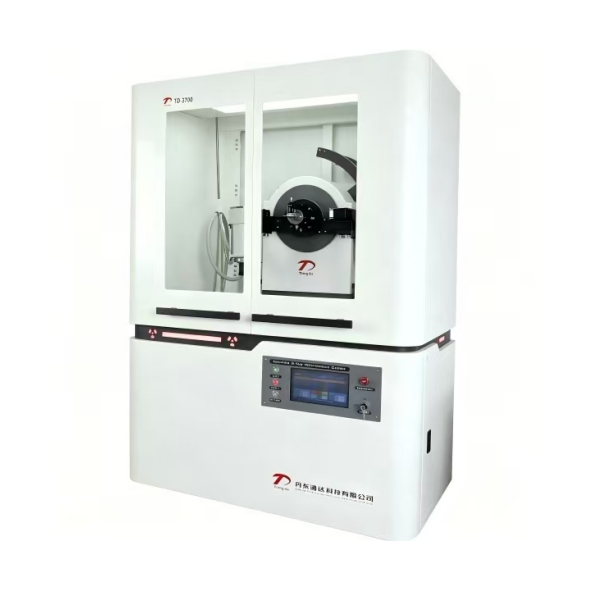
    Diffractometer
    1. The accuracy of Diffractometer is high. 2. The application range of Diffractometer is wide. 3. Diffractometer is easy to operate, convenient and efficient.
    More
  • Single Crystal XRD
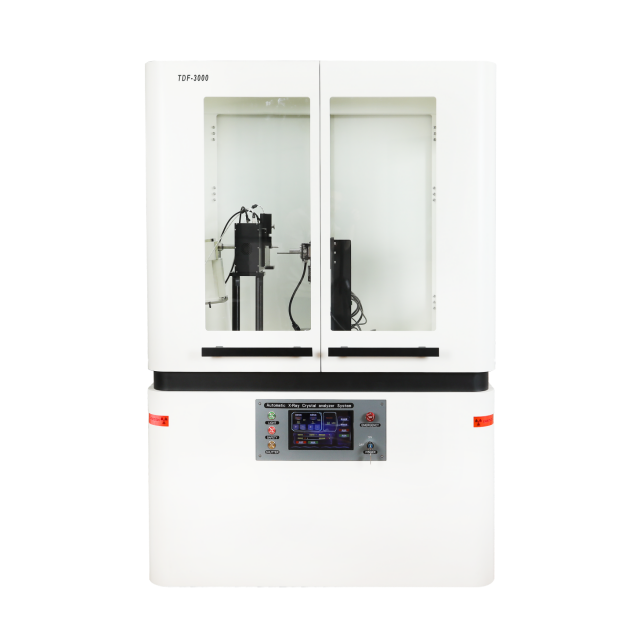
    Single Crystal XRD
    1.The single crystal machine adopts PLC control technology. 2.Modular design, accessories plug and play. 3.Electronic lead door interlocking equipment with double protection. 4.Single crystal X-ray tube: a variety of targets can be selected, such as Cu, Mo,etc. 5. Single crystal adopts four-circle concentric technology to ensure that the center of no goniometer remains unchanged.
    More
  • A 2D X-ray Diffractometer
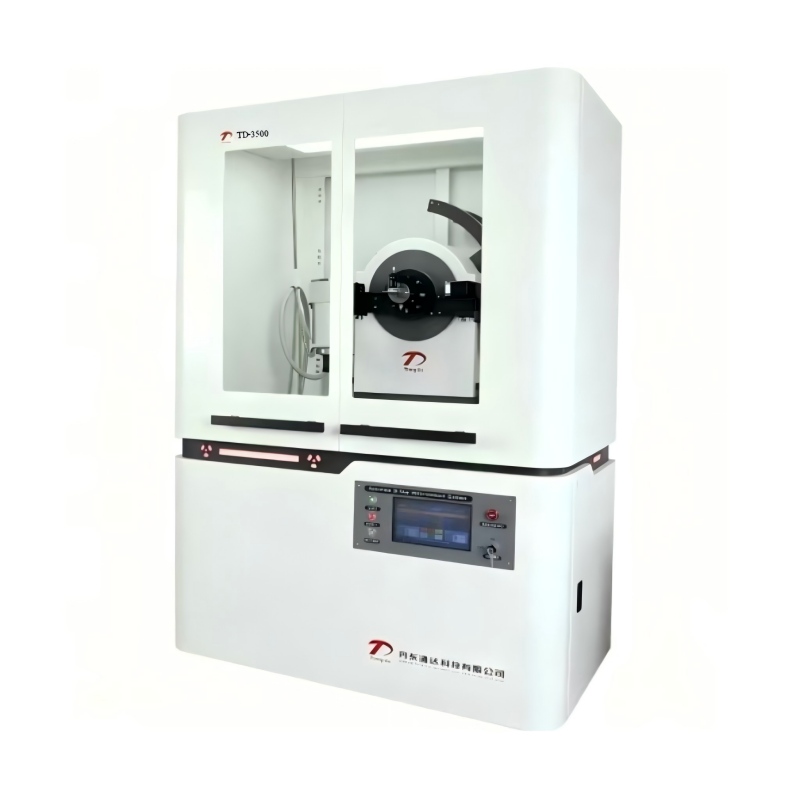
    A 2D X-ray Diffractometer
    Advantages: Continuously adjustable X-ray penetration depth Capability to observe the distribution of crystal planes with different orientations Analysis of orientation distribution in samples such as fibers, thin films, and powders Examination of structural characteristics like lattice distortion and crystallite size
    More
  • X-ray Diffraction Residual Stress Analyzer
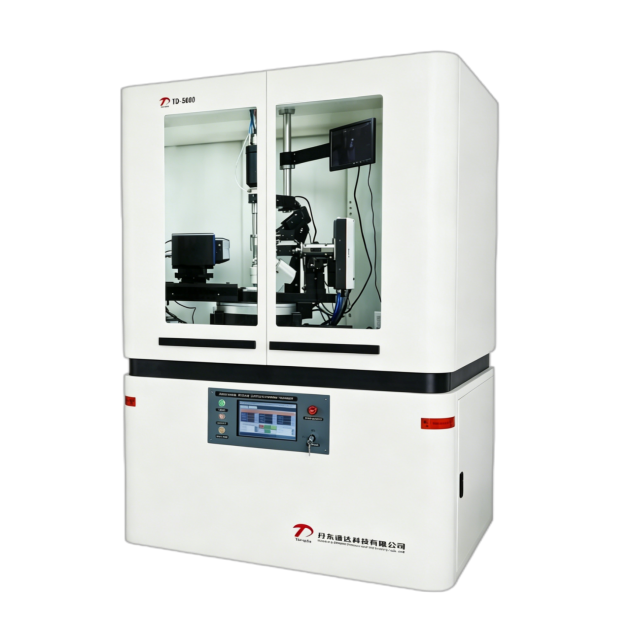
    X-ray Diffraction Residual Stress Analyzer
    TD-RSD XRD Residual Stress Analyzer ±7MPa accuracy, dual-detector innovation, full-auto operation & powerful software. Optimize processes, enhance product reliability. Compact, efficient, leading solution.
    More

Contact us

X-ray diagnostic technology for battery materials

2024-05-06

NREL researchers have utilized state-of-the-art X-ray diagnostic capabilities as a non-destructive method to examine the composition and structure of battery materials.
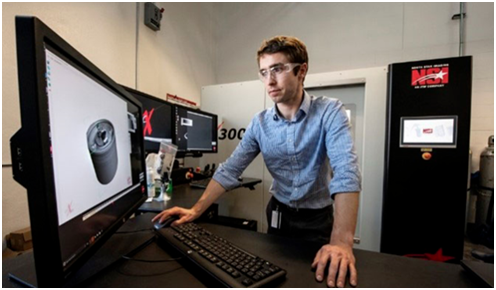
X-ray

X-ray diagnostic technology provides a way to examine the properties of lithium-ion battery materials. Because they are non-destructive, X-ray can detect changes occurring in real time without causing significant interference to the system.
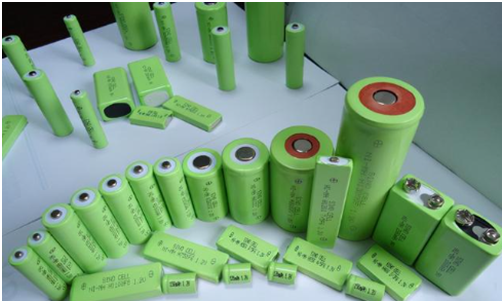
X-ray diffraction

NREL has a suite of advanced X-ray diagnostic capabilities, including X-ray computed tomography, X-ray diffraction(XRD) , X-ray fluorescence and X-ray spectroscopy systems.


The NREL researchers used synchrotron radiation XRD and XRD-CT to quantify the lithium and degradation gradiants across the entire electrode depth during rapid charging, as well as the degradation of individual electrode particles. New insights have been gained into the extent of chemical heterogeneity of battery electrodes over their lifetimes and how this heterogeneity adversely affects battery performance.
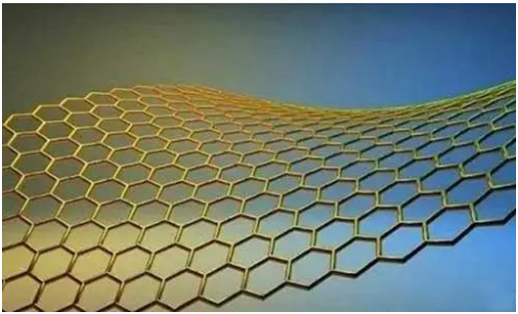
non-destructive

NREL researchers used high-speed synchrotron X-ray radiography to understand the failure mechanisms of lithium-ion batteries under a range of mechanical to thermal abuse situations. NREL has compiled an open source battery failure database that provides insight to researchers and engineers around the world.


Get the latest price? We will reply as soon as possible (within 12 hours)

top