

X-ray Absorption Spectroscopy (XAS) reveals information about the local chemical environment and electronic structure of materials by analyzing their absorption edge structure in response to X-rays. The core of experimental design lies in the uniformity of sample preparation and precise control of measurement parameters. The following are the key procedural guidelines:
I. Optimization of Sample Preparation
Powder Samples
Grinding and Pelletizing: Grind the sample to a particle size <10μm to reduce granularity effects. Use a hydraulic press to form thin pellets with a diameter of 5-10mm and a thickness of 0.5-1mm under 10-20MPa pressure, ensuring a transmission rate >30%. For example, avoid excessive grinding for metal oxide samples to prevent introducing lattice distortions.
Dilution and Mixing: For strongly absorbing elements (e.g., Fe, Cu), dilute to an appropriate concentration (typically 1-5 wt%) using an inert matrix (e.g., boric acid, cellulose) to prevent distortion of pre-edge features due to self-absorption effects.
Thin Film / Liquid Samples
Thin Film Deposition: Prepare uniform films with a thickness <500nm using methods like magnetron sputtering or spin coating to avoid interference from multilayer film interfaces.
Liquid Encapsulation: Encapsulate liquid samples using polyimide film (e.g., Kapton), controlling the liquid layer thickness to <1mm to reduce scattering background.
Environmental Control
Samples should be prepared in an inert atmosphere (e.g., Ar glove box) to avoid oxidation or hydrolysis. For example, lithium-ion battery cathode materials require complete isolation from CO₂ and H₂O throughout the process.
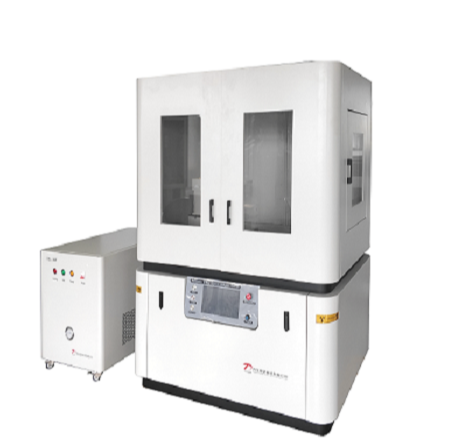
II. Optimization of Measurement Parameters
Energy Scan Range
Pre-edge Region: Scan 50-100eV towards the lower energy side centered on the absorption edge energy (E₀) to capture pre-edge features.
Extended Region (EXAFS): Scan up to E₀+1000eV towards the higher energy side, with step sizes gradually increasing from 0.5eV (near-edge region) to 5eV (far-edge region).
Beam Parameters
Beam Size: Select a size from 100μm×100μm to 1mm×1mm based on sample uniformity. A smaller spot size improves spatial resolution but requires longer acquisition times.
Monochromator Resolution: Use Si(111) or Si(311) monochromators with an energy resolution ΔE/E≈10⁻⁴ to balance resolution and flux.
Data Acquisition Strategy
Multiple Scan Averaging: For weak signal samples (e.g., dilute solutions), average 10-20 scans to improve the signal-to-noise ratio.
Temperature Control: Low-temperature experiments (e.g., 10K) require a liquid helium flow cryostat to reduce the impact of thermal vibrations on EXAFS amplitudes.
III. Verification and Standardization
Use standard samples (e.g., metal foils) to calibrate the energy axis, ensuring differences in E₀ are <0.1eV.
Verify EXAFS data quality through Fourier transform analysis; the position of the main peak should deviate from the theoretical bond length by <0.02Å.
Well-designed sample preparation and parameter control significantly enhance the reliability of XAS experiments and the accuracy of chemical information analysis, providing crucial data support for research in fields such as catalysis and energy materials.