

Products

Featured products

  • Diffractometer
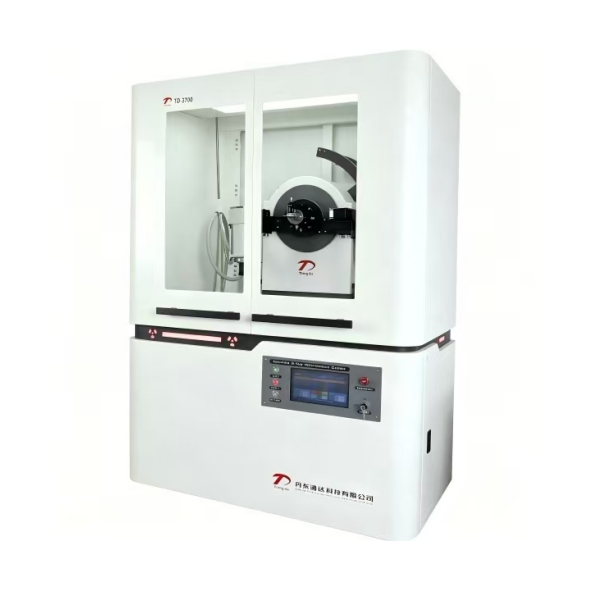
    Diffractometer
    1. The accuracy of Diffractometer is high. 2. The application range of Diffractometer is wide. 3. Diffractometer is easy to operate, convenient and efficient.
    More
  • Single Crystal XRD
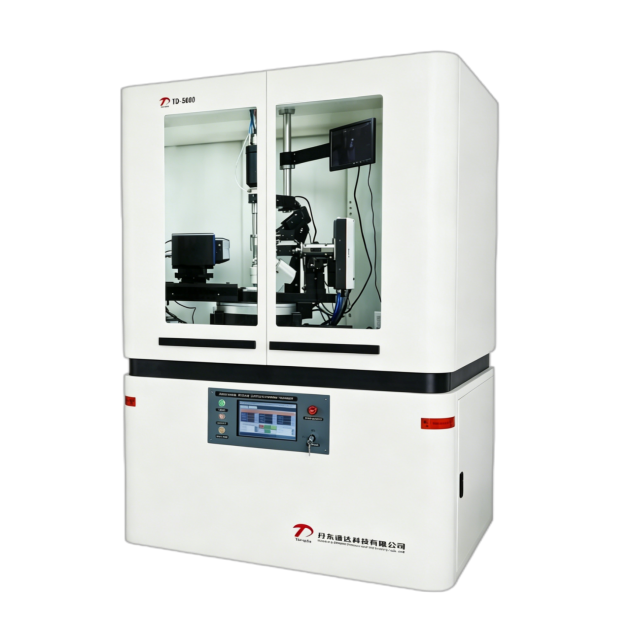
    Single Crystal XRD
    1.The single crystal machine adopts PLC control technology. 2.Modular design, accessories plug and play. 3.Electronic lead door interlocking equipment with double protection. 4.Single crystal X-ray tube: a variety of targets can be selected, such as Cu, Mo,etc. 5. Single crystal adopts four-circle concentric technology to ensure that the center of no goniometer remains unchanged.
    More
  • Series X-ray Crystal Analyzer
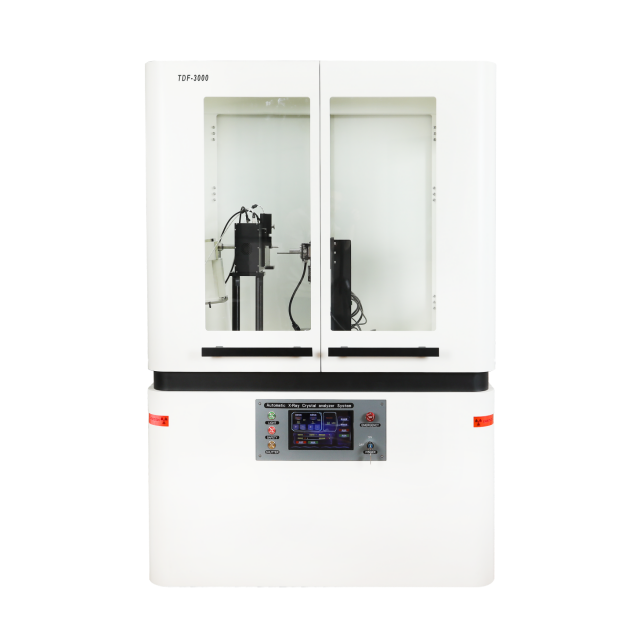
    Series X-ray Crystal Analyzer
    1. X-ray instrument is easy to operate and fast to detect. 2. X-ray instrument is accurate and reliable, with excellent performance. 3. X-ray instrument has various functional accessories to meet the needs of different testing purposes.
    More
  • Powder Diffractometer
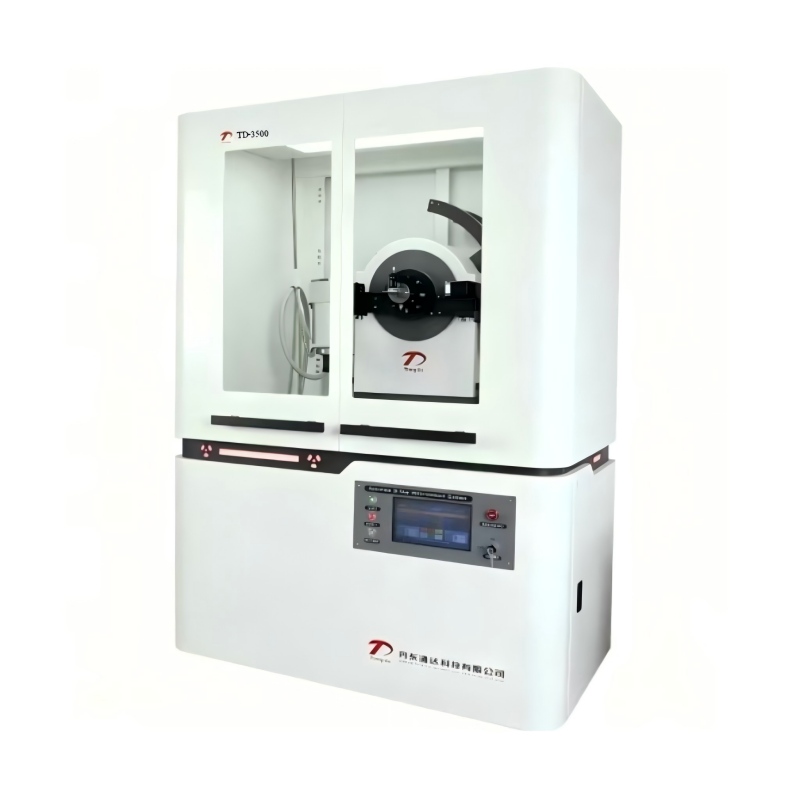
    Powder Diffractometer
    1. Detector type: Array detector or SDD detector; 2. PLC automatic control calculus, Integration mode conversion, PLC automatically performs PHA, dead time correction 3.Sample measurement type: powder sample, liquid samples, melt-state samples, viscous samples, loose powders, bulk solid samples 4.Available with a variety of diffractometer accessories 5.Maximum output powder: 3kW
    More

Contact us

SAXS application and development trend

2024-03-13

Small-angle X-ray scattering is the diffuse scattering of electrons to X-rays in the small Angle range near the original beam. Small-angle scattering occurs in all materials with non-uniform electron density on the nanometer scale. 

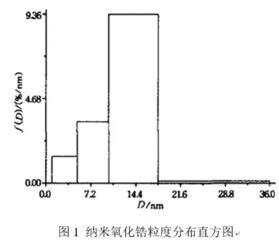
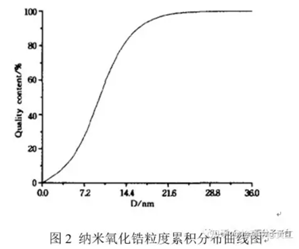
1.Application of SAXS in particle size distribution SAXS is widely used to determine the particle size and particle size distribution of nano-powders. The particle size analysis results reflect neither grains nor aggregates, but the size of primary particles. The particle size distribution of nanometer zirconia was measured by X-ray small Angle scattering method. The histogram of particle size distribution was obtained by testing and data processing.
X-raySAXS

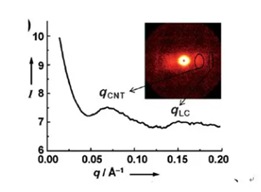
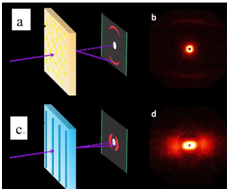
2.Orientation characterization SAXS can intuitively characterize materials with orientation. FIG. 4 and 5 represent the SAXS and schematic diagram of the synthesized oriented carbon nanotubes. As can be seen from the SAXS diagram, the two bright spots with left and right symmetry indicate the high orientation of the carbon nanotubes, and the peak position corresponds to the size structure of the carbon nanotubes, while the randomly dispersed carbon nanotubes do not have such patterns.
X-raySAXS

So far, SAXS technology has been successfully applied to some aspects of microstructure characterization of materials, and it is of certain theoretical and practical significance to further study the theoretical methods and applications of SAXS.


Get the latest price? We will reply as soon as possible (within 12 hours)

top