




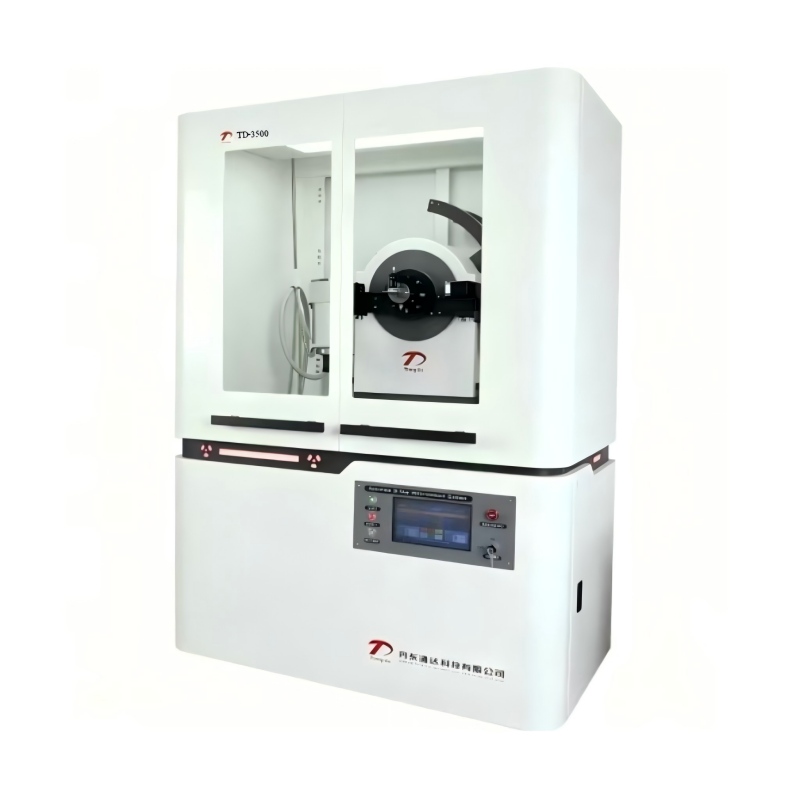
X-ray crystallography is a technique used to determine the atomic and molecular structure of a crystal, where the crystal structure causes the incident X-ray beam to diffract into many specific directions. By measuring the Angle and intensity of these diffracted beams, crystallographers can produce a three-dimensional image of the electron density within the crystal. Based on this electron density, the average position of the atoms in the crystal can be determined, as well as their chemical bonds, their crystallographic obstacles, and various other information.
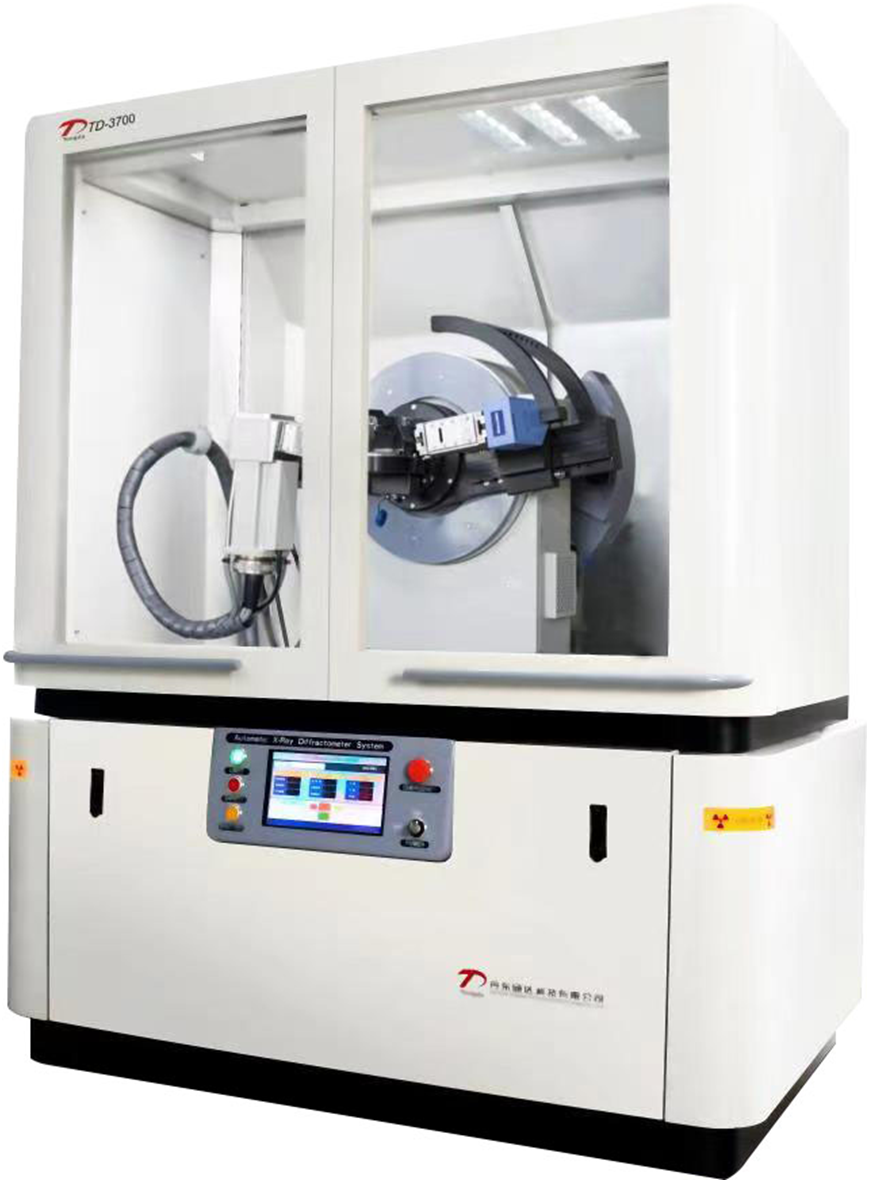
Because many materials can form crystals - such as salts, metals, minerals, semiconductors, and a variety of inorganic, organic, and biomolecules - X-ray crystallography has become the basis for developments in many fields of science. In its early decades of use, the method determined the size of atoms, the length and type of chemical bonds, and the atomic-level differences between various materials, especially minerals and alloys. The method has also revealed the structure and function of many biomolecules, including vitamins, drugs, proteins and nucleic acids such as DNA. X-ray crystallography remains the primary method for characterizing the atomic structure of new materials and identifying materials that look similar by other experiments. X-ray crystal structures can also explain unusual electronic or elastic properties of materials, illuminate chemical interactions and processes, or serve as a basis for designing anti-disease drugs.
In single-crystal X-ray diffraction measurements, the crystal is mounted on an goniometer. The goniometer is used to position the crystal in the selected direction. The crystal is illuminated with a fine focused monochromatic X-ray beam, which produces a diffraction pattern of regularly spaced points, called reflection. The mathematical method of Fourier transform is used to convert two-dimensional images taken at different orientations into a three-dimensional model of the electron density within the crystal, combined with known chemical data of the sample. If the crystal is too small or the internal structure is not uniform enough, it may result in resolution (blurring) and even error.
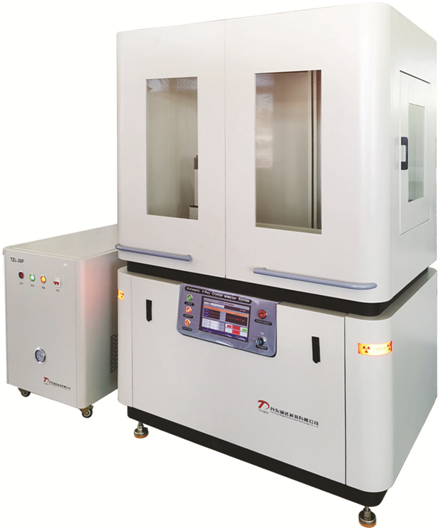
X-ray crystallography is related to several other methods of determining the structure of atoms. Similar diffraction patterns can be produced by scattering electrons or neutrons, which are also explained by the Fourier transform. If a single crystal of sufficient size cannot be obtained, a variety of other X-ray methods can be applied to obtain less detailed information; These methods include fiber diffraction, powder diffraction, and (if the sample is uncrystallized) small-angle X-ray scattering (SAXS). If the material under study is obtained only in the form of nanocrystal powder or has poor crystallinity, electronic crystallography methods can be applied to determine the atomic structure.
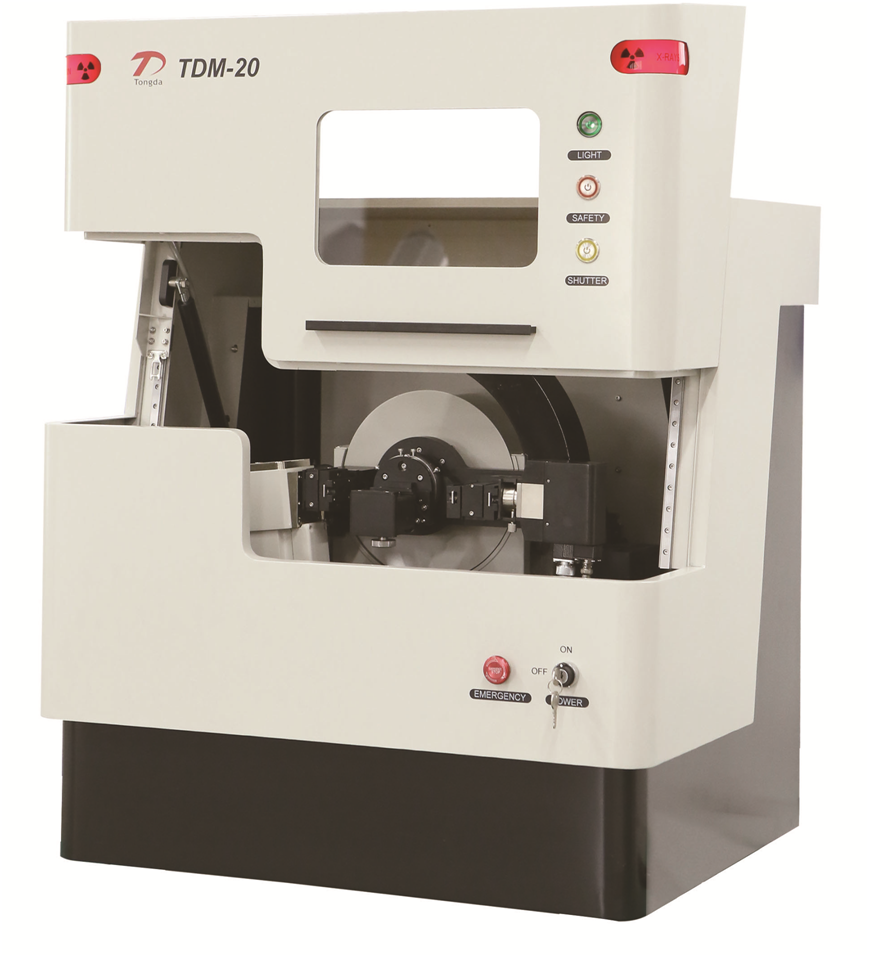
For all of the above X-ray diffraction methods, scattering is elastic; The scattered X-rays have the same wavelength as the incident X-rays. In contrast, inelastic X-ray scattering methods can be used to study the excitation of samples, such as plasmons, crystal field and orbital excitation, magnetons and phonons, rather than the distribution of atoms.