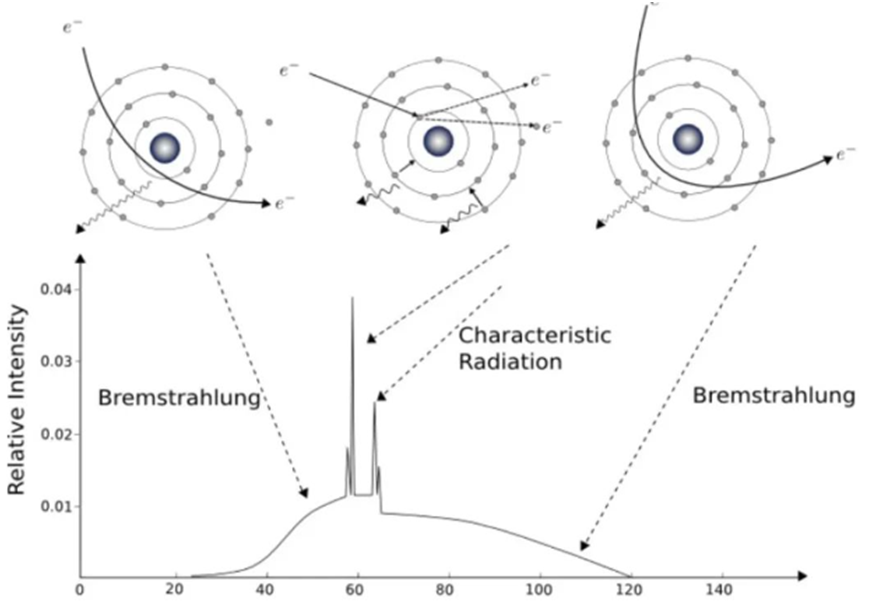





X-rays are a type of electromagnetic radiation widely used in medical and industrial fields. Although most X-rays are produced artificially, there are also some phenomena in nature that produce X-rays.
一、Labour
1.X-ray tube
X-ray tubes are the most common method of producing X-rays. It works by accelerating electrons from the cathode to the anode, and the electrons collide with the anode to produce X-rays. The method is widely used in medical and industrial fields.
2.Betameter
Synchrotron radiation is a particle accelerator that uses a magnetic field to bend the trajectories of electrons. When electrons are accelerated and directed towards the target material, they produce X-rays. Synchrotron radiation is a high-intensity and focused X-ray source that is widely used in science and industry.
3. Linear accelerator
Linear accelerators use electric fields to accelerate electrons to high energies. When electrons are pointed in the direction of the target material, they produce X-rays. Linear accelerators are commonly used in medical radiation therapy.
4. Radioisotope X-ray generator
Radioisotope X-ray generators produce X-rays from the radioactive decay of certain isotopes. This method is commonly used in field portable X-ray machines because it does not require an external power source.
二、Nature
1. Cosmic X-rays:
High-energy phenomena such as supernova explosions, black holes and neutron stars naturally produce X-rays in space. These X-rays are called cosmic X-rays and can be observed using telescopes and other astronomical instruments.
2. Earth's atmosphere:
The Earth's atmosphere produces X-rays through the interaction of cosmic rays with the atmosphere. These X-rays are called atmospheric X-rays and can be observed using high-altitude balloons and aircraft.
3. Radioactive decay:
Certain naturally occurring radioactive materials, such as uranium and thorium, emit X-rays when they decay. These X-rays are called natural radioactive X-rays and can be detected on the Earth's surface and in rocks.
4. Lightning:
Lightning is a natural phenomenon that produces X-rays. When lightning strikes, electrons collide with ions, producing X-rays.