

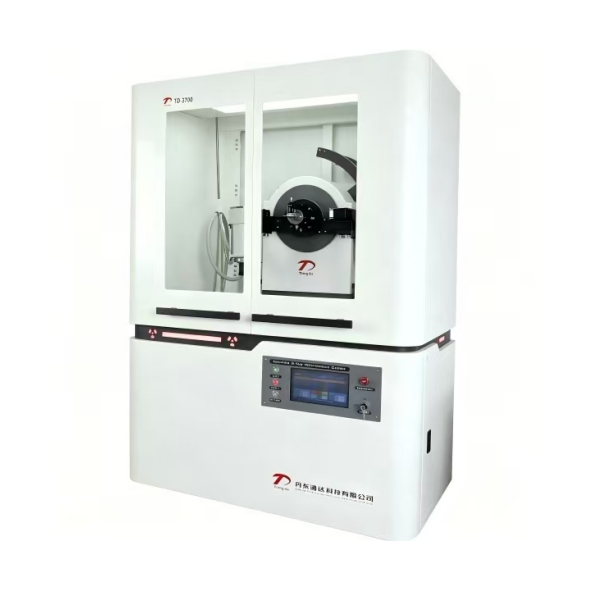
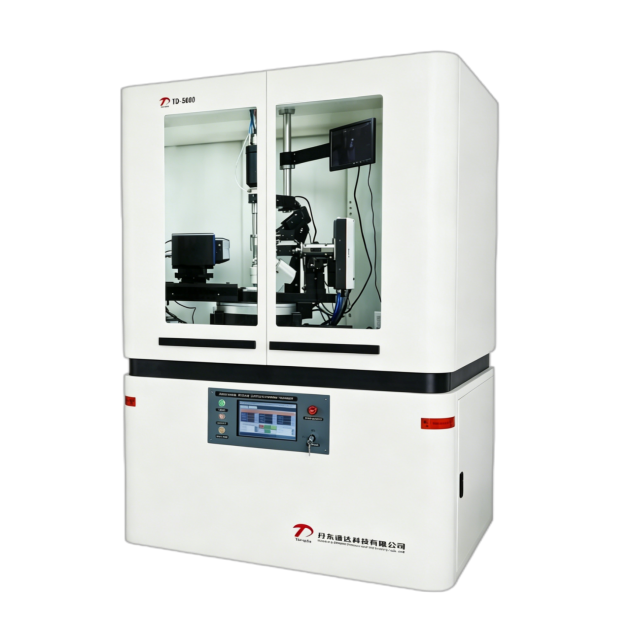
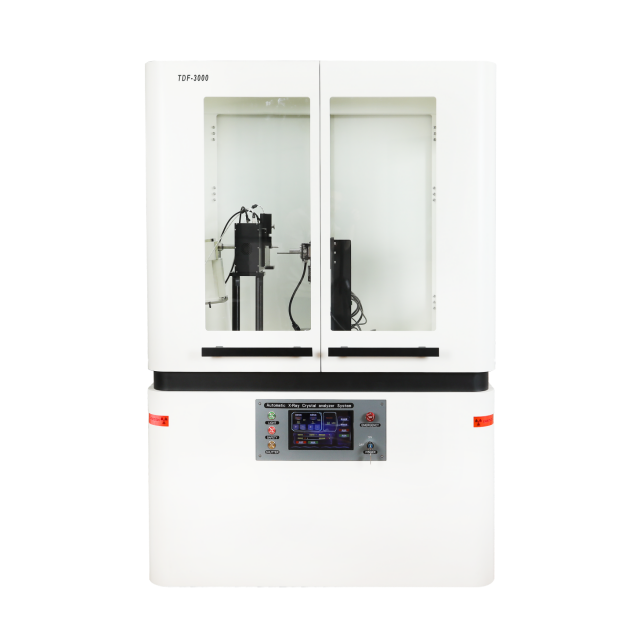
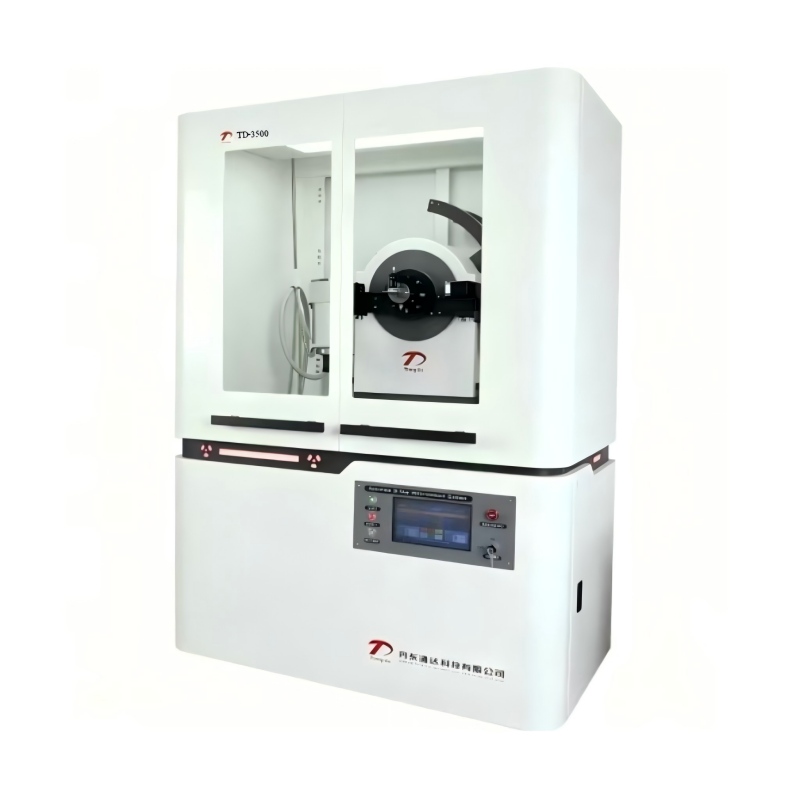
In materials science, physics, chemistry, and related research fields, X-ray diffractometers are widely used instruments for analyzing the crystal structure and phase composition of materials. To ensure the accuracy and reliability of experimental data, precise calibration of the XRD instrument and effective data analysis are essential.
The TD-3700 X-ray diffractometeroperates based on Bragg's law, which states that when X-rays strike a periodic crystal lattice, coherent scattering occurs, and the scattered waves interfere constructively at specific directions, forming diffraction. By measuring the diffraction angles and intensities, the interplanar spacing and crystal structure can be determined.
Before performing XRD testing, the instrument must be rigorously calibrated. This includes verifying the X-ray wavelength, adjusting the detector position, and ensuring proper sample positioning. It is critical to check that the X-ray source and detector operate synchronously and that their geometric relationship is correct. In addition, the sample surface should be flattened to obtain a uniform and consistent diffraction pattern.
Another key point in the calibration process is determining the so-called "zero point," i.e., the direct beam that has not been diffracted by the sample. This zero point serves as the reference for all subsequent measurements, and its accuracy directly affects the reliability of the analysis results. Typically, instrument calibration can be verified by measuring a standard reference sample under the same conditions.
Once the XRD instrument is calibrated, data collection can begin. During the data analysis stage, researchers typically use specialized software to process diffraction patterns, such as Jade, MDI JADE, SearchMatch, etc. These programs help identify and match standard diffraction patterns, thereby determining the crystalline phases present in the sample.

However, data analysis goes far beyond simple pattern matching; it also requires detailed analysis of diffraction peak positions, intensities, and shapes. For example, calculating the area or integrated intensity of diffraction peaks can provide semi-quantitative information. Furthermore, the Scherrer equation can be used to estimate crystallite size from line broadening analysis, while the Williamson-Hall method can evaluate both microstrain and crystallite size.
In practice, diffraction data can be affected by various factors, such as preferred orientation of the sample, fluorescence background, and the presence of impurity phases. Therefore, these potential influencing factors must be carefully addressed during analysis. Experienced operators adjust analysis parameters according to the specific situation or employ multiple data processing methods to improve the accuracy of the analytical results.

The calibration and data analysis of the TD-3700 X-ray diffractometer are critical steps in the experimental process. Rigorous calibration is the prerequisite for obtaining reliable data, while meticulous data analysis is the means to extract useful information from experimental data. Only by combining the two can the full potential of XRD be realized in modern scientific research, providing solid data support for the advancement of materials science and related fields.