

Products

Featured products

  • Diffractometer
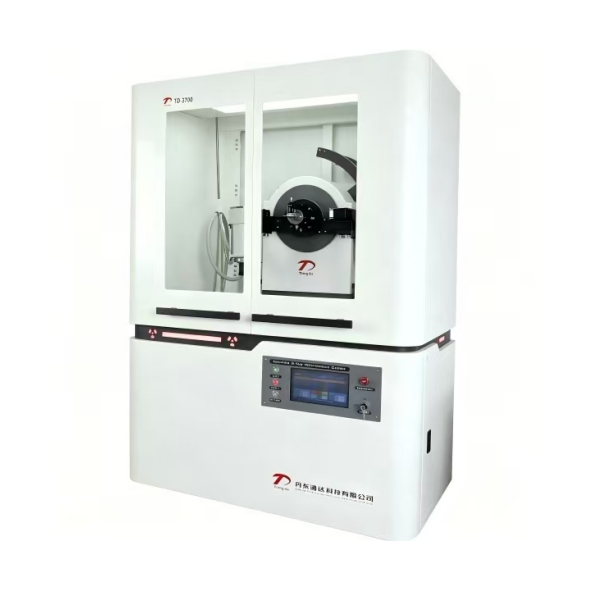
    Diffractometer
    1. The accuracy of Diffractometer is high. 2. The application range of Diffractometer is wide. 3. Diffractometer is easy to operate, convenient and efficient.
    More
  • Single Crystal XRD
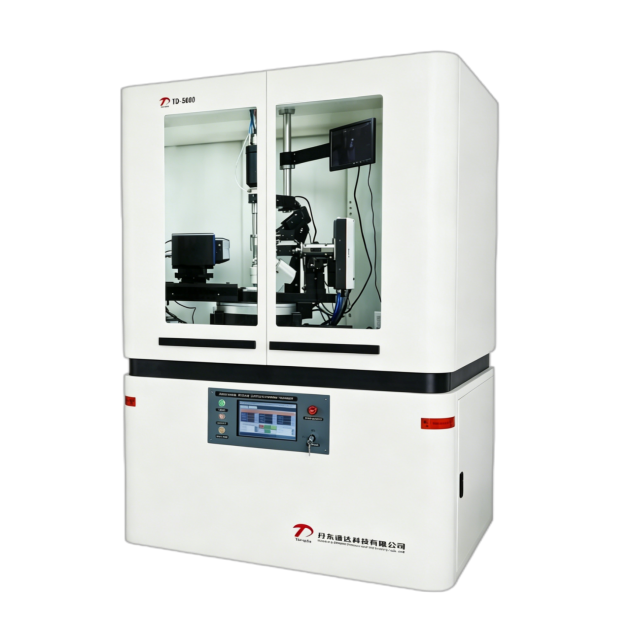
    Single Crystal XRD
    1.The single crystal machine adopts PLC control technology. 2.Modular design, accessories plug and play. 3.Electronic lead door interlocking equipment with double protection. 4.Single crystal X-ray tube: a variety of targets can be selected, such as Cu, Mo,etc. 5. Single crystal adopts four-circle concentric technology to ensure that the center of no goniometer remains unchanged.
    More
  • Series X-ray Crystal Analyzer
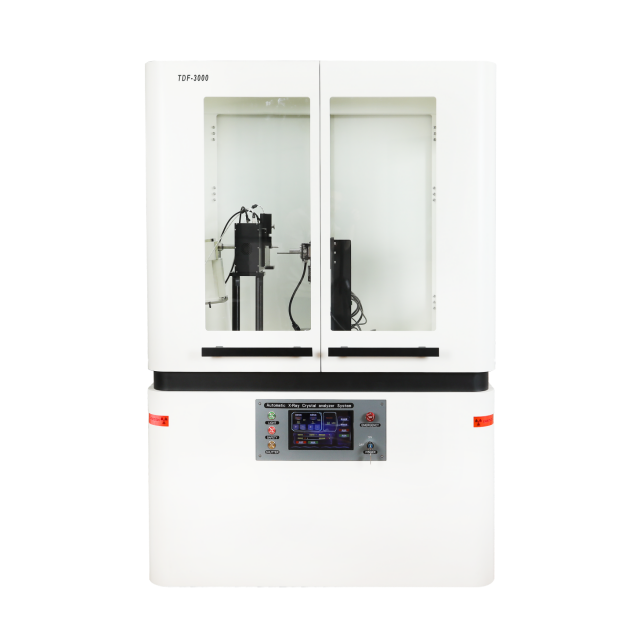
    Series X-ray Crystal Analyzer
    1. X-ray instrument is easy to operate and fast to detect. 2. X-ray instrument is accurate and reliable, with excellent performance. 3. X-ray instrument has various functional accessories to meet the needs of different testing purposes.
    More
  • Powder Diffractometer
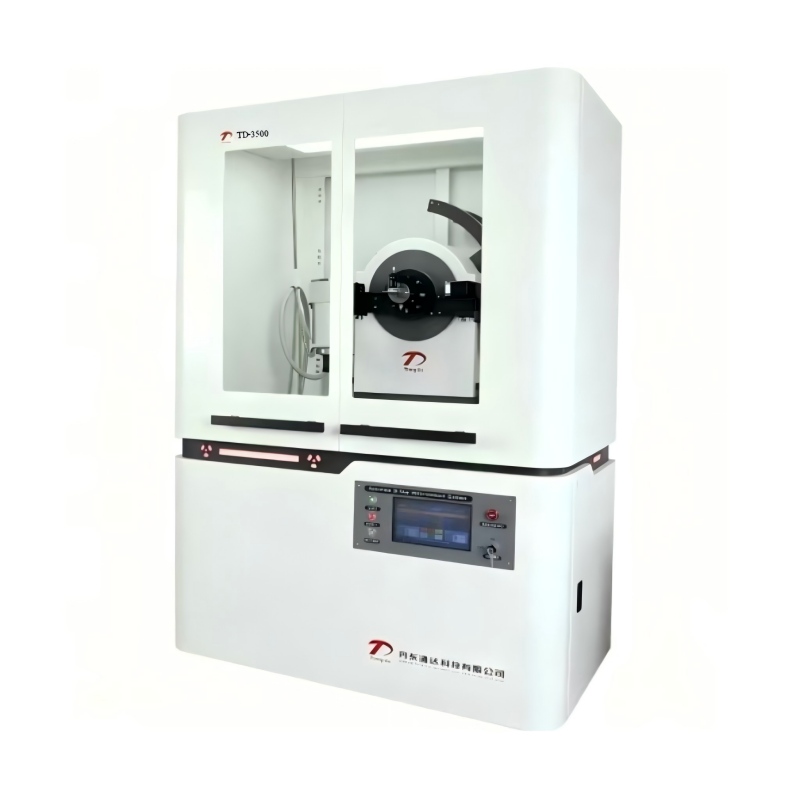
    Powder Diffractometer
    1. Detector type: Array detector or SDD detector; 2. PLC automatic control calculus, Integration mode conversion, PLC automatically performs PHA, dead time correction 3.Sample measurement type: powder sample, liquid samples, melt-state samples, viscous samples, loose powders, bulk solid samples 4.Available with a variety of diffractometer accessories 5.Maximum output powder: 3kW
    More

Contact us

Non-destructive testing technology - X-ray diffraction

2024-06-21

In 1895, the German physicist W.K. Roentgen first discovered the existence of X-rays, so X-rays are also called Roentgen rays. The essence of X-ray is a kind of electromagnetic wave with very short wavelength (about 10-8 ~10-12 m) and great energy, which has wave-particle duality.
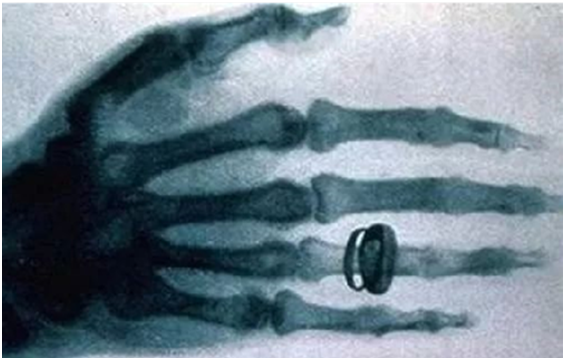
X-ray

Because the X-ray has great energy, when it enters the crystal, the atoms in the crystal will be forced to do periodic motion under the action of the X-ray, so that the secondary wave will be emitted externally in the unit of the atomic ball, and the frequency of the wave is consistent with the incident X-ray, and this process becomes the X-ray scattering.
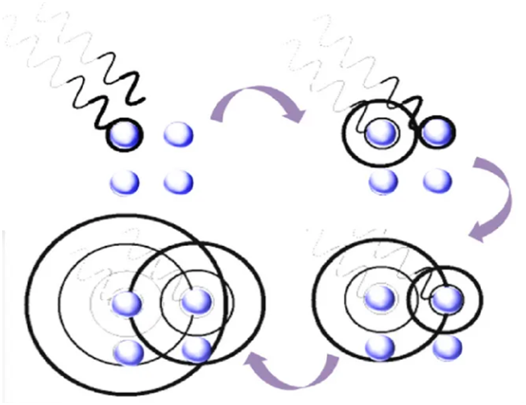
X-ray diffraction

For amorphous materials, because there is no long-range order of atom arrangement in crystal structure, there is only short-range order in a few atomic ranges, so the X-ray diffraction pattern of amorphous materials is some diffuse mantels. However, for crystalline materials, whose atomic arrangement is long ordered in three-dimensional space, the X-ray diffraction pattern only shows intensification peaks at specific locations. 


Generally speaking, the characteristics of a diffraction pattern can be considered to be composed of two aspects: 

1. the distribution law of the diffraction line in space, which is determined by the size, shape and orientation of the cell; 2. The intensity of the diffraction beam - depends on the kind of atoms and their position in the cell.


Get the latest price? We will reply as soon as possible (within 12 hours)

top