

1. When quantitative calculation of XRD data, how to deal with the effects caused by absorption? Or when do we need to think about absorption?
Answer: Basically, with powder diffraction, the absorption problem does not exist. If the sample is finely ground and the difference in particle size is small, the microscopic absorption effect does not exist in powder XRD. If the difference in particle size between different phases in the powder sample is relatively large, more than a few microns, it may cause microscopic absorption, that is, if the particle size is uneven, there is a correction method in JADE. In the WPF window, select "Brindley absorption correction" in the dialog box of wt% fluorescence.
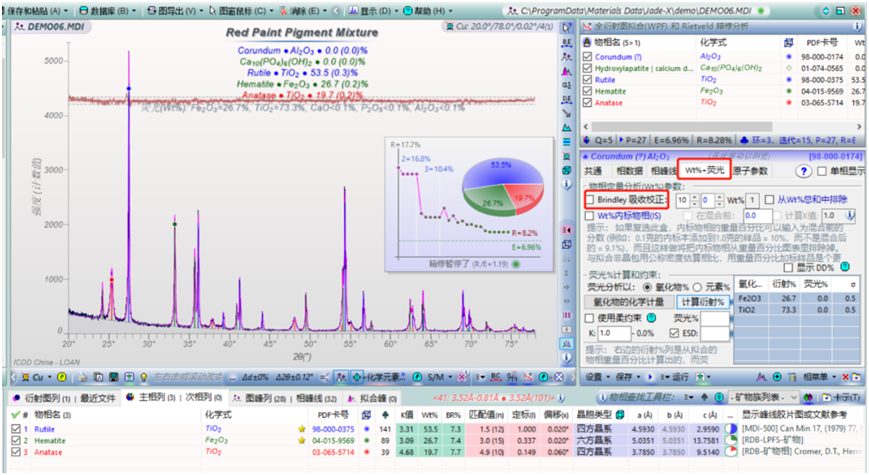
(1) If in the process of grinding the sample, there is a phenomenon such as sample bonding, it is necessary to consider absorption correction.
(2) If the difference in the absorption coefficient (μ) between different phases reaches more than 5 times, the microscopic absorption needs to be considered.
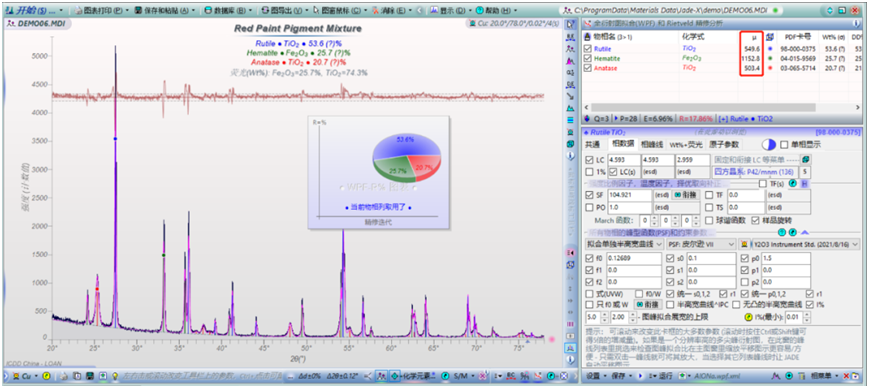
(3) If the size of the sample grinding is less than 1-2 microns, it is basically unnecessary to consider the microscopic absorption.
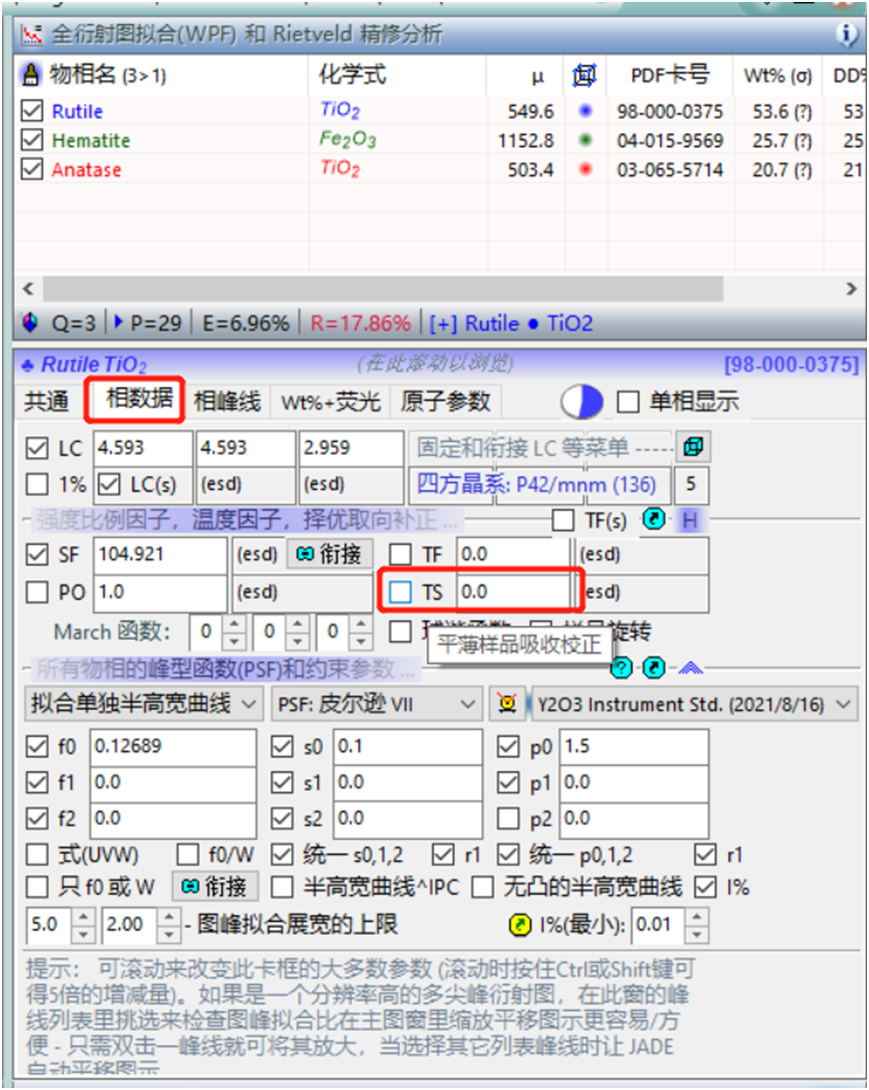
(4) If you use a sample holder without background, you need to consider absorption correction when you scatter a thin layer of powder.
2. How do I determine if the finishing result is optimal?
Answer: (1) First, the derived difference curve should be observed. In JADE, the standard deviation value (±3δ) can be displayed in the difference curve, as shown by the dashed line in the figure below; If the difference curve is within the range of standard deviation, it indicates that the result of refinement is good;
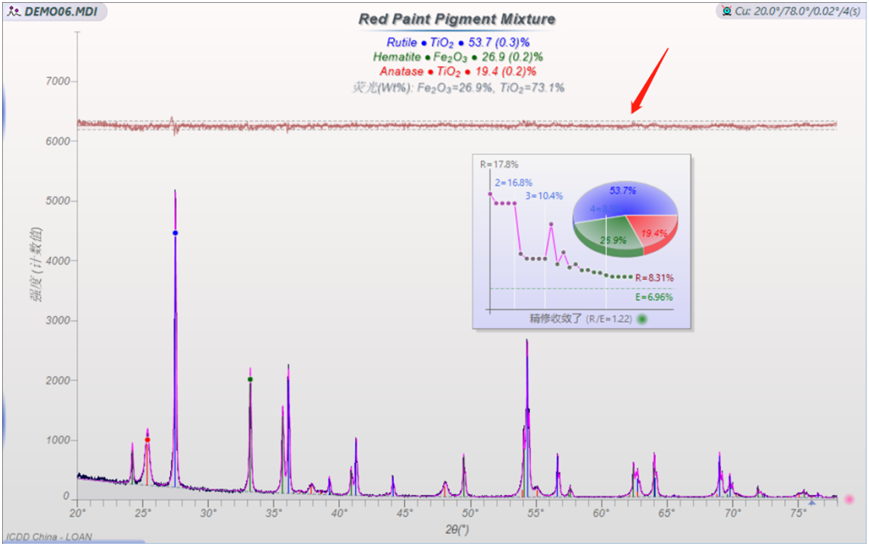
(2) R/E value, E is the minimum expected R value that is Rexp, R is Rwp, generally R/E value less than 2, the result of refinement is relatively good, if R/E less than 1.5 is the ideal state. Of course, the prerequisite is to choose the appropriate phase and structural data, in order to analyze the results more reliable.