



Residual Stress Analysis Capability of Powder Diffractometers
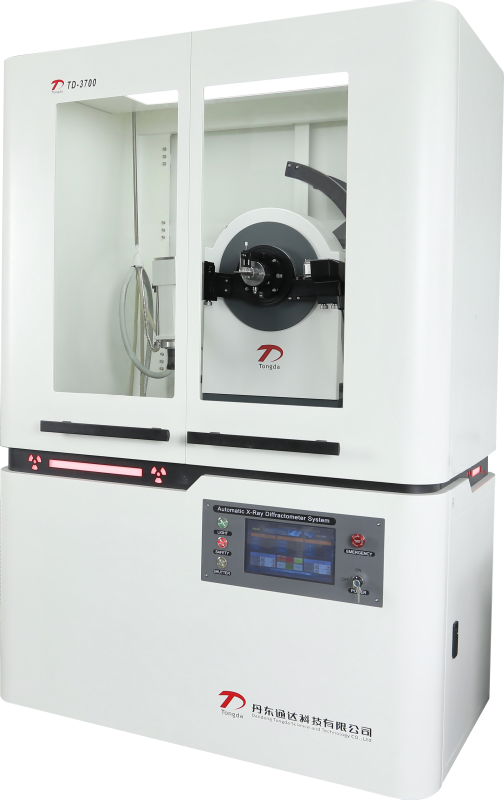
2026-01-19 16:18Powder diffractometers play a vital role in residual stress analysis, with their core function being the non-destructive determination of residual stress states on material surfaces. The following provides a detailed explanation of the residual stress analysis capabilities of powder diffractometers (which typically also encompass other types of X-ray diffraction instruments).
I. Fundamental Principle
The fundamental principle of residual stress analysis using a powder diffractometer is based on the X-ray diffraction method. When residual stress exists within a material, its crystal lattice structure undergoes changes, leading to alterations in the interplanar spacing. This change can be detected through the diffraction effect of X-rays. Specifically, when X-rays irradiate the material at different incident angles, diffraction peaks are generated. The position of these diffraction peaks is directly related to the interplanar spacing. By measuring the shift in the diffraction peak positions, the internal residual strain within the material can be calculated. Subsequently, the residual stress is determined using Hooke's law.
II. Analysis Method
In residual stress analysis, the diffractometer typically employs the fixed ψ method. This technique involves the coordinated θ-2θ movement between the sample and the detector. By varying the ψ angle of the sample (i.e., the angle between the selected principal stress direction within the sample plane and the measured stress direction) and measuring the corresponding diffraction angle 2θ, a linear relationship between 2θ and sin²ψ is established. The slope M of this line is directly related to the residual stress. By calculating the slope M and utilizing a known stress constant K, the residual stress value can be determined.
III. Application Fields
The residual stress analysis capability of powder diffractometers finds extensive application in multiple fields, including but not limited to:
Materials Science and Engineering: Used for evaluating and optimizing material processing techniques to improve material properties.
Manufacturing: Plays a crucial role in product quality control and improvement, enabling the early detection of potential defects through residual stress analysis.
Aerospace Engineering: Assesses the safety and reliability of aircraft structures and materials, guiding engineering decisions and maintenance planning.
Automotive Industry: Analyzes and evaluates residual stress in critical components such as engines and chassis to enhance vehicle performance and reliability.
IV. Technical Features and Advantages
Non-Destructive Testing: Powder diffractometers can perform residual stress analysis without damaging the material, making them suitable for stress analysis of various valuable or complex materials.
High Precision: Accurate residual stress values can be obtained through precise measurement and calculation, providing a reliable basis for evaluating and optimizing material performance.
Versatility: In addition to residual stress analysis, diffractometers can also be used for phase analysis, lattice constant measurement, and more, offering broad application prospects.
The residual stress analysis capability of powder diffractometers holds significant application value in numerous fields such as materials science, manufacturing, aerospace engineering, and the automotive industry. Its characteristics of being non-destructive, high-precision, and versatile make it an indispensable testing tool in these domains.