



The Principle, Technological Advances, and Applications of X-ray Absorption Spectrometer
2026-03-02 08:46X-ray Absorption Spectrometer (XAS)is an advanced material analysis technique based on the interaction between X-rays and specific elements within a substance. When X-rays pass through a sample, rays at specific energies are absorbed by atoms in the sample, triggering electron transitions and subsequently emitting characteristic X-rays. These emitted X-rays carry vital information about the sample's atomic structure and electronic state. By precisely tuning the X-ray energy to excite electronic transitions of specific elements in the sample and measuring the energy and intensity of these X-rays, scientists can obtain critical information such as elemental valence states, coordination environments, chemical bond types, and local electronic structures.
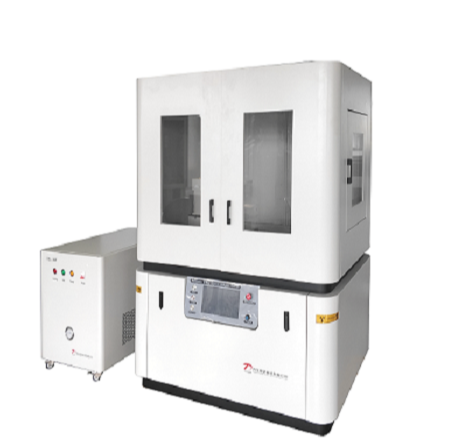
In recent years, X-ray absorption spectrometer technology has made significant progress. On one hand, the continuous improvement in energy resolution and sensitivity allows for more precise determination of material local structure information. For instance, the Super XAFS series spectrometers developed by the Shanghai Institute of Applied Physics, Chinese Academy of Sciences, provide users with experimental data comparable to synchrotron radiation XAFS, thanks to their high-quality X-ray source, excellent energy resolution, and ultra-precision linkage scanning system. On the other hand, the emergence of tabletop X-ray absorption spectrometers has broken through the limitations of traditional synchrotron radiation sources, enabling X-ray absorption fine structure measurements in conventional laboratory environments and bringing great convenience to researchers.

In terms of applications, X-ray absorption spectrometers are widely used in fields such as materials science, chemistry, biology, and medicine. In materials science, it is used to study crystal structures, electronic states, and elemental distribution of materials, providing strong support for material design and optimization. In the chemical field, XAS technology can reveal chemical reaction mechanisms, helping scientists understand changes in atomic and electronic structures during reaction processes. In biology and medicine, XAS technology provides new approaches for studying the spatial conformation of biological macromolecules, as well as for disease diagnosis and treatment.
In summary, XAS is a powerful technique for probing local atomic and electronic structures. Recent advances in lab-scale instruments have expanded its accessibility. Its versatility drives critical insights across materials science, chemistry, and biology, making it indispensable for modern research and development.