



Role of Benchtop X-ray Diffractometers in Quality Control
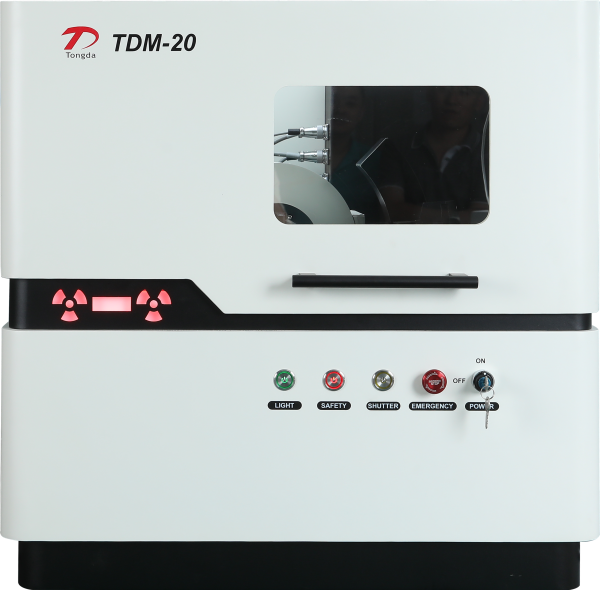
2026-01-16 10:22Benchtop X-ray diffractometers play a critical role in quality control by providing precise analysis of material crystal structures, composition, and stress information through non-destructive testing. This offers a scientific basis for ensuring product consistency, identifying defects, and optimizing processes, especially in fields such as material R&D, failure analysis, and complex structure inspection. Their role is elaborated below from two main aspects: core functionalities and application scenarios.
I. Core Functionalities: Precision Analysis Based on Crystal Structure
Crystal Structure Analysis
By measuring the diffraction angles and intensities generated from the interaction between X-rays and crystalline materials, and calculating interplanar spacings according to Bragg's Law, benchtop X-ray diffractometers enable quantitative analysis of material phase composition, crystal structure, and orientation. For example, in welding processes, analyzing the crystal structure of the weld zone helps trace the causes of defects such as cracks and pores, providing data to support process improvements.
Composition and Stress Analysis
These instruments can detect material density and compositional differences, identify hazardous substances (such as explosives), and measure microscopic stress within grains. In the electronics manufacturing sector, this capability allows for precise localization of defects like virtual soldering and voids in chip packaging, avoiding the damage to products caused by traditional decapsulation inspection methods.
Multi-format Sample Compatibility
They support analysis of various sample forms, including powders, thin films, and bulk materials, covering fields such as materials science, pharmaceutical development, geological exploration, and nanotechnology. For instance, in the pharmaceutical industry, diffraction patterns can be used to assess the crystalline quality of finished products, ensuring drug stability.
II. Application Scenarios: Covering the Entire Process from R&D to Production
Material R&D Phase
Assists researchers in understanding the relationship between material crystal structure and physical-chemical properties, providing a basis for the development of new materials. For example, by analyzing crystal structure stability, it guides the engineering design and selection of high-performance materials for aerospace applications, smartphone screens, and more.
Production Quality Control
Real-time Defect Detection: In electronics manufacturing, it non-destructively penetrates component housings to detect issues such as short circuits or open circuits in PCB circuit boards, improving inspection efficiency and accuracy.
Process Parameter Optimization: By comparing the crystal structures of normal and failed products, failure mechanisms are identified, enabling optimization of design and process flows to reduce production defects.
Product Consistency Assurance: In chemical material production, it evaluates the crystalline quality of finished products, allowing timely adjustment of process parameters to ensure stable product performance.
Failure Analysis and Traceability
In fields such as welding, components, full machines, and chips, crystal structure analysis helps trace failure causes. For instance, comparing diffraction patterns of failed and normal components can quickly pinpoint material or process defects, providing direction for improvements.
Safety and Compliance Assurance
In the food and pharmaceutical industries, it detects contaminants such as metal or glass fragments in products, preventing health risks. In security inspection, it identifies hazardous substances to ensure public safety.
III. Technical Advantages of Benchtop X-ray Diffractometers: Efficient, Precise, and Flexible
Non-destructive Testing
Obtains internal structural information without damaging samples, making it suitable for inspecting valuable or complex products such as chips and wafers.
High Precision and Automation
Latest models can complete crystal orientation determination in under 10 seconds. Integrated dynamic beam optimization technology improves signal-to-noise ratio by 40%. Combined with AI algorithms, they enable automated inspection, significantly enhancing efficiency.
Modularity and Extensibility
Supports nine extended application scenarios, such as reflection/transmission dual-mode analysis, meeting diverse industry needs.
IV. Industry Value: Driving Quality Management Advancement
Reduces Production Costs: By identifying defects early, rework and scrap are minimized, and process parameters are optimized.
Enhances Product Reliability: Precisely locates root causes of failures, enabling improvements at the design stage and extending product lifespan.
Boosts Market Competitiveness: Meets high-standard quality requirements, helping companies achieve international certifications (e.g., ISO and CE).
Supports Smart Manufacturing: Integrates with production line data to build real-time monitoring systems and accelerate product iteration.