



Calibration Methods and Stability Assurance for Desktop X-ray Diffractometers in Long-term Use
2026-01-20 09:23To ensure the accuracy and stability of desktop X-ray diffractometers during long-term use, a series of calibration methods and stability assurance measures need to be implemented. The following provides a detailed explanation of these two aspects:
I. Calibration Methods
Regular Calibration
• Frequency: Calibration should be performed according to the equipment manufacturer's recommendations, typically every six months, or adjusted based on usage frequency and changes in test results.
• Content: Key performance indicators such as the instrument’s 2θ angle indication error, repeatability, resolution, diffraction intensity stability, and energy resolution should be calibrated.
• Steps: Use standard reference materials (e.g., silicon, molybdenum) for calibration, following the steps outlined in the calibration specifications or equipment manual to ensure accuracy and precision.
Optical Path Adjustment and Zero-Point Calibration
• Adjust the optical path during initial installation and after changing accessories to ensure accurate X-ray projection and reception.
• Measure the zero-point deviation of θ and 2θ angles, and correct the zero point using the measured deviation values to ensure the accuracy of measurement results.
Appearance and General Requirements Inspection
• The instrument should be labeled with its name, model, serial number, and manufacturer.
• All components and accessories in use should be securely fastened, and moving parts should operate smoothly and flexibly.
• All pipeline interfaces inside and outside the instrument should be reliably sealed, and all functions should operate normally when commands are input via the computer.
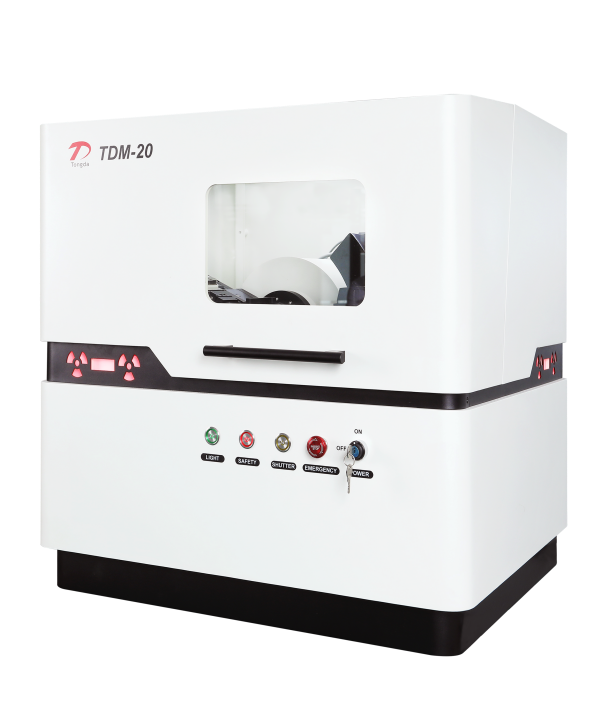
II. Stability Assurance Measures
Environmental Control
• Temperature: Maintain the ambient temperature within an appropriate range (e.g., 15–25°C) to avoid the effects of high or low temperatures on the efficiency of the X-ray generator and the sensitivity of the detector.
• Humidity: Keep relative humidity at or below 70% to prevent increased humidity from causing short circuits in the internal circuits.
• Cleanliness: Ensure a clean and vibration-free surrounding environment to minimize external interference with experimental results.
Power Supply Stability
• Use high-quality voltage stabilizers and uninterruptible power supplies (UPS) to protect the equipment from damage caused by voltage fluctuations and power failures.
• Regularly inspect the working condition of power supply equipment and promptly replace aging or damaged components.
Maintenance and Inspection
• Regularly inspect and maintain various components of the desktop X-ray diffractometer, including the X-ray tube, detector, and cooling system.
• Clean dust and contaminants from the equipment surface using a soft, clean cloth, avoiding cleaning agents containing alcohol or other chemicals.
• Check the physical condition and software system of the equipment to identify and resolve potential issues in a timely manner.
Technical Updates and Improvements
• Use high-stability materials and components to enhance the equipment’s durability under harsh environmental conditions.
• Employ advanced image processing and correction algorithms to minimize the impact of environmental changes on test results.
• Perform regular software upgrades and updates to access the latest features and performance optimizations.
Operator Training and Emergency Plans
• Train operators to ensure they understand the equipment’s usage methods and precautions, enabling them to operate and maintain it correctly.
• Develop contingency plans for harsh environmental conditions, including equipment troubleshooting and emergency shutdown procedures, to ensure a swift response and handling in unexpected situations.
Through regular calibration, environmental control, power supply stability, maintenance and inspection, technical updates and improvements, and operator training and emergency plans, the accuracy and stability of desktop X-ray diffractometers can be ensured during long-term use, providing reliable data support for scientific research.