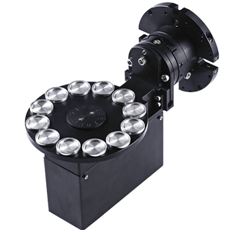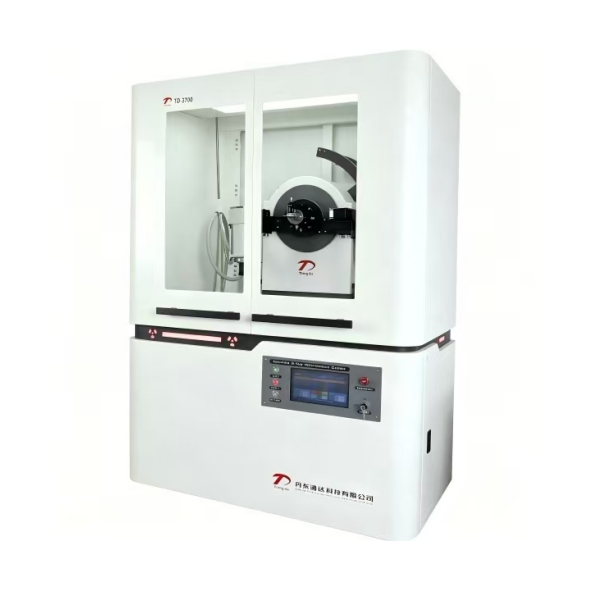
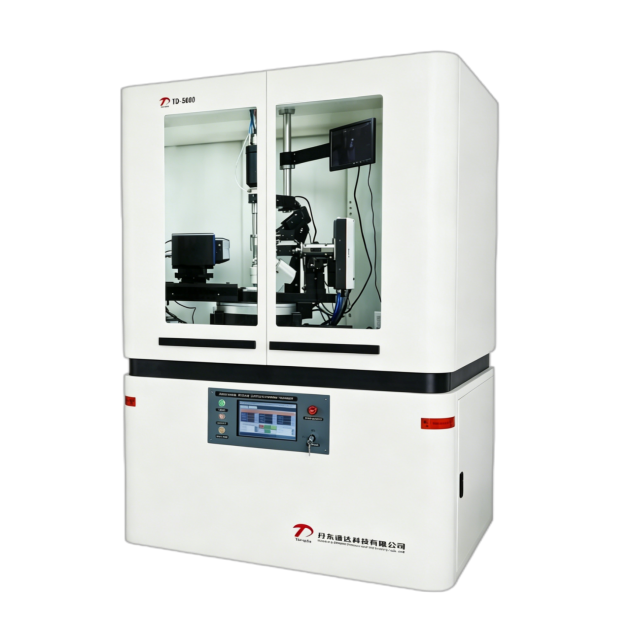
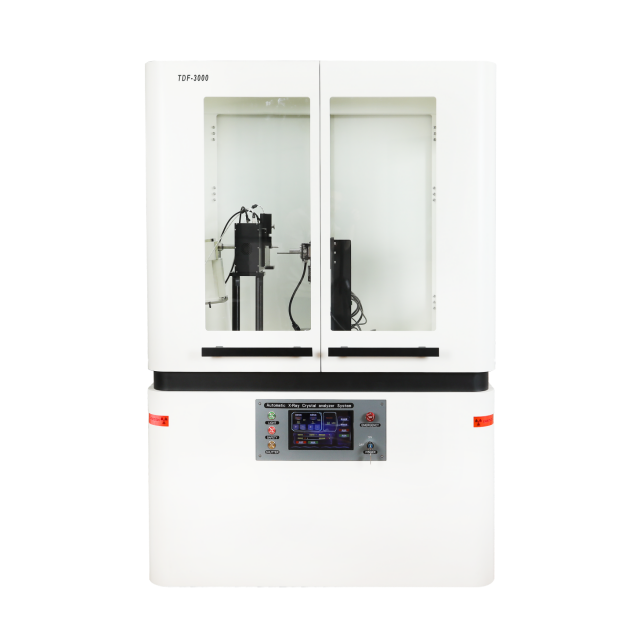
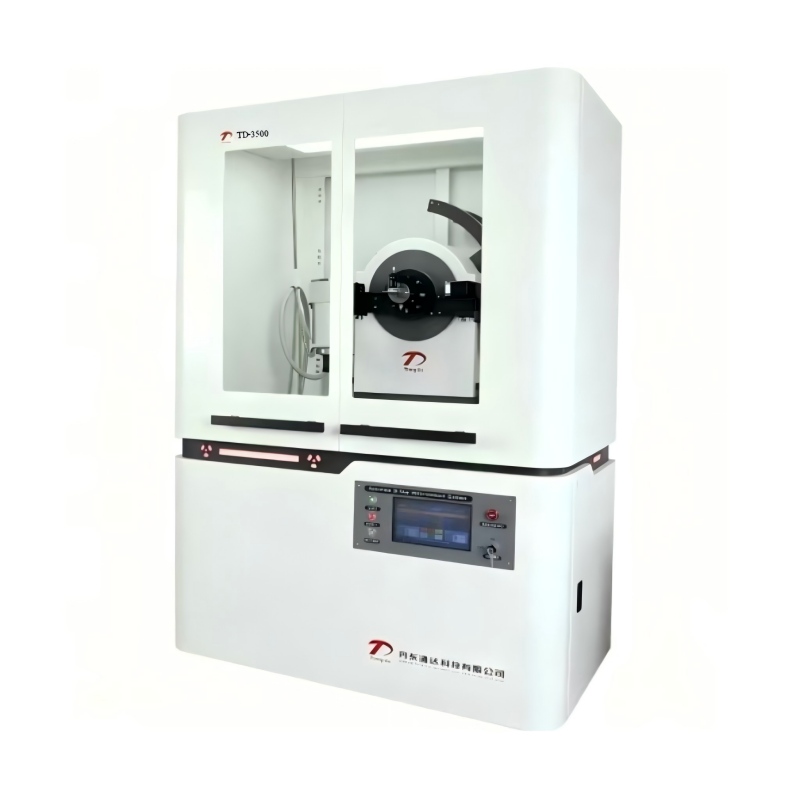
Since its establishment in 2010, Dandong Tongda Science & Technology Co., Ltd. has been focusing on the research, development, and production of X-ray analytical instruments and non-destructive testing equipment.The company has accumulated extensive experience in X-ray technology. In 2013, it became the undertaking unit of the "National Major Scientific Instrument and Equipment Development Project" for the X-ray single crystal diffractometer, supported by the Ministry of Science and Technology of China. The Cryostream low-temperature liquid nitrogen cooling system, launched by Dandong Tongda Science & Technology, is a representative product of its Medium-low temperature accessory.This system is specifically designed for scientific experiments requiring precise low-temperature environments and integrates multiple advanced technologies. Precise temperature control is the core advantage of the system. The Medium-low temperature accessory can maintain a temperature stability of up to 0.3 K within the standard temperature range of 100–300 K.Such high temperature stability provides a reliable environment for scientific experiments, ensuring the accuracy and reproducibility of experimental data. Efficient cooling performance is another highlight. The system requires only 35 minutes to cool from room temperature to 100 K.The rapid cooling speed significantly enhances the work efficiency of researchers, making it particularly suitable for experimental scenarios requiring frequent temperature changes. The intelligent control system makes operation more straightforward. Utilizing a fuzzy PID temperature control algorithm, the system achieves accurate and stable real-time control of low-temperature nitrogen gas temperature.This intelligent control approach greatly reduces the operational complexity, allowing researchers to focus more on the experiments themselves rather than equipment adjustments.
EmailMore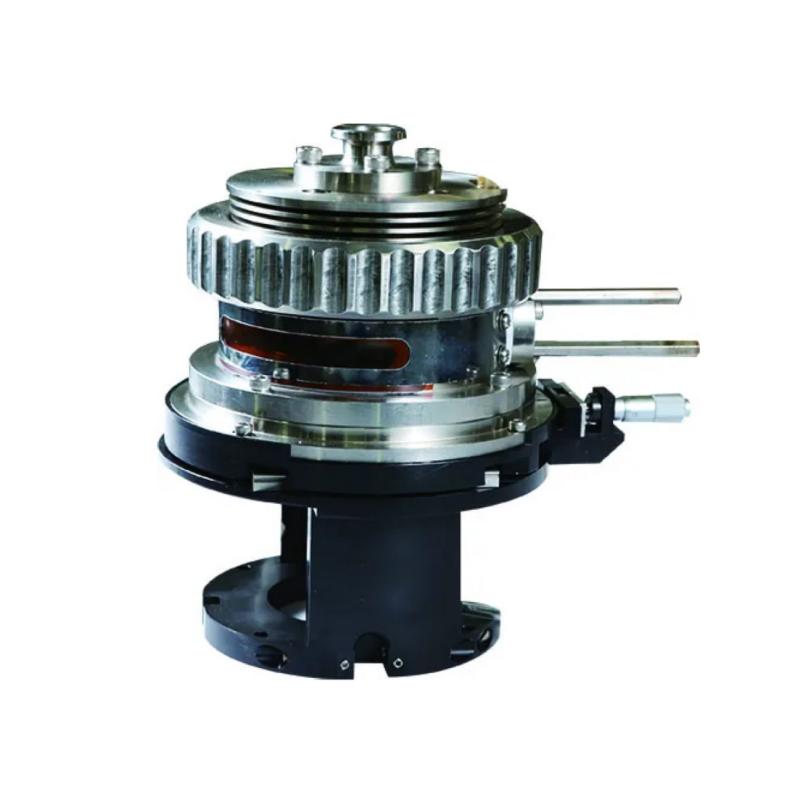
In situ medium and low temperature accessories are experimental equipment accessory used for material analysis, mainly used for in-situ testing in low or medium low temperature environments. Combined with vacuum environment, temperature control, and special window material design, it is widely used in fields such as chemistry, materials science, and catalytic research. 1. Core functions and technical parameters of in-situ medium and low temperature accessories (1) Temperature range and control accuracy Supports a temperature range of -196 ℃ to 500 ℃ in a vacuum environment (such as liquid nitrogen refrigeration), with a temperature control accuracy of ± 0.5 ℃. Some models can cover temperatures from -150 ° C to 600 ° C, suitable for a wider range of experimental needs. (2) Refrigeration method and cooling system Using liquid nitrogen refrigeration, with a liquid nitrogen consumption of less than 4L/h, and maintaining a stable temperature through a deionized water circulation cooling system. Optional low-temperature liquid nitrogen cooling system (such as Cryostream series). (3) Window Materials and Structural Design The window material is mostly polyester film (such as TD series), and some infrared configurations use KBr or SiO2 windows. The structure includes a high-pressure resistant design (such as 133kPa) and is equipped with multiple gas inlets/outlets, suitable for in-situ reactions or atmosphere control. 2. Application fields of in-situ medium and low temperature accessories (1) Material research Used for in-situ testing of X-ray diffractometers (such as TD-3500) to study changes in crystal structure and phase transition processes at low temperatures. Support research on heterogeneous catalysis, gas-solid interactions, photochemical reactions, etc. (2) Electrochemical and Battery Research It can be extended to in-situ battery accessories to test composites in electrochemical systems (such as carbon, oxygen, nitrogen, sulfur, etc.), with a temperature resistance of up to 400 ℃. (3) Industry Applications The products of Dandong Tongda Technology (TD series) have been applied in the fields of chemistry, chemical engineering, geology, metallurgy, etc., and exported to countries such as the United States and Azerbaijan. 3. Typical products and brands of in-situ medium and low temperature accessories Dandong Tongda Technology (TD Series) The accessories for X-ray diffractometers such as TD-3500 and TD-3700 emphasize high-precision temperature control (± 0.5 ℃) and efficient liquid nitrogen refrigeration. Suitable for diffuse reflectance spectroscopy measurement, providing stainless steel reaction chamber, multi window configuration (FTIR or UV Vis compatible), supporting high vacuum to 133kPa environment. Overall, in situ medium and low temperature accessories have become an important tool for material in situ analysis through precise temperature control, vacuum environment, and window design adapted to different instruments. They play an irreplaceable role in the study of low-temperature crystal structures and exploration of catalytic reaction mechanisms.
EmailMore
The medium and low temperature accessory of an X-ray diffractometer is a key component used for X-ray diffraction analysis in low-temperature environments.The medium and low temperature accessory is widely used in research and development work in materials science, physics, chemistry, and other fields, especially suitable for scenarios that require structural analysis of materials under different temperature conditions. In order to understand the changes in crystal structure during low-temperature refrigeration process, the following are the technical parameters of the medium and low temperature accessory: Vacuum environment:- 196~500℃ Temperature control accuracy: ± 0.5 ℃ Refrigeration method: liquid nitrogen (consumption less than 4L/h) Window material: Polyester film Cooling method: deionized water circulation cooling In short, the medium and low temperature accessory of X-ray diffractometer is important equipment component that can provide strong support for scientific research and material analysis.The medium and low temperature accessory of a diffractometer is one of the important tools in the field of material structure analysis, with broad application prospects and significant research value.The medium and low temperature accessory of the diffractometer is a key component to ensure the normal operation and accurate measurement of the instrument under low-temperature conditions. Its design and performance directly affect the accuracy and reliability of experimental results. When selecting and applying medium and low temperature accessory, experimental requirements, sample characteristics, as well as the technical parameters and performance characteristics of the accessories should be fully considered to ensure the best experimental results.
EmailMore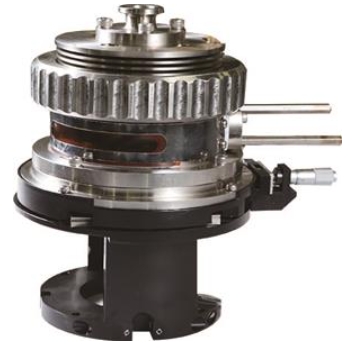
The medium and low temperature accessory is designed to understand the changes in crystal structure during the low-temperature refrigeration process.
EmailMore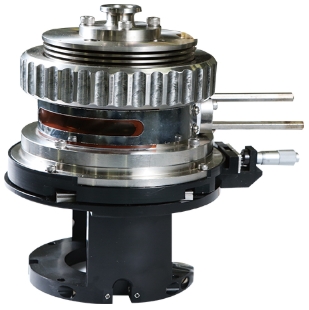
Medium and low temperature accessory is an experimental device used for testing and analyzing materials or samples within a specific temperature range (usually a medium low temperature environment). The application areas include materials science, chemical engineering, and drug research and development. With the continuous advancement of technology and the increasing demand for applications, it will play a more important role in the future.
EmailMore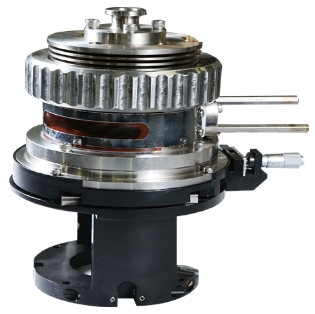
The in-situ medium and low temperature accessory is designed to understand the changes in crystal structure during the low-temperature refrigeration process; In order to provide a medium and low temperature (usually below room temperature but not extremely low temperature, such as a range between -100 ℃ and room temperature) sample environment for microscopes and other instruments. Vacuum environment: -196~500℃ Temperature control accuracy: ±0.5℃ Refrigeration method: liquid nitrogen (consumption less than 4L/h) Window material: Polyester film Cooling method: deionized water circulation cooling
EmailMore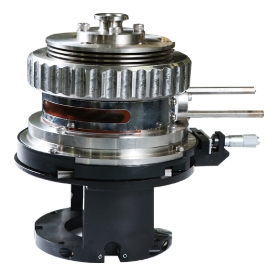
The goniometer is the heart of the X-ray diffractometer, and the TD series X-ray diffractometer has extremely high measurement accuracy
EmailMore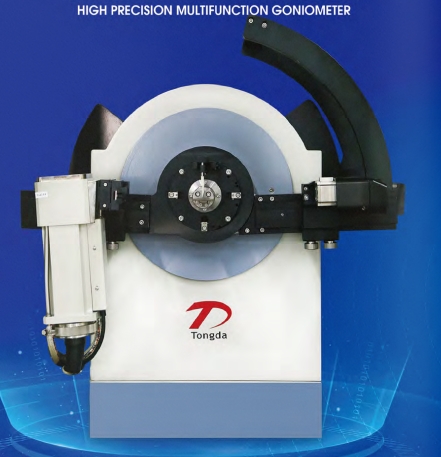
X-ray diffractometer (XRD) is the use of diffraction principle, accurate phase analysis, qualitative analysis and so on. Today, we will introduce some accessories that can be equipped with XRD instruments.
EmailMore