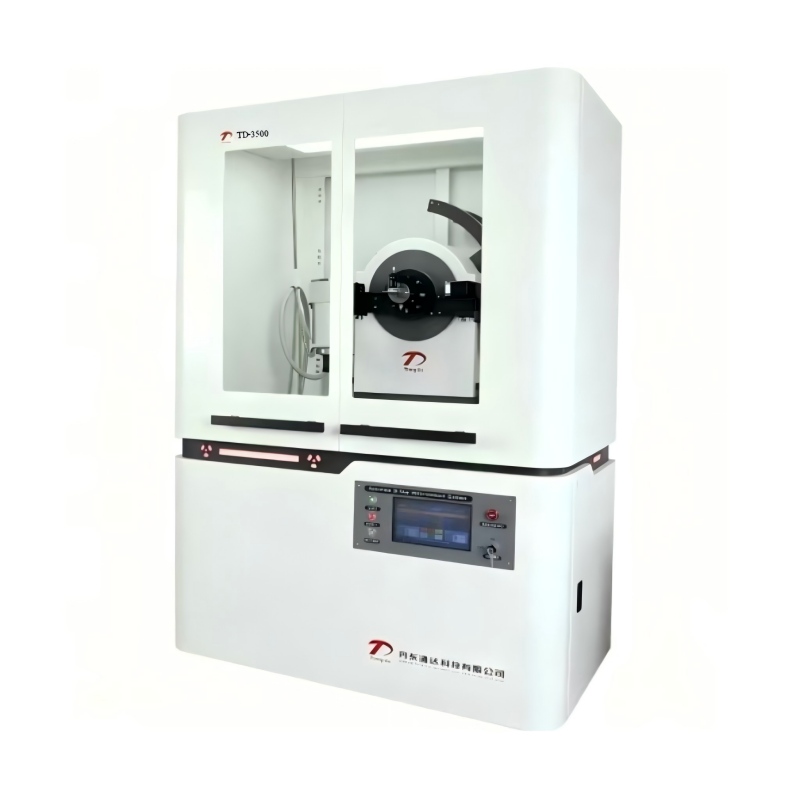
High-resolution X-ray diffractometers analyze materials by capturing precise diffraction patterns, revealing crystal structure, lattice parameters, atomic positions, and chemical composition. The process involves sample preparation, instrument adjustment, pattern acquisition, and data analysis, offering critical insights for material research and development.
EmailMore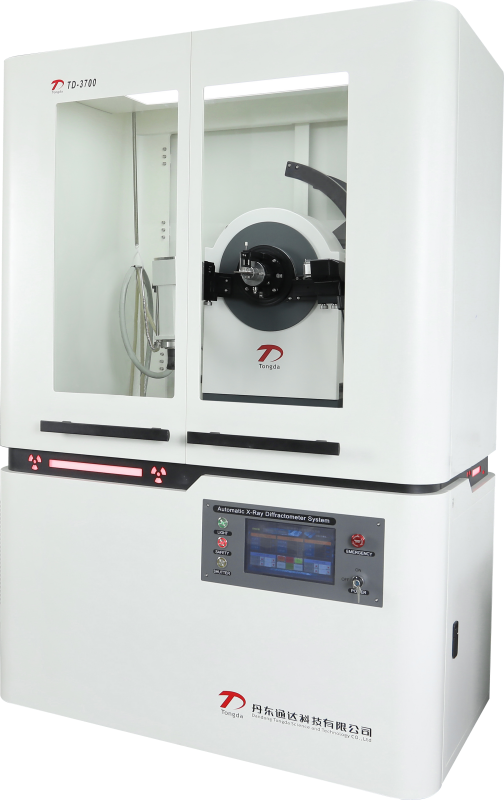
New-generation HR-XRD cuts energy use via hardware upgrades, smart controls, and full lifecycle management, maintaining precision while slashing costs and emissions for green labs.
EmailMore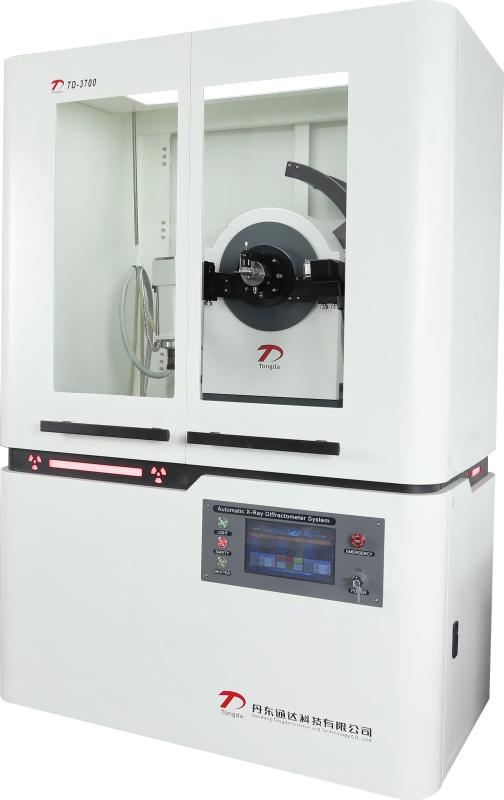
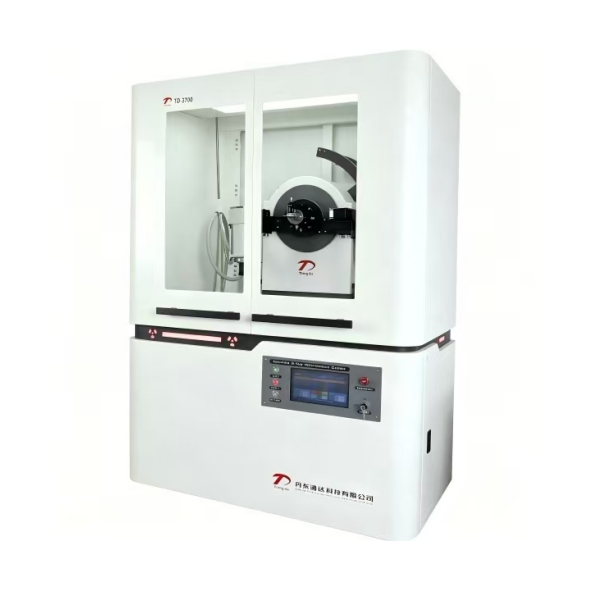
The TD-3700 is a next-gen X-ray diffractometer featuring a high-speed array detector for intensity scores of times higher and rapid, noise-free analysis. Its transmission mode excels with trace samples. Modular and one-touch, it ensures easy operation and global compliance for diverse lab applications worldwide.
EmailMore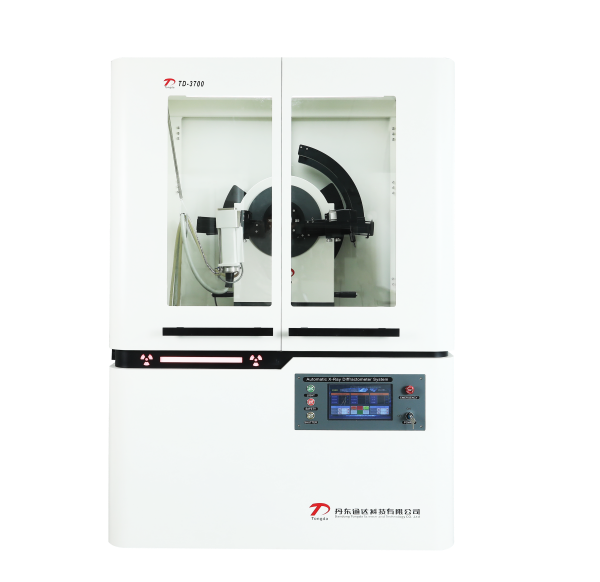
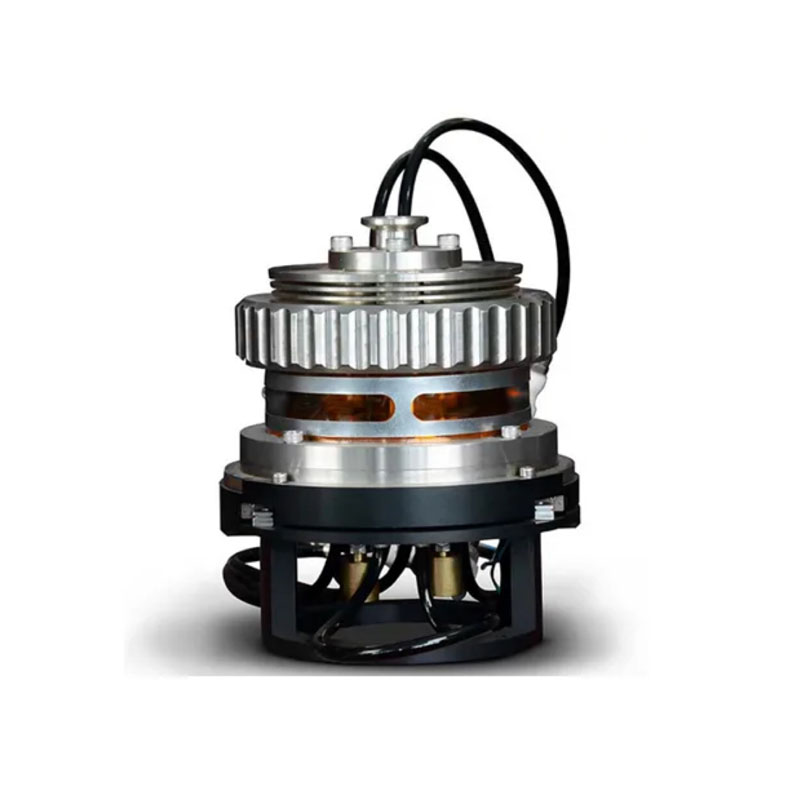
Dandong Tongda High Temperature Accessory is a precision instrument specifically designed for material research in high-temperature environments. It enables real-time observation and analysis of samples under high-temperature conditions, helping researchers obtain dynamic change information of materials at elevated temperatures. The Dandong Tongda High Temperature Accessory demonstrates outstanding technical performance, capable of meeting the demands of most high-temperature experimental environments. Depending on the experimental environment, the temperature range of the accessory varies: in an inert gas atmosphere, the temperature can range from room temperature to 1200°C; in a vacuum environment, the maximum temperature can reach 1600°C. Such a wide temperature range allows the accessory to adapt to various complex research scenarios, providing comprehensive technical support for studying material behavior at high temperatures. In terms of temperature control, the accessory also performs exceptionally well, with a control accuracy of up to ±0.5°C. This ensures high stability during experiments, offering a solid guarantee for the accuracy and reproducibility of experimental data. The High Temperature Accessory's design and construction reflect a balance between professionalism and practicality. The accessory uses polyester film as the window material, a choice that ensures both good observation clarity and stability in high-temperature environments. The cooling system employs deionized water circulation cooling, effectively ensuring the stable operation of the equipment under prolonged high-temperature conditions and extending its service life. This design considers the requirements of long-duration high-temperature experiments, allowing researchers to conduct continuous observations without worrying about equipment overheating. Whether studying crystal structure phase transitions, material thermal expansion behavior, or observing chemical reactions of materials at high temperatures, this accessory can provide intuitive and accurate experimental data.
EmailMore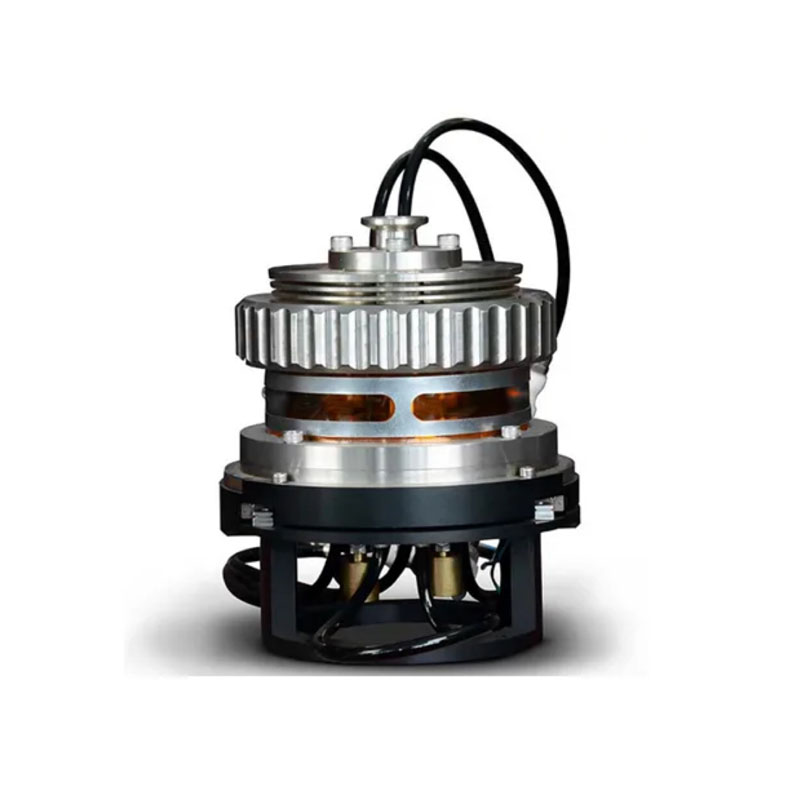
To understand the changes in crystal structure of samples during high-temperature heating and the changes in mutual dissolution of various substances during high-temperature heating. In situ high-temperature attachment is an experimental device used for in-situ characterization of materials under high temperature conditions, mainly used to study dynamic processes such as crystal structure changes, phase transitions, and chemical reactions of materials during high-temperature heating. The following provides a detailed introduction from the aspects of technical parameters, application scenarios, and precautions: 一、 Technical parameters of in-situ high-temperature attachments 1. Temperature range of in-situ high-temperature attachments Inert gas/vacuum environment: The maximum temperature can reach 1600 ℃. Standard environment: Room temperature to 1200 ℃ (as provided in the TD-3500 XRD accessory). 2. Temperature control accuracy of in-situ high-temperature accessories: usually ± 0.5 ℃ (such as in-situ high-temperature accessories), and the accuracy of some equipment above 1000 ℃ is ± 0.5 ℃. 3. Window materials and cooling methods for in-situ high-temperature attachments Window material: Polyester film (temperature resistant to 400 ℃) or beryllium sheet (thickness 0.1mm), used for X-ray penetration. Cooling method: Deionized water circulation cooling ensures stable operation of the equipment under high temperature conditions. 4. Atmosphere and pressure control of in-situ high-temperature attachments: Supports inert gases (such as Ar, N ₂), vacuum or atmospheric environments, and some models can withstand pressures less than 10 bar. The atmosphere gas flow rate can be adjusted (0.7-2.5L/min), suitable for corrosive gas environments. 二、 Application scenarios of in-situ high-temperature attachments 1. Material research on in-situ high-temperature attachments Analyze the changes in crystal structure (such as platinum phase transition) and phase transition processes (such as melting and sublimation) at high temperatures. Study the chemical reactions of materials at high temperatures, such as dissolution and oxidation. 2. Equipment adaptability of in-situ high-temperature attachments Mainly used in X-ray diffractometers (XRD), such as TD-3500, TD-3700, etc. It can also be used for in-situ tensile testing using scanning electron microscopy (SEM), with customized flange connections required. 三、 Precautions for using in-situ high-temperature accessories 1. Sample requirements for in-situ high-temperature attachments It is necessary to test the chemical stability of the sample in the target temperature range in advance to avoid decomposition into strong acids/bases or ceramic bonding. The sample shape must meet the requirements of the attachment (such as thickness 0.5-4.5mm, diameter 20mm). 2. Experimental operating procedures for in-situ high-temperature attachments The heating rate needs to be controlled (e.g. maximum 200 ℃)/ min@100 ℃) to avoid overheating and damaging the equipment. After the experiment, the sample needs to be cooled to room temperature to prevent structural damage.
EmailMore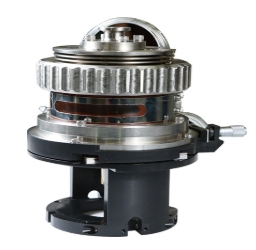
The TD-3700 high-resolution X-ray diffractometer is a new member of the TD series, equipped with a variety of high-performance detectors such as high-speed one-dimensional array detectors, two-dimensional detectors, SDD detectors, etc. It integrates fast analysis, convenient operation, and user safety. The modular hardware architecture and customized software system achieve a perfect combination, making its failure rate extremely low, anti-interference performance good, and ensuring long-term stable operation of high-voltage power supply. The TD-3700 high-resolution X-ray diffractometer supports not only the conventional diffraction data scanning method, but also the transmission data scanning method. The resolution of transmission mode is much higher than that of diffraction mode, which is suitable for structural analysis and other fields. Diffraction mode has strong diffraction signals and is more suitable for routine phase identification in the laboratory. In addition, in the transmission mode, the powder sample can be in trace amounts, which is suitable for data acquisition in cases where the sample size is relatively small and does not meet the requirements of diffraction method for sample preparation. The array detector fully utilizes mixed photon counting technology, with no noise, fast data acquisition, and more than ten times the speed of scintillation detectors. It has excellent energy resolution and can effectively remove fluorescence effects. Multi channel detectors have faster readout times and achieve better signal-to-noise ratios. A detector control system with electronic gating and external triggering effectively completes system synchronization. The working principle of TD-3700 high-resolution X-ray diffractometer: By utilizing the fluctuation of X-rays, when they are irradiated onto a crystal, atoms or ions in the crystal act as scattering centers, scattering X-rays in all directions. Due to the regularity of atomic arrangement in crystals, these scattered waves interfere with each other and reinforce each other in certain directions, forming diffraction. By measuring the diffraction angle and diffraction intensity, the structural information of the crystal can be obtained. The main features of TD-3700 high-resolution X-ray diffractometer are: (1) Easy to operate, one click collection system; (2) Modular design, plug and play instrument accessories, no need for calibration; (3) Real time online monitoring using touch screen to display instrument status; (4) Electronic lead door interlocking device, dual protection, ensuring user safety; (5) High frequency and high-voltage X-ray generator, with stable and reliable performance; (6) Advanced recording control unit with strong anti-interference ability. The high precision of the TD-3700 high-resolution X-ray diffractometer enables high-precision analysis of the crystal structure of materials, such as precise determination of lattice constants, cell parameters, etc. The angle measurement accuracy can reach ±0.0001°. The high resolution of TD-3700 high-resolution X-ray diffractometer can clearly distinguish adjacent diffraction peaks, accurately analyze diffraction information of different crystal planes for complex crystal structures, and reveal the microstructure characteristics of materials. The non-destructive nature of the TD-3700 high-resolution X-ray diffractometer: it will not cause damage to the sample during the testing process, and the sample can be kept in its original state for multiple tests, which is particularly important for precious or difficult to obtain samples. Rapid analysis of TD-3700 high-resolution X-ray diffractometer: Modern high-resolution X-ray diffractometers have fast detection capabilities and can complete sample testing in a short period of time, improving work efficiency. 3. Application areas of TD-3700 high-resolution X-ray diffractometer: Semiconductor materials: used to detect the crystal quality of semiconductor single crystal materials and epitaxial thin films, analyze lattice mismatch, defects and other information, which helps optimize the performance of semiconductor devices. Superconducting materials: Study the crystal structure and phase transition process of superconducting materials to provide a basis for optimizing superconducting properties. Nanomaterials: Analyzing the grain size, crystal structure, microscopic strain, etc. of nanomaterials helps researchers better understand their properties and applications. Other fields: It is also widely used in research and quality control of metal materials, ceramic materials, polymer materials, biomaterials, and other fields. High resolution X-ray diffractometer is a high-precision, high-resolution, non-destructive, and fast analytical instrument with important application value in many fields.
EmailMore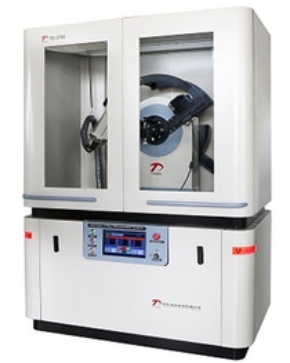
The high temperature accessory in a diffractometer is an additional device that can perform X-ray diffraction analysis on samples under high temperature conditions. To understand the changes in crystal structure of samples during high-temperature heating and the changes in mutual dissolution of various substances during high-temperature heating. Working principle of high temperature accessory: By using methods such as resistance heating, induction heating, or radiation heating, the sample is heated within a set temperature range. At the same time, it is equipped with high-precision temperature sensors and control systems to monitor and adjust the temperature of the sample in real time, ensuring the stability and accuracy of the temperature. The temperature control accuracy can reach ±0.5℃ or even higher. In order to maintain the stability of the sample at high temperatures and prevent it from reacting with oxygen in the air, high temperature accessory usually require an atmosphere protection system. Common atmospheres include inert gases such as argon, nitrogen, etc. The atmosphere control system can accurately control the flow rate and pressure of the atmosphere, providing a stable experimental environment for the sample. The main functions of high temperature accessory is: Real time monitoring of sample phase transition, chemical reactions, crystal structure changes, and other processes can be carried out in high-temperature environments to obtain information on the structure and properties of substances at different temperatures. By analyzing the position, intensity, and shape of diffraction peaks, the crystal cell parameters, crystal structure, phase composition, and other information of the sample can be obtained, and the content of each component can be accurately measured. Study the rate, mechanism, and diffusion behavior of chemical reactions. For example, observing the structural changes of catalysts during high-temperature reactions, understanding the formation and disappearance of their active centers, and optimizing the performance of catalysts. Application area of high temperature accessory: Used to study the phase transition, crystal structure evolution, and performance changes of high-temperature superconducting materials, metal alloys, ceramic materials, etc. at different temperatures, providing a basis for material design and preparation. Monitoring the changes in substances during chemical reactions, such as studying the structural changes of catalysts and the evolution of active centers in high-temperature catalytic reactions, can help develop efficient catalysts. Study the physical properties of substances at high temperatures, such as magnetism, electronic structure, and their relationship with temperature, and explore new physical phenomena and laws. Technical parameter of high temperature accessory: Temperature setting: Inert gas environment from room temperature to 1200 ℃ Vacuum environment: high temperature of 1600 ℃ Temperature control accuracy: ± 0.5 ℃ Window material: Polyester film Cooling method: deionized water circulation cooling In summary, the high temperature accessory in the diffractometer is an important testing tool that can perform X-ray diffraction analysis on samples under high temperature conditions, providing strong support for research in fields such as materials science, chemical engineering, and physics.
EmailMore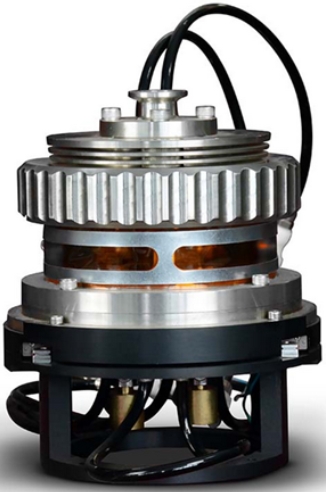
High temperature accessory are designed to understand the changes in the crystal structure of samples during high-temperature heating, as well as the changes in mutual dissolution of various substances during high-temperature heating.
EmailMore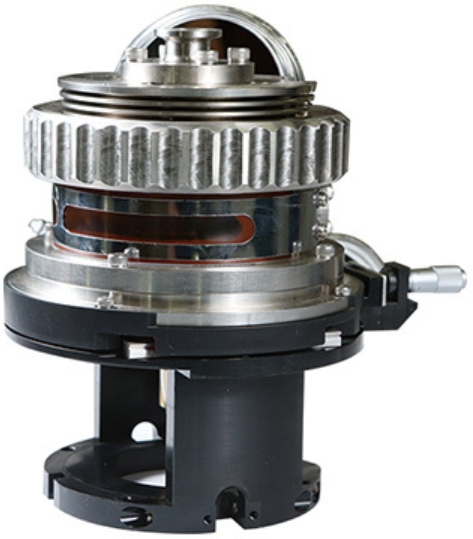
TD-3700 High-Resolution X-Ray Diffractometer delivers exceptional analytical performance through innovative detector technology and dual scanning modes. Featuring rapid data acquisition, user-friendly operation, and enhanced safety, it enables precise materials analysis across research and industrial applications, setting new standards for Chinese scientific instruments.
EmailMore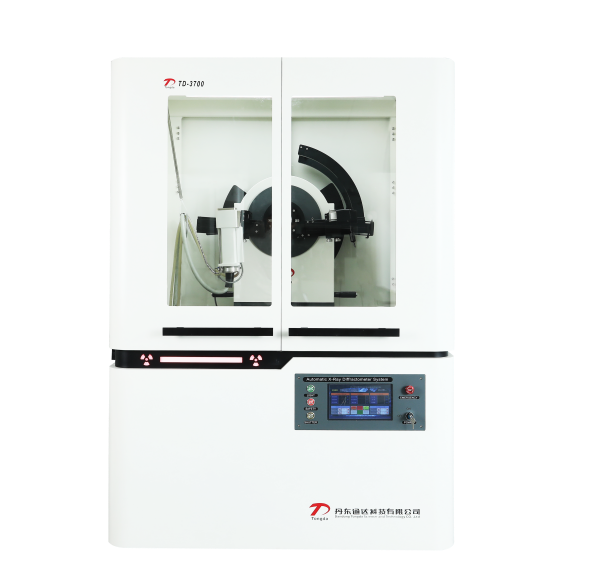
Dandong Tongda's In-situ High-temperature Accessory enables real-time analysis of material structural changes up to 1600°C with ±1°C precision. Ideal for superconductors, ceramics, and thin film research, it's exported globally.
EmailMore