



High-Resolution X-Ray Diffractometer : The "Energy-Saving Pioneer" in Green Laboratory Construction
2026-01-05 14:46As a core instrument in material analysis, traditional high-resolution X-ray diffractometers have often been labeled as "high energy consumers" due to their high-power X-ray tubes and continuously operating cooling systems. However, the new generation of equipment achieves a sharp reduction in energy consumption while ensuring detection accuracy through design innovations and intelligent control, making it an "Energy-Saving Pioneer" for green laboratory development. Its energy-saving logic manifests in three dimensions: hardware optimization, intelligent operation, and full-lifecycle management.
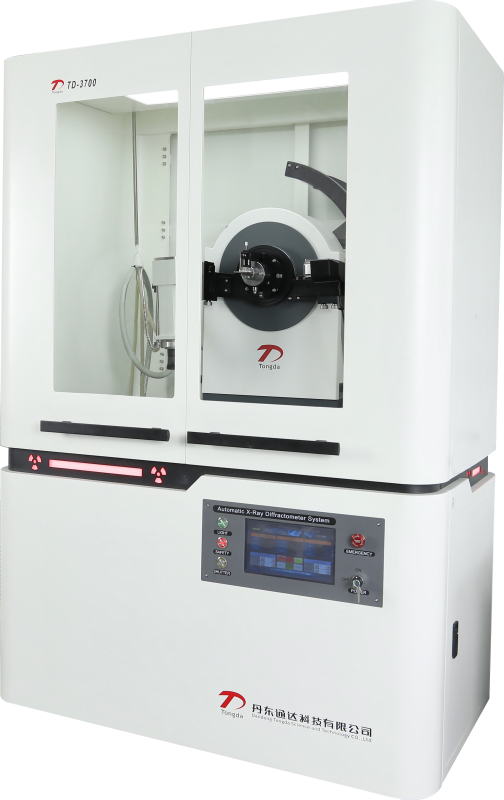
1. Hardware Innovation: Reducing Energy Consumption from the Source
Energy-efficient design of core components is key to lowering energy consumption. X-ray tubes employ "pulsed excitation" technology, replacing the traditional continuous emission mode. They output high-energy X-rays only during the detection phase, with standby power dropping to below 5% of the rated value. This can reduce daily electricity consumption by 3-5 kWh per single unit. The cooling system is upgraded to an "intelligent variable-frequency water-cooling" system. Flow sensors match the heat output of the X-ray tube in real-time, automatically reducing water pump speed when the tube temperature falls below 40°C, achieving over 30% energy savings compared to fixed-frequency systems. Furthermore, the equipment body utilizes new thermal insulation materials, reducing heat exchange between the diffraction chamber and the environment, thereby lowering the load on the constant temperature system by 20% and further compressing energy consumption.
2. Intelligent Control: Dynamic Optimization for Maximum Efficiency
The intelligent control system achieves a balance between energy consumption and performance through algorithmic optimization. Before detection, the system automatically identifies the sample type and matches the optimal X-ray power and scanning speed according to crystal structure complexity. For simple cubic crystals, it can reduce the X-ray power from 18kW to 12kW while still ensuring data accuracy; for complex alloy samples, it dynamically increases power to 20kW to avoid energy waste from repeated tests. The "scheduled wake-up" function allows the equipment to start preheating 30 minutes in advance based on the experimental plan and automatically enter a deep standby mode 15 minutes after completion, eliminating idle energy consumption when the laboratory is unattended. Some models also support continuous multi-sample detection planning, optimizing the sample stage movement path to reduce mechanical motion energy consumption by 15%.
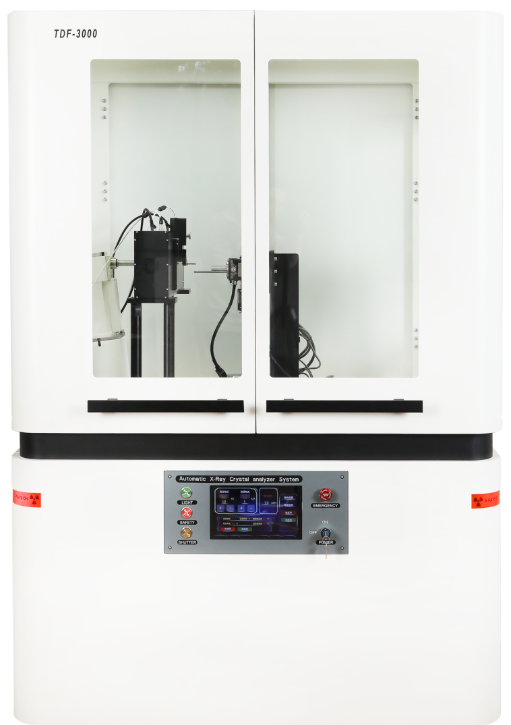
3. Full-Lifecycle Management: Extending the Value Chain of Energy Savings
Full lifecycle management, from installation to decommissioning, further amplifies the energy-saving effect. During the installation phase, a "centralized water-cooling" solution is adopted, where multiple units share one cooling system, reducing water pump energy consumption by 40% compared to individual cooling units. In daily maintenance, monthly cleaning of the X-ray tube window filter and the detector dust screen prevents unnecessary power increases due to component contamination. Quarterly calibration of the optical path system ensures X-ray utilization efficiency reaches above 90%, minimizing ineffective energy consumption. Upon equipment decommissioning, professional agencies recycle lead shielding materials and heavy metal components, enabling resource recycling and aligning with the full lifecycle environmental philosophy of green laboratories.
The "Energy-Saving Pioneer" characteristic of the new generation high-resolution X-ray diffractometer is the synergistic result of hardware innovation and intelligent management. It is estimated that compared to traditional models, the new generation equipment can achieve annual energy savings of 1500-2000 kWh while reducing carbon emissions by approximately 1.2 tons. This transformation not only lowers laboratory operating costs but also promotes a shift in material analysis equipment from "precision-first" to "precision and energy efficiency balanced," providing solid technical support for green scientific research endeavors.