



Application of X-ray Crystal Orientation Analyzers in Optoelectronic Material Research and Development
2026-01-27 09:42In the era of rapid development of modern technology, optoelectronic materials have become a focal point of research across numerous fields due to their optical and electronic properties. These materials are essential for enabling LED lighting, photovoltaic cells, and various display technologies. To enhance the performance of optoelectronic devices, scientists need to deeply understand the microscopic structure of materials, particularly the influence of crystal orientation on material properties.
X-ray crystal orientation analyzers utilize the principles of X-ray diffraction to accurately measure the orientation distribution of crystals within materials. During the development of optoelectronic materials, this equipment can optimize the crystal growth process and adjust their optical and electrical properties. For instance, in the production of LEDs, determining the precise crystal orientation can improve luminous efficiency and extend product lifespan.
Specifically, this instrument plays a crucial role during the growth phase of semiconductor materials. For semiconductor crystals such as gallium arsenide or silicon, precise control over their growth direction is vital for the subsequent performance of devices. By analyzing the crystal orientation patterns, researchers can monitor minor deviations during crystal growth, promptly adjust growth parameters, and ensure optimal crystal quality.
Furthermore, this instrument is also instrumental in the preparation of optoelectronic thin films. These films typically range from a few nanometers to several micrometers in thickness and require high uniformity and specific crystal orientations. Using this instrument, researchers can detect minute crystal defects and inconsistencies, enabling real-time monitoring and quality control during the production process.
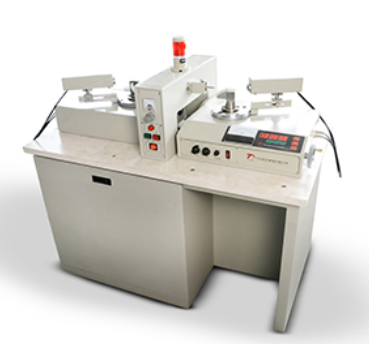
Notably, with the emergence of novel optoelectronic materials such as two-dimensional materials and organic-inorganic hybrid materials, the application scope of this instrument continues to expand. These materials show immense potential in the optoelectronic field due to their layered structures and diverse functionalities. Leveraging high-precision X-ray crystal orientation technology, researchers can analyze the crystal structures of these complex materials at the atomic level, providing robust support for designing next-generation optoelectronic devices.
The X-ray crystal orientation analyzer serves as a critical bridge connecting fundamental material research with industrial applications in optoelectronics. As technology continues to advance and innovate, its role in the development of optoelectronic materials will become even more prominent. It not only contributes to the creation of higher-performance optoelectronic products but also supports global sustainable development efforts.