



In-depth Analysis of the Working Principle and Application Fields of X-Ray Diffractometers
2026-01-26 09:05X-ray diffractometer is a precision instrument used for studying the internal crystal structure of materials. Its working principle is based on the diffraction phenomenon generated by the interaction between X-rays and crystals. When X-rays pass through a crystal, they are scattered by the atoms within the crystal. These scattered waves reinforce each other in certain directions, forming diffraction patterns. By analyzing these diffraction patterns, we can obtain information about the atomic arrangement, unit cell parameters, and crystal structure within the material.
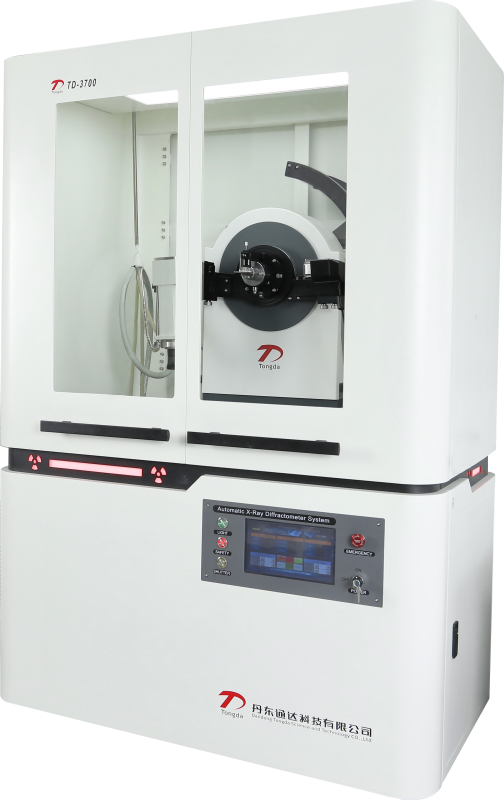
X-ray diffractometersare widely used in various fields. Firstly, in materials science, they are employed to study the crystal structures of metals, ceramics, polymers, and other materials, providing critical insights for optimizing material properties and developing new materials. Secondly, in chemistry, X-ray diffractometers are used to analyze the crystal structures of compounds, revealing molecular interactions and chemical reaction mechanisms. Additionally, in the biomedical field, X-ray diffractometers play a significant role in studying the crystal structures of biological macromolecules, such as proteins and nucleic acids, offering strong support for the design and development of biopharmaceuticals.
With continuous advancements in technology, the performance of X-ray diffractometershas also improved significantly. Modern X-ray diffractometers offer high resolution, high sensitivity, and rapid data processing capabilities, making them even more widely applicable in scientific research and industrial production. Meanwhile, with the rise of nanotechnology, X-ray diffractometers are playing an increasingly important role in characterizing and studying nanomaterials.
In summary,X-ray diffractometers play an indispensable and crucial role in scientific research and industrial production, thanks to their unique working principles and extensive application areas. Looking ahead, with continuous technological innovation and refinement, the performance of X-ray diffractometers will achieve leapfrog advancements. Their analytical accuracy, detection efficiency, and level of intelligence will reach new heights. This will not only deepen our understanding in traditional fields such as materials science, chemical synthesis, and biopharmaceuticals but will also inject strong momentum into research breakthroughs in emerging areas such as new energy development, nanotechnology, and quantum materials. Ultimately, it will provide solid and reliable technological support for global scientific innovation and industrial upgrading.