



- Home
- >
News
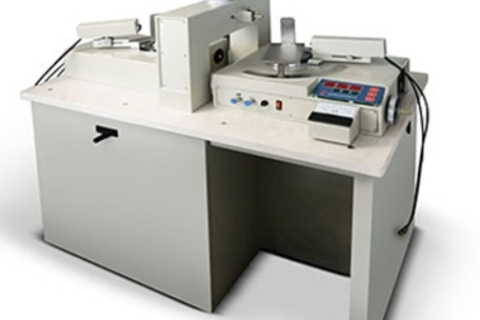
The X-ray orientation analyzer is a device that uses the principle of X-ray diffraction to determine crystal orientation. It is widely used in fields such as materials science, geology, physics, etc., for studying crystal structure, lattice parameters, crystal defects, etc. The working principle of an X-ray orientation analyzer is to irradiate a monochromatic X-ray beam onto the crystal under test. When the X-ray interacts with atoms in the crystal, scattering occurs. According to Bragg's law, when the wavelength of X-rays is an integer multiple of the atomic spacing in a crystal, scattered light will interfere and form a series of alternating bright and dark stripes, known as Bragg reflection. By measuring the angles and intensities of these Bragg reflections, information such as crystal orientation and lattice parameters can be calculated. The X-ray orientation analyzer usually includes the following main parts: 1.X-ray source: a device that produces monochromatic X-rays, typically using an X-ray tube or synchrotron radiation source. 2.Sample stage: a platform used to place the crystal to be tested, which can adjust the position and angle of the crystal. 3.Detector: used to receive scattered X-rays and convert them into electrical signals. Common detectors include scintillation counters, proportional counters, etc. 4.Data acquisition and processing system: used to collect signals output by detectors, and perform data processing and analysis. Usually includes multi-channel analyzers, computers, and other equipment. 5.Control system: used to control the movement of X-ray source, sample stage, and detector to achieve measurement of crystals in different directions. By using an X-ray orientation analyzer, researchers can accurately determine the orientation and lattice parameters of crystals, thereby gaining a deeper understanding of their structure and properties. This is of great significance for the development of new materials, geological exploration, crystal growth and other fields.
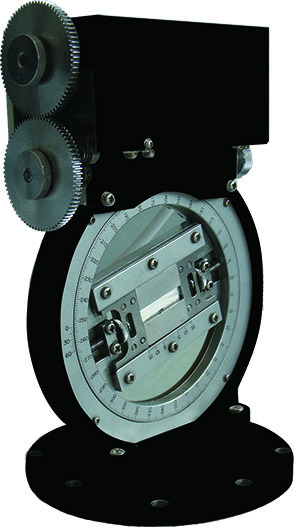
Using X-ray diffraction (transmission) method to test the unique crystal structure of fibers. Test the orientation of the sample based on data such as fiber texture and half peak width.
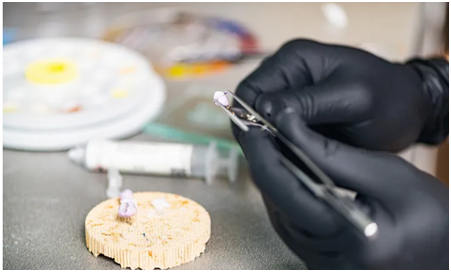
XRD technology plays an important role in the research and development of ceramic materials. It provides a reliable scientific basis for the synthesis, preparation process optimization, performance improvement and application popularization of ceramic materials.
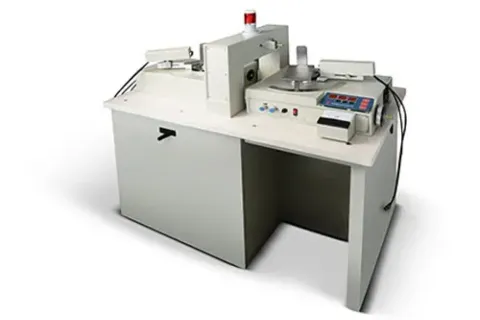
Automatic X-ray orientation instrument is an indispensable instrument for precision processing and manufacturing crystal devices. It is widely used in the research, processing and manufacturing of crystal materials.
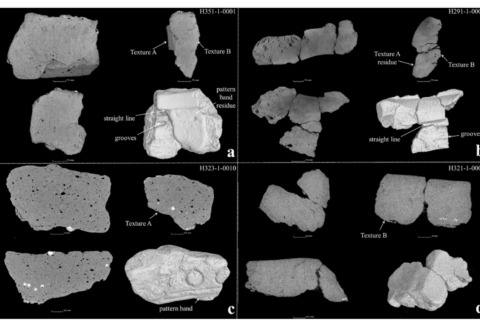
Micro-ct technology has significant advantages in the characterization of ceramics, which can reveal the composite structure inside the material without damage, and restore the key technology in the production of ceramics.
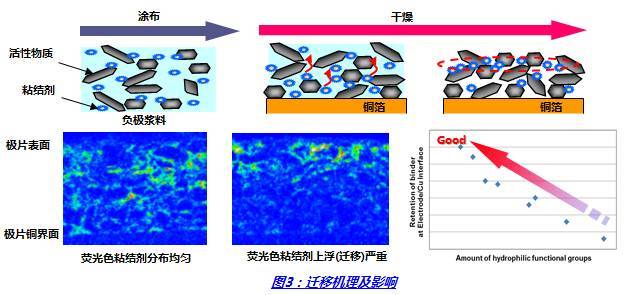
Binder is a polymer compound used in electrode making to adhere the active substance to the collector fluid. The main function is to bond and maintain active substances.
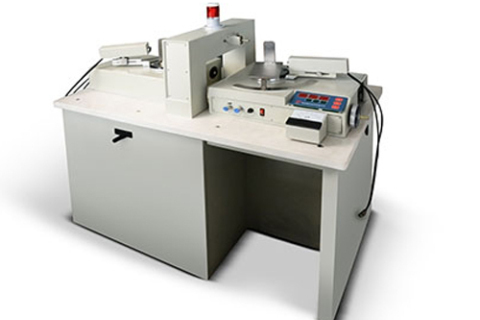
Using the principle of X-ray diffraction, the cutting Angle of natural and artificial single crystals is accurately and quickly determined, and the cutting machine is equipped for directional cutting of the said crystals.