



X-ray Absorption Spectrometer: Working Principle and Application Prospects
2026-03-18 09:52The operating principle of the X-ray Absorption Spectrometer (XAS) is based on the interaction between X-rays and specific elements within a material. When X-rays pass through a sample, they are absorbed by the atoms, causing electronic transitions at specific energies and the emission of characteristic X-rays. These emitted X-rays contain information about the atomic structure and electronic state of the sample. By measuring the energy and intensity of these X-rays, XAS can reveal the structural properties of matter at the atomic scale. XAS is primarily divided into X-ray Absorption Near-Edge Structure (XANES) and Extended X-ray Absorption Fine Structure (EXAFS), which provide information on electronic states and local coordination environments, respectively.
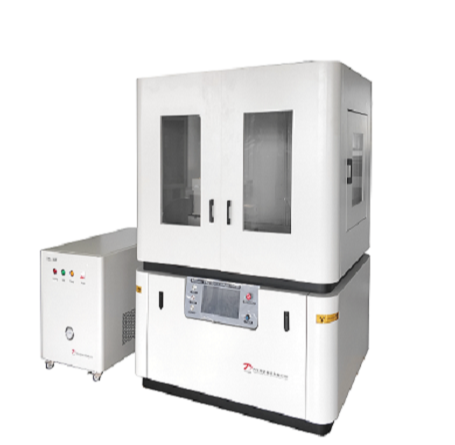
The application prospects of X-ray Absorption Spectrometersare extensive. In the field of materials science, XAS helps researchers understand the crystal structure, electronic states, and elemental distribution of materials, providing strong support for material design and optimization, particularly playing a key role in catalyst design and energy material development. In chemistry, XAS can reveal reaction mechanisms and intermediate states, offering crucial information for chemical synthesis and catalysis research, and aiding in the development of efficient catalysts. Furthermore, XAS has wide applications in biology and medicine, such as studying the spatial conformation, functional groups, and interactions of biological macromolecules, paving new ways for disease diagnosis and treatment, for example, in the structural and functional study of metalloproteins.

With continuous technological advancements, the performance of X-ray Absorption Spectrometers is constantly improving, featuring higher energy resolution, faster scanning speeds, and lower detection limits. These advancements will further broaden the application fields of XASand promote the in-depth development of scientific research. The development of synchrotron radiation sources has also greatly enhanced the sensitivity and time-resolved capabilities of XAS, enabling the study of in-situ reaction processes. In the future, XAS is expected to play an even greater role in fields such as new energy, environmental science, and geology, providing critical data in research areas like the evolution of battery materials, pollutant migration, and geochemical processes, thereby contributing to the sustainable development of human society. Furthermore, the integration of advanced data analysis techniques and machine learning with XAS is poised to unlock even more detailed kinetic and mechanistic insights, accelerating the discovery and optimization of materials for clean energy conversion and environmental remediation.