



The Key Role of XAS in the Research of Lithium-Ion Batteries, Fuel Cells, and Photocatalytic Materials
2026-02-12 09:06X-ray absorption spectroscopy (XAS), with its atomic-level resolution, plays an indispensable role in the research of lithium-ion batteries, fuel cells, and photocatalytic materials, specifically manifested in the following aspects:
Lithium-ion Batteries: Analyzing the Dynamic Behavior and Redox Mechanisms of Electrode Materials
XAS, through the synergistic analysis of X-ray absorption near-edge structure (XANES) and extended X-ray absorption fine structure (EXAFS), enables real-time tracking of valence state evolution and local structural changes in electrode materials during charge and discharge processes. For example, in lithium-rich manganese-based cathode materials, XANES reveals that Ni ions are oxidized to near Ni⁴⁺ when charged to 4.3V, followed by a slight decrease in valence state at 4.8V, and gradually reduced to their initial state during discharge, demonstrating highly reversible redox behavior. EXAFS, by analyzing changes in Ni-O bond lengths, confirms that the formation of oxygen coordination vacancies dominates the charge compensation process. Furthermore, XAS combined with RIXS technology can further elucidate the redox pathways of lattice oxygen, providing theoretical foundations for designing high-energy-density cathode materials.
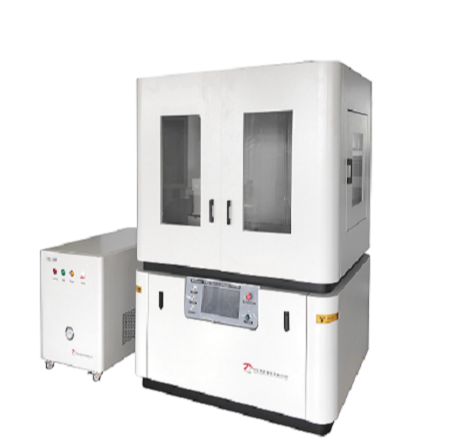
Fuel Cells: Revealing Catalyst Active Sites and Stability Mechanisms
XAS is a core tool for studying the dynamic characteristics of fuel cell catalysts. For example, in Pt-based nanoparticle catalysts, XANES, by analyzing the absorption edge position of the Pt L₃ edge, reveals strong interactions between Pt and Zn/Co, with electron transfer from Pt to Zn and Co, explaining the electronic mechanism behind the enhanced catalyst activity. EXAFS, through the analysis of Pt-Zn and Pt-Co coordination bond lengths, confirms that the "Pt-Zn-N" atomic glue structure stabilizes PtCo particles via chemical bonds, suppressing high-temperature agglomeration. Additionally, XAS can be used to investigate the structural stability of catalysts after acid treatment, providing key parameters for optimizing catalyst design.
Photocatalytic Materials: Elucidating Charge Transfer and Reaction Pathways
By analyzing the electronic structure and coordination environment of metal sites, XAS can reveal the microscopic mechanisms of charge separation and transfer in photocatalytic materials. For example, in studies of single-atom cobalt catalysts (Co-SAs/NC), XAS combined with Raman spectroscopy elucidates the role of Co-N₄ coordination structures in promoting sulfur species conversion, revealing how the dynamic evolution of Co-S bonds inhibits polysulfide shuttling. Additionally, XAS can be applied to study valence state changes in photocatalysts during reactions, providing molecular-level insights for optimizing photocatalytic performance.