



Technical Principles, Development Status, and Applications of X-ray Absorption Spectrometers: A Review
2026-04-07 08:50I. Technical Principles
X-ray absorption spectrometers operate based on the photoelectric effect, measuring the variation of a material’s X-ray absorption coefficient as a function of incident photon energy to reveal the local atomic structure and electronic state information of specific elements in the sample. When the X-ray energy reaches the binding energy of core-level electrons, these electrons are excited to unoccupied or continuum states, causing an abrupt change in the absorption coefficient and forming an absorption edge. The fine structure within approximately 50 eV of the absorption edge is called X-ray absorption near-edge structure (XANES), which provides information on elemental valence, coordination symmetry, and orbital hybridization. The oscillatory signals in the energy range of 50 to 1000 eV above the absorption edge are termed extended X-ray absorption fine structure (EXAFS). Through Fourier transform, EXAFS can extract structural parameters such as coordination bond lengths, coordination numbers, and disorder degrees.
II. Current Development Status
In recent years, X-ray absorption spectrometer technology has shown two major trends. First, synchrotron radiation light sources are being upgraded to fourth-generation diffraction-limited storage rings, with brilliance increased by orders of magnitude and energy resolution reaching ΔE/E ≤ 10⁻⁴. Second, breakthroughs in benchtop instruments have been achieved—for example, the easy XAFS series, resulting from 20 years of synchrotron miniaturization, has concentrated the functionality of a ring accelerator with a circumference of 432 meters into a conventional laboratory instrument, filling the domestic gap. In 2024, the global benchtop instrument market size reached USD 113 million, and it is expected to grow to USD 152 million by 2031, with a compound annual growth rate (CAGR) of 4.2%. Domestic companies such as Anhui Chuangpu Instrument and Guochuang Scientific Instrument have launched products that have been included in provincial-level high-quality industrial product catalogs, significantly accelerating the pace of localization.
III. Application Fields
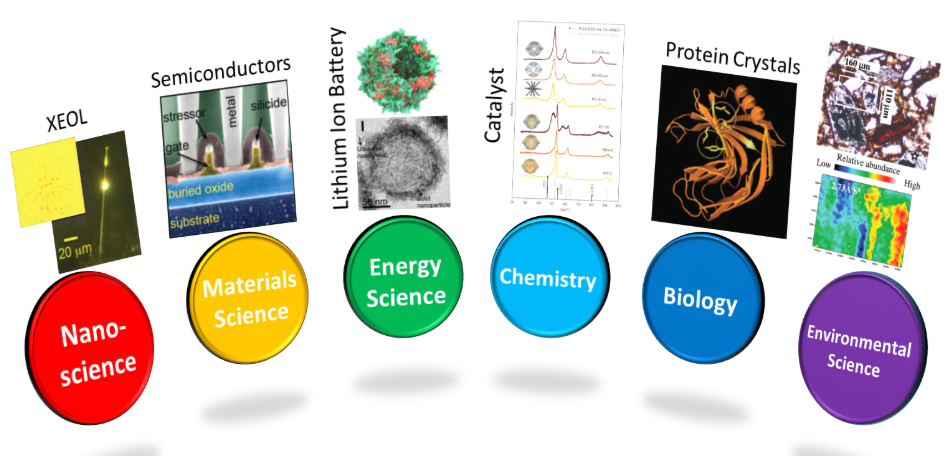
This technology has penetrated multiple fields, including materials science, energy, environment, and biomedicine. In catalysis, it enables real-time monitoring of valence state changes in catalyst active centers. In battery materials research, it can resolve structural evolution during charge/discharge processes of electrode materials. In environmental monitoring, it analyzes the coordination environment of heavy metals in soil. In biomedicine, it provides critical data for metalloprotein structure determination and drug design. Its non-destructive nature, element specificity, and high sensitivity (detection limit as low as 0.5 wt%) make it a core tool for investigating the local structure of complex systems.