



Exploring Material Structure: Principles and Applications of X-ray Crystallography Analyzers
2026-03-24 11:07In the fields of materials science and physics, understanding the internal structure of materials is of paramount importance. The X-ray crystallography analyzer is a widely used tool that provides critical information about the atomic structure and crystal orientation of materials. This device is based on the principle of X-ray diffraction and enables scientists to explore the microstructure of matter, thereby driving the development of new materials and advancing research into physical properties.
The working principle of the X-ray crystallography analyzer is based on Bragg's Law, which states that when the wavelength of incident X-rays and the distance between atomic planes within a crystal satisfy a specific relationship, diffraction occurs. When X-rays strike a sample, the atoms in the sample scatter the X-rays. At certain specific angles, these scattered waves interfere with each other, producing diffraction spots. By measuring the positions and intensities of these spots, the arrangement of atoms in the crystal and the crystal structure can be determined.

In terms of applications, this instrument is widely used for the analysis of various materials, including metals, alloys, semiconductors, ceramics, minerals, and biological macromolecules such as proteins and nucleic acids. In materials science, it can be used to study phase transitions, defects, stress, and microstructural changes. In the semiconductor industry, this instrument is a common tool for evaluating wafer quality, detecting impurities, and monitoring epitaxial layer growth. In the field of biology, it helps scientists resolve complex biomolecular structures, providing critical information for drug design and disease treatment.
In addition, this instrument plays an important role in catalyst development, nanomaterial characterization, artifact identification, and environmental monitoring. Through in-depth analysis of material structures, it provides scientists with a powerful tool to explore and utilize the fundamental properties of matter.
With continuous technological advancements, the performance of this instrument is also steadily improving. Modern X-ray crystallography analyzers are equipped with more efficient detectors and more precise measurement techniques, making data collection faster and more accurate. At the same time, the development of computer software has simplified the data analysis process, making crystal structure analysis accessible even to non-experts.
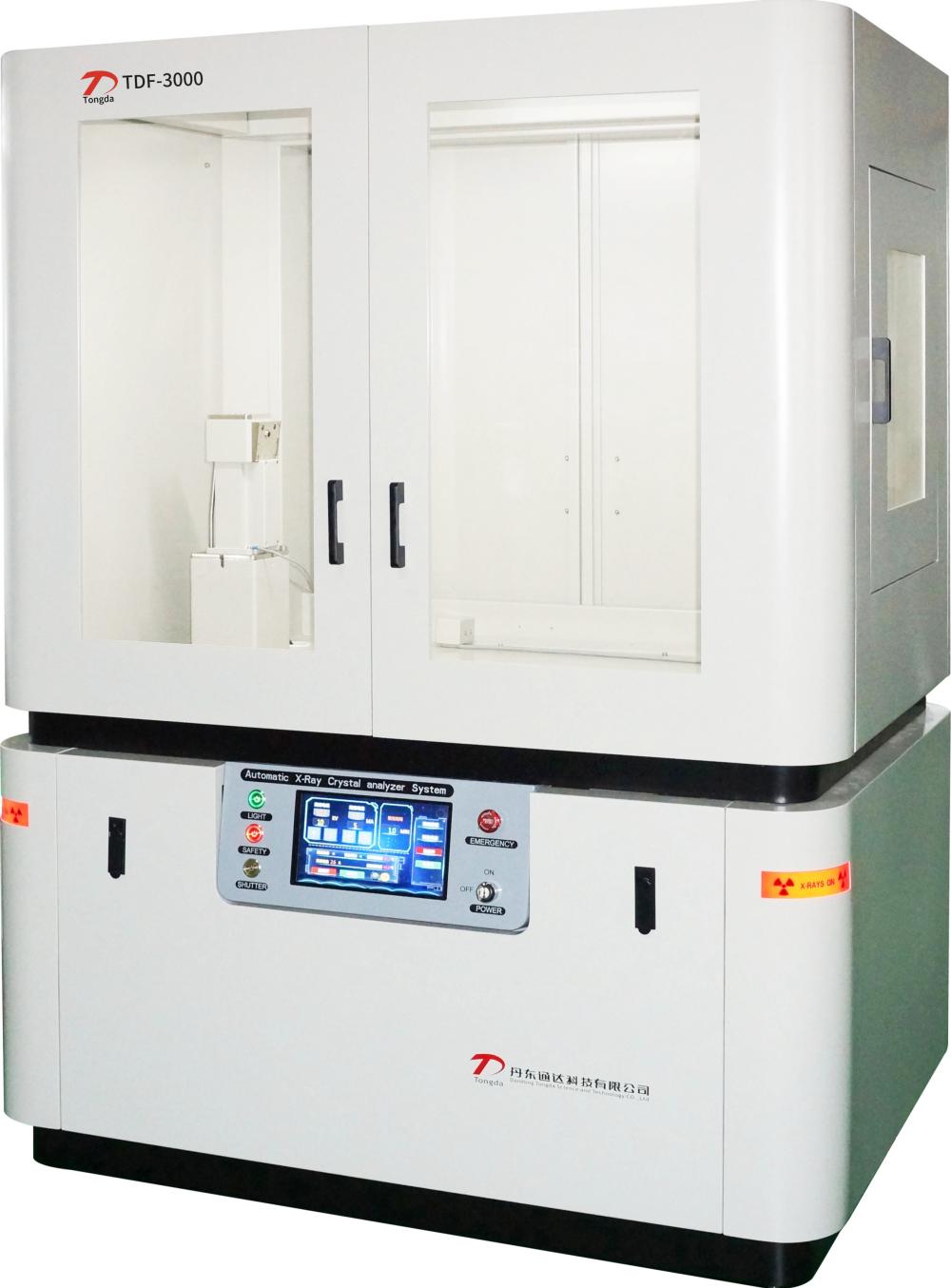
The X-ray crystallography analyzer is a powerful analytical tool that plays an irreplaceable role in exploring material structures. As the demands for material performance in scientific research and industry continue to increase, we can foresee that this equipment will continue to demonstrate its great potential and value across multiple fields.