



Detailed Steps and Key Points for Calibrating an X-Ray Crystal Orientation Instrument
2026-03-06 09:24I. Preliminary Preparation
1. Equipment Inspection
First, ensure that the X-ray crystal orientation instrument has no external damage and that all components are connected properly. Check that the power cord is securely plugged in and that the power indicator light is functioning normally; this is fundamental to ensuring the instrument can be powered on and started. At the same time, inspect the internal ventilation and heat dissipation devices to ensure they are operating correctly. Good heat dissipation is crucial for instruments running for extended periods, preventing damage to components or compromised measurement accuracy due to overheating.
Examine the instrument's display screen for any dead pixels or unclear display issues. A clear screen is essential for operators to read data accurately and perform operations correctly.
2. Standard Sample Preparation
Select an appropriate standard crystal as the calibration sample. Standard crystals typically possess well-known crystal orientations and high crystalline quality, with parameters like lattice constants precisely determined and widely recognized. For example, silicon single crystals are commonly used for calibrating many X-ray crystal orientation instruments.
Prepare the surface of the standard crystal, ensuring it is flat, clean, and free from impurities. Surface irregularities can lead to abnormal X-ray scattering, while impurities can affect X-ray transmittance and diffraction patterns, thereby impacting the accuracy of the calibration.
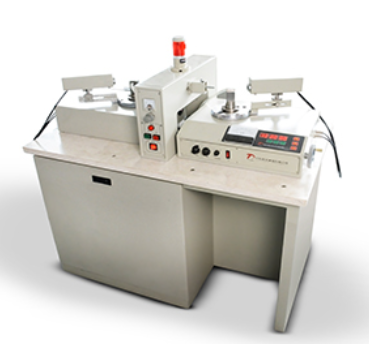
II. Calibration Process
1. Instrument Initialization
Turn on the power switch of the X-ray crystal orientation instrument and allow it to warm up for a period, typically 15 to 30 minutes. The purpose of warming up is to allow the internal electronic components to reach a stable operating state, ensuring the stability and accuracy of subsequent measurements.
Access the instrument's operation interface and, referring to the instrument's instruction manual, perform the initial settings for relevant parameters such as tube voltage, tube current, and exposure time. The reasonable setting of these parameters should consider the characteristics of the standard crystal and the instrument's own requirements. Generally, lower tube voltage and current can be used for initial rough adjustments, while higher parameters can be employed during subsequent fine calibration.
2. Sample Mounting and Positioning
Carefully mount the prepared standard crystal onto the sample stage of the X-ray crystal orientation instrument, ensuring accurate positioning and secure fastening. Adjust parameters such as the height and angle of the sample stage so that the standard crystal is positioned optimally within the X-ray beam. This step may require using the instrument's optical microscope or other auxiliary positioning devices to ensure the X-rays accurately irradiate the key area of the standard crystal.
Using the instrument's control software, perform fine adjustments on the sample stage to align the main crystal plane of the standard crystal perpendicular to the X-ray beam. This can be judged by observing the intensity and position of the diffraction peak. When the diffraction peak reaches its maximum intensity and exhibits the best symmetry, it indicates that the crystal plane has been adjusted to the optimal position.
III. Data Acquisition and Analysis
1. Data Acquisition
Activate the X-ray emitter and begin scanning the standard crystal according to the preset parameters. During the scan, the instrument records X-ray diffraction intensity data at different angles. To ensure data reliability, multiple scans are typically performed, and the results are averaged.
Conduct a preliminary check of the collected data to identify any abnormal data points. If significant anomalies are present, they may be caused by occasional instrument malfunction or external interference, necessitating a re-scan.
2. Data Analysis and Determination of Calibration Parameters
Import the collected data into specialized analysis software. The software analyzes and processes the data based on the known structural information of the standard crystal and diffraction theory. By comparing the difference between the measured diffraction peak positions and the standard positions, the instrument's calibration parameters, such as angular offset and wavelength deviation, are calculated.
Based on the calculated calibration parameters, adjust the relevant settings of the X-ray crystal orientation instrument. For example, if an angular offset is found, correct it by adjusting components like the internal angle encoder. If there is a wavelength deviation, adjust the operating parameters of the X-ray tube or make corresponding adjustments to the wavelength calibration module.
IV. Calibration Verification and Iterative Adjustment
1. Calibration Verification
Use the calibrated and adjusted X-ray crystal orientation instrument to measure the standard crystal again. Compare the new measurement results with the theoretical values of the standard crystal and calculate the measurement error. If the measurement error falls within the acceptable tolerance, the calibration is generally considered successful. If the error exceeds the tolerance, the calibration process needs to be re-examined to identify the problem and make further adjustments.
2. Iterative Adjustment
Based on the results of the calibration verification, if further optimization of the calibration parameters is needed, repeat the calibration process described above until the measurement error meets the requirements. During the iterative adjustment process, carefully observe the impact of each adjustment on the measurement results to identify the optimal calibration scheme.