



Core Technology: Optimization of Goniometer Geometry and Optics in Powder Diffractometers
2026-02-03 09:17The selection of goniometer geometry and the optimization of the optical system are core technologies for improving the quality of diffraction data in powder diffractometers. Their design must balance focusing efficiency, resolution, and operational convenience.
The Bragg-Brentano (BB) geometry is the predominant goniometer configuration. It achieves parafocusing conditions through the synchronous rotation of a flat sample and the detector at a 2:1 angular speed ratio. The radius of the focusing circle in this geometry varies with the diffraction angle. While the sample center lies precisely on the focusing circle, regions near the edges deviate, leading to some defocusing. However, by controlling the divergence of the incident beam (e.g., using programmable automatic divergence slits), high intensity can be maintained at the diffraction peak positions while balancing irradiated area and resolution. For samples with complex shapes (e.g., gear tooth roots, curved components), the standard BB geometry can suffer from diffraction angle shifts and intensity distortions due to absorption effects. Here, the side-inclination method (or ψ tilt) is applied. By rotating the sample around a horizontal axis (perpendicular to the diffraction plane), the angle between the incident beam and the diffracting plane normal is altered. This compensates for absorption effects without changing the diffraction geometry, significantly improving measurement accuracy for low-angle diffraction. This technique is particularly valuable for depth-resolved residual stress analysis.
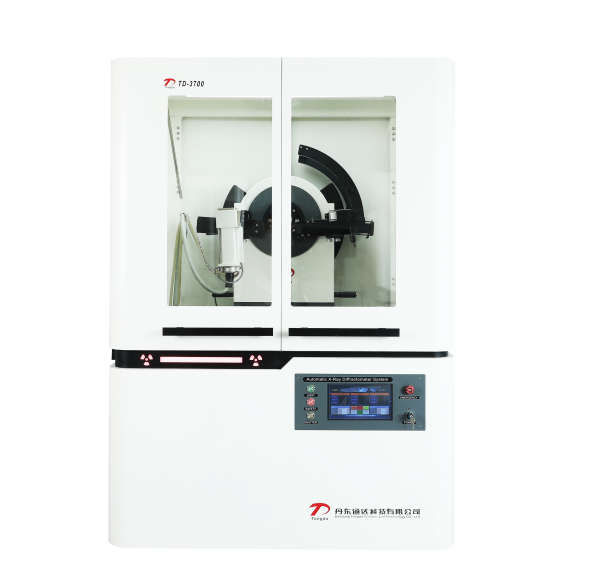
Optical system optimization focuses on upgrading and intelligently configuring beam path modules. Traditional BB setups rely on divergence slits (DS) and receiving slits (RS) to control in-plane (horizontal) divergence. Modern instruments widely incorporate Soller slits—arrays of parallel metal foils—to restrict the axial (vertical) divergence angle, typically to below 2.26°. This significantly reduces defocusing effects and peak asymmetry caused by axial divergence. To further enhance resolution, parallel beam optics (e.g., Göbel mirrors based on multilayer coatings) are extensively used. These systems collimate the incident X-ray beam, converting divergent rays into a highly parallel beam. This eliminates errors from sample displacement or surface roughness and effectively suppresses Kβ radiation and continuous spectrum (white radiation) interference. For instance, the TRIO optical system in Bruker's D8 Discover diffractometer allows automatic switching between BB geometry, parallel beam geometry, and high-resolution monochromator paths. This flexibility adapts to diverse testing needs, from coarse powders and micro-area samples to thin films and single-crystal epitaxial layers.
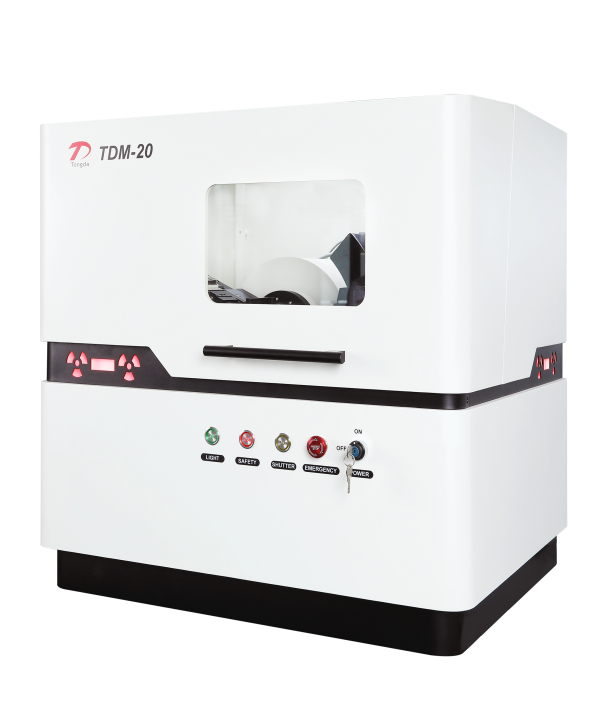
Synergistic optimization of the X-ray tube target and detector is key to eliminating fluorescence background and enhancing the signal-to-noise ratio. For samples containing elements like copper or nickel that produce strong fluorescence, specialized modules (e.g., BBHD modules combining optimized filters and optics) can efficiently filter out continuous radiation and Kβ lines. For samples with iron, cobalt, or manganese, whose K-radiation can excite intense sample fluorescence, traditional detectors record a high background. Energy-dispersive detectors like the 1Der, with high energy resolution (e.g., ~340 eV), discriminate between photons of different energies. This allows direct suppression of fluorescence background signals in the energy domain, preserving the pure diffraction signal. A practical example is the analysis of steel samples using a cobalt X-ray target. The weak diffraction peaks from cementite (Fe₃C) are often obscured or buried by strong fluorescence in conventional setups. However, combining a cobalt target with a BBHD module and a 1Der detector enables clear identification of these weak peaks, achieving high-sensitivity detection of carbide phases and overcoming the detection limits of traditional optical paths for complex matrices.
In summary, modern powder diffractometers build a versatile measurement framework through flexible goniometer geometry selection, modular optical system optimization, and matched target-detector design. The integrated application of these technologies not only improves data quality and reliability but also greatly expands the application scope and depth of X-ray diffraction in fields such as materials science, chemistry, geology, and industrial inspection.