



Application of Benchtop Diffractometers in Rapid Phase Identification
2025-12-29 10:02Phase identification is a core step in material analysis, aimed at determining the crystal structure and phase composition of materials. It provides crucial evidence for material research and development, quality control, and failure analysis. Traditional large-scale X-ray diffractometers (XRD), while offering high precision, are limited by their large size, complex operation, long testing cycles, and dependence on specialized laboratories. These limitations make them unsuitable for on-site rapid testing and batch sample screening. Benchtop diffractometers, with their advantages of miniaturization, portability, and high efficiency, break through the application bottlenecks of traditional equipment. They demonstrate broad application value in rapid phase identification and have become important analytical tools in both scientific research and industrial fields.
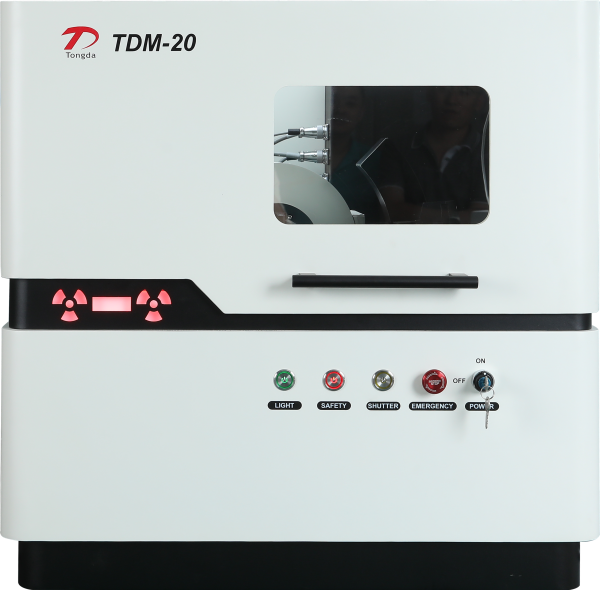
The industrial quality control sector is a core application scenario for benchtop diffractometers. In production lines for industries such as metal materials, ceramics, and building materials, the purity of raw materials and the phase composition of finished products directly affect product performance, necessitating rapid screening of unqualified products. These diffractometers can be deployed directly on the production floor. They require no complex sample preparation—simple preparation like grinding or pelletizing is sufficient—and testing time per sample can be reduced to just a few minutes. For example, in steel production, they can quickly identify the content ratio of phases like austenite and ferrite to determine if heat treatment processes meet standards. In cement production, they can rapidly detect key phases in clinker, such as tricalcium silicate and dicalcium silicate, allowing for timely adjustments to production formulas and ensuring product quality stability. This rapid testing capability enables a "test-and-decide immediately" workflow, significantly improving production efficiency and reducing the costs associated with the flow of non-conforming products.
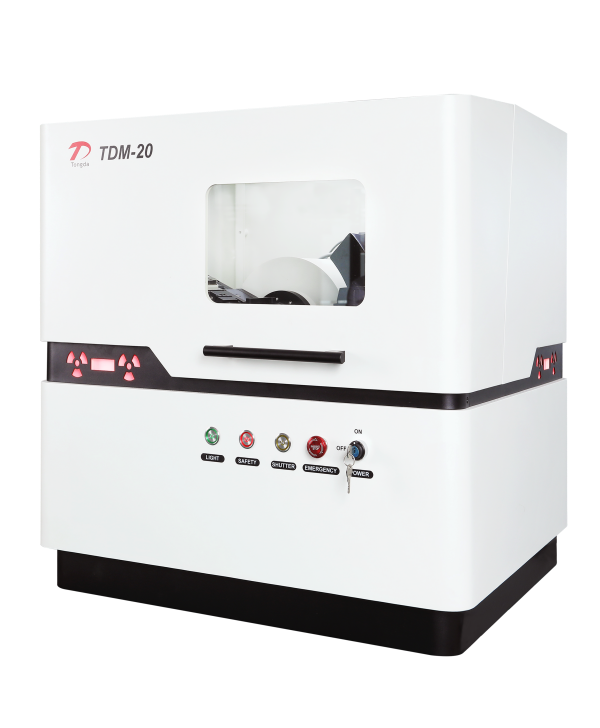
In scientific research and teaching, benchtop diffractometers provide convenience for rapid phase screening and fundamental research. During new material development, researchers need to conduct preliminary phase identification on a large number of synthesized samples to filter those with the expected crystal structure for further in-depth study. These diffractometers are simple to operate, requiring no prior experience with professional XRD equipment, allowing users to quickly perform qualitative phase analysis and shorten R&D cycles. For instance, in the development of new energy battery materials, they can rapidly identify the crystal structure integrity of cathode materials (like NCM or lithium iron phosphate) and assess the impact of doping or sintering processes on phases. In university materials science education, their compact size and high safety make them suitable as teaching equipment, allowing students to intuitively experience the phase analysis process and enhancing practical teaching outcomes.
In on-site emergency testing and archaeological artifact identification, the portability and speed of benchtop diffractometers offer distinct advantages. At geological exploration sites, they can quickly identify the phase composition of ores to determine ore type and grade, providing real-time data for exploration decisions. In environmental emergency testing, they can rapidly analyze crystalline pollutants (like heavy metal salts or refractory minerals) in contaminated soil or water sediments to clarify pollution sources and severity. In archaeology, they can perform non-destructive or minimally invasive testing on artifact samples (such as ceramics, metal objects, or rock specimens) to quickly identify material composition and manufacturing techniques, providing scientific basis for cultural heritage preservation and research. Their small size helps avoid damage to archaeological sites.
Furthermore, benchtop diffractometers find wide application in fields like electronics and biomedicine. In electronic component manufacturing, they can rapidly test the phase structure of semiconductor or packaging materials to ensure component performance stability. In biomedicine, they can be used for the rapid identification of drug polymorphs to assess drug purity and stability, supporting drug development and quality control.
By achieving "convenient deployment through miniaturized design, improved testing efficiency through simplified operation, and meeting basic screening needs through accurate qualitative analysis," benchtop diffractometers overcome the application limitations of traditional large diffractometers in rapid phase identification. As technology continues to advance, the detection accuracy and stability of these instruments keep improving. Their application scenarios will further expand, providing more efficient and convenient solutions for phase analysis across various industries and driving phase identification technology towards "on-site, rapid, and widespread" adoption.
Dandong Tongda Scinence& Technology Co., Ltd. is a national high-tech enterprise, specializing in the R&D and manufacturing of analytical and non-destructive testing instruments such as X-ray diffractometers, which are close to world-class levels. Our products have been exported to overseas markets. If you are in need of X-ray diffractometers and related accessories, feel free to visit our official website for selection.