

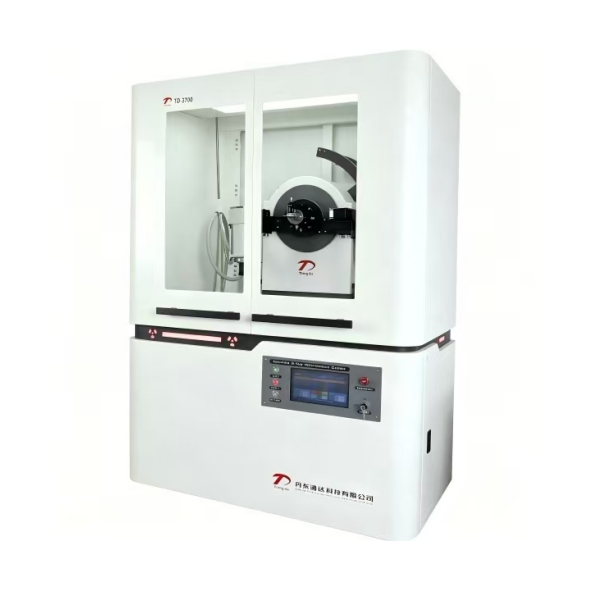
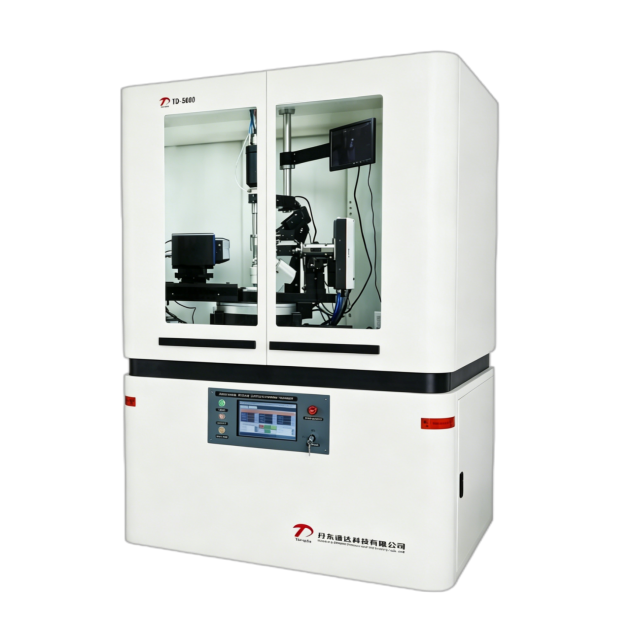
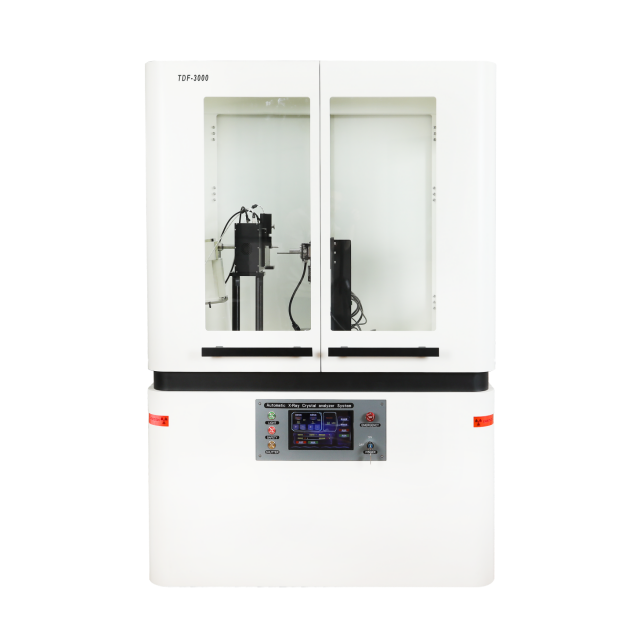
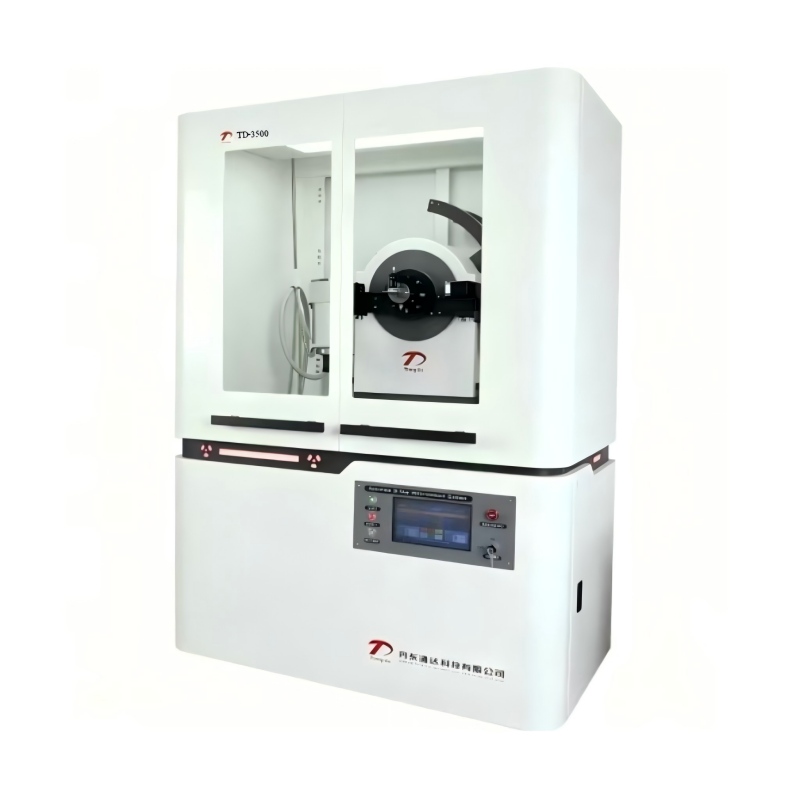
1.X-ray diffractometer
When X-ray diffraction is projected into a crystal as an electromagnetic wave, it is scattered by the atoms in the crystal, and the scattered waves appear to emanate from the center of the atoms, and the scattered waves emitted from the center of each atom are similar to the source spherical waves. Since the atoms are periodically arranged in the crystal, there is a fixed phase relationship between these scattered spherical waves, which will cause the spherical waves to strengthen each other in some scattering directions and cancel each other in some directions, resulting in diffraction phenomena.
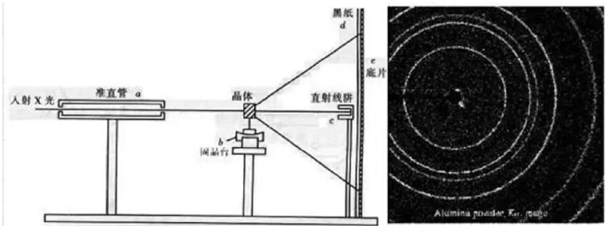
2. Bragg equation -- the theoretical cornerstone of XRD
2dsin0=n in (where day is the incidence Angle, d is the spacing between crystal faces, n is the diffraction order, in is the wavelength of the incoming ray, and 20 is the diffraction Angle)
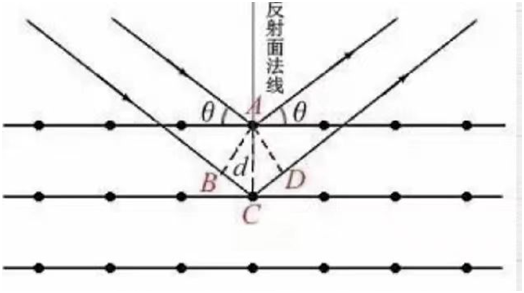
Bragg equation is the basic condition for X-ray diffraction in a crystal, reflecting the relationship between the direction of the diffraction line and the crystal structure.
Attention:
(a) All atomic diffraction wave phases on all crystal planes in all directions satisfying the Bragg equation are exactly the same and their amplitudes reinforce each other. In this way, diffraction lines appear above the 20 direction and cancel each other out elsewhere, and the intensity of the X-rays is reduced or equal to zero.
(b) The Angle of reflection of X-rays is different from that of visible light, and the Angle between the Angle of incidence and the Angle of reflection of X-rays is always 20.
3. Scherrer formula - the theoretical basis of grain size measurement
The width of the X-ray diffraction band is related to the size of the grain. The smaller the grain is, the diffraction line becomes diffused and widened. Also known as Scherrer's formula, it describes the relationship between grain size and the half-peak width of the diffraction peak.
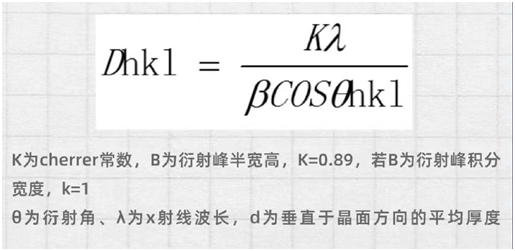
K is the cherrer constant, B is the half-width and height of the diffraction peak, K=0.89, if B is the integral width of the diffraction peak, K=1
θ is the diffraction Angle, λ is the X-ray wavelength, and d is the average thickness perpendicular to the crystal face.
Attention:
Using this equation to calculate the average particle size requires attention:
(1) is the half-peak width, that is, the width at which the diffraction intensity is half the maximum value, and the unit is radian.
(2) Measuring range 3-200nm.