


Revolutionizing Irradiation Technology, Leading the New Wave of Biological Research
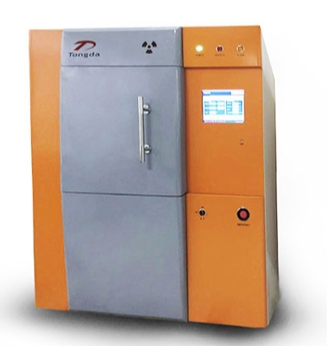
2025-12-03 13:25In the fields of life sciences and pest control research, the convenience and safety of irradiation technology are becoming key drivers of innovation. The WBK-01 X-ray Irradiator, launched by Dandong Tongda Science & Technology Co., Ltd., is a new generation of laboratory equipment born in response to this demand.
The WBK-01 X-ray Irradiator provides an efficient and reliable solution for irradiating cells or small animals by generating high-energy X-rays, making it widely applicable in various basic and applied research.
For a long time, researchers have relied on radioactive isotope irradiators, but this method often requires transporting samples to a central irradiation facility, a process that is cumbersome and comes with many limitations. Today, the introduction of the WBK-01 X-ray Irradiatorhas completely changed this landscape. This compact benchtop device can be installed directly within the laboratory. It operates more safely, is simpler to use, and has significantly lower acquisition and operational costs. Researchers can conveniently perform immediate irradiation on cells and various other samples without leaving the lab, greatly enhancing experimental efficiency. The system features a user-friendly design, allowing operators to use it safely and quickly even without extensive specialized training in X-ray technology. Furthermore, the device eliminates the complex licensing applications, high safety protection costs, and ongoing maintenance expenses associated with traditional radioactive isotope-based equipment, making it an ideal alternative to radioactive isotope sources.
The significant value of this device is strongly demonstrated in fields such as the Sterile Insect Technique (SIT). This technique, pioneered by American entomologists Raymond Bushland and Edward Knipling in the 1950s, is now a primary direction for replacing chemical pesticides and achieving environmentally friendly pest control. Its core principle involves rearing sterile male insects through irradiation processing. Once released, these males mate with wild females, resulting in eggs that fail to hatch, thereby achieving population suppression. The technique was first successfully applied to control the New World screwworm fly, a pest harmful to livestock. Field release trials on Sanibel Island in Florida, USA, and the island of Curaçao, among others, achieved remarkable success. Subsequently, the technique has been promoted in many regions worldwide and extended to the control of other pests like the Mediterranean fruit fly.
In recent years, utilizing this technique to control mosquito populations, thereby blocking the transmission of dengue fever and other mosquito-borne diseases, has become an important scientific research direction. The WBK-01 X-ray Irradiator from Dandong Tongda Science & Technology Co., Ltd. can provide stable and controllable irradiation conditions for research aimed at rearing sterile male mosquitoes. It aids in developing more environmentally friendly and effective biological control solutions, showcasing great application potential in the field of public health.
The WBK-01 X-ray Irradiator from Dandong Tongda Science & Technology Co., Ltd., with its excellent safety, convenience, and cost-effectiveness, is empowering researchers globally to accelerate the translation of cutting-edge ideas into tangible results.