



What aspects are related to the results of the X-ray crystal orientation instrument?
2026-03-10 10:22Factors influencing X-ray crystal orientation instruments involve multiple aspects. In order to obtain accurate and reliable crystal orientation measurement results, these factors need to be comprehensively considered, and corresponding measures should be taken to reduce their impact. At the same time, with the continuous development and advancement of technology, the performance and application scope of X-ray crystal orientation instruments will also be continuously improved and expanded. The following is a detailed description of the factors influencing X-ray crystal orientation instruments:
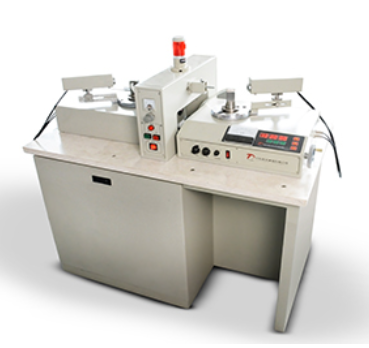
1.Instrument Performance Aspects
Resolution: Resolution is a key indicator for measuring the measurement accuracy of X-ray crystal orientation instruments. High resolution enables more precise detection of the crystal's diffraction angle, thus accurately determining the crystal's orientation. For example, in the semiconductor industry, for high-precision semiconductor crystal cutting, X-ray crystal orientation instruments with very high resolution are required to ensure the accuracy of the crystal cutting angle, in order to meet the high demands of chip manufacturing. If the resolution is insufficient, it may lead to deviations in the crystal cutting angle, affecting the performance of semiconductor devices.
Sensitivity: Sensitivity determines the instrument's degree of response to X-rays. Instruments with high sensitivity can detect weaker diffraction signals, which is very important for analyzing crystal materials with low diffraction intensity.In some special cases, such as when orienting tiny crystals or samples with low crystallinity, a high-sensitivity instrument can better obtain sufficient diffraction information, thereby accurately determining the crystal's orientation. Conversely, an instrument with low sensitivity may not be able to detect these weak signals, leading to inaccurate orientation results.
Linearity: Linearity refers to the linear relationship between the instrument's measurement results and the actual values. Good linearity ensures that measurement results within different angular ranges are accurate. If the linearity is poor, it may cause deviations in the measured angles, especially during large-angle measurements, where this deviation becomes more pronounced. Therefore, when using an X-ray crystal orientation instrument, it is necessary to regularly calibrate the instrument's linearity to ensure the accuracy of the measurement results.
Stability and Reliability: During long-term use, the stability and reliability of the instrument are crucial. A stable instrument can maintain consistency in measurement results at different times and under different environmental conditions. For example, on an industrial production line, a large number of crystals need to be oriented continuously. If the instrument is unstable, it may lead to fluctuations in measurement results, affecting product quality. A reliable instrument ensures that it is less prone to failure during normal use, reducing maintenance time and costs.
2.Sample Characteristics Aspects
Crystal Quality: High-quality crystals have regular atomic arrangements and good crystallinity, capable of producing clear, sharp diffraction peaks, which helps improve the accuracy of orientation. Low-quality crystals may have defects, dislocations, or impurities, which can cause diffraction peaks to broaden, deform, or weaken in intensity, thus affecting the accuracy of the orientation results. For example, in gemstone identification, high-quality gem crystals have a complete lattice structure, and their crystal orientation can be accurately determined using an X-ray crystal orientation instrument. However, for gemstones with cracks or impurities, the orientation results may be interfered with.
Crystal Size: The size of the crystal also affects the orientation results. Larger crystals usually provide stronger diffraction signals, which is beneficial for improving measurement accuracy and precision. However, for overly large crystals, a longer measurement time may be required to obtain sufficient diffraction information, and in some cases, they may be limited by the instrument's measurement range. Conversely, overly small crystals, due to their weak diffraction signals, may make it difficult to accurately determine their orientation.
Surface Flatness: The flatness of the sample surface has an important impact on the incidence and reflection angles of X-rays. An uneven surface can cause the scattering angle of X-rays to change, thereby affecting the position and intensity of diffraction peaks. Therefore, before performing X-ray crystal orientation, it is necessary to ensure that the sample surface is as flat as possible to improve the accuracy of the orientation.
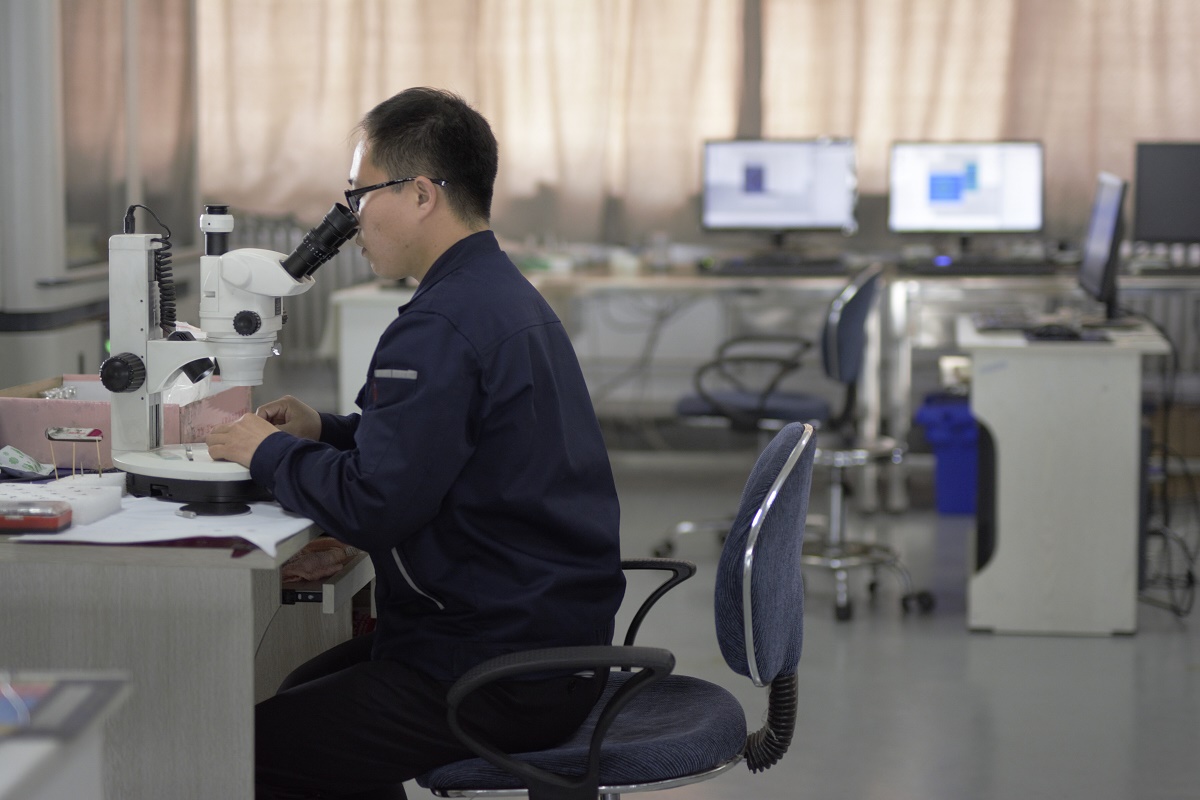
3.Environmental Factors
Temperature: Temperature changes can cause thermal expansion or contraction of the crystal, leading to changes in the lattice constant, which in turn affects the diffraction angle. At different temperatures, the diffraction peak position of the same crystal may shift, which can introduce errors in the determination of crystal orientation. Therefore, when performing high-precision X-ray crystal orientation, it needs to be carried out in a constant temperature environment, or real-time temperature monitoring and compensation should be performed to reduce the impact of temperature on the measurement results.
Humidity: Changes in humidity may cause moisture or other substances to adsorb onto the crystal surface, altering the physical and optical properties of the crystal, thus affecting the diffraction effect. In a high-humidity environment, a thin film of water may form on the crystal surface, increasing the scattering and absorption of X-rays and reducing diffraction intensity. Therefore, when using an X-ray crystal orientation instrument, the environment should be kept as dry as possible to avoid the impact of humidity on the measurement results.
Vibration: External vibrations can interfere with the propagation of X-rays and the diffraction process of the crystal, causing diffraction peaks to broaden or deform, affecting the accuracy of the measurement. Therefore, X-ray crystal orientation instruments usually need to be installed on a stable foundation, and vibration damping measures should be taken to reduce the impact of vibration on the instrument.
Magnetic Fields: Strong magnetic fields may affect the trajectory of electrons and the deflection of X-rays, thereby interfering with the measurement results. When using an X-ray crystal orientation instrument, it is important to avoid placing the instrument near strong magnetic fields, or to take magnetic shielding measures to eliminate the influence of magnetic fields.