



Unveiling X-ray Absorption Spectroscopy: A Comprehensive Analysis from Principles to Applications
2026-03-19 09:08X-ray Absorption Spectroscopy (XAS) , as a powerful analytical technique, reveals the mysteries of the atomic and electronic structure within matter. Its fundamental principle is based on the interaction between X-rays and matter, where X-rays of specific energies are absorbed by atoms of specific elements in the material, thereby forming absorption spectra. This phenomenon is not only related to the type of element but is also closely associated with the chemical environment and electronic structure surrounding the atom.

In XAS technology, the X-ray energy is precisely tuned to excite electronic transitions of specific elements within the sample. By analyzing the shape, position, and intensity of the absorption spectra, scientists can obtain critical information regarding elemental valence states, coordination environments, chemical bond types, and local electronic structures. This information is crucial for understanding the properties, performance, and reaction mechanisms of materials.
XAS technology is widely applied across multiple fields. In materials science, it is used to study the electronic structure, phase transition processes, and surface and interface phenomena of new materials. In environmental science, XAS helps scientists understand the speciation, transformation pathways, and bioavailability of pollutants. In biology and medicine, XAS is employed to analyze the metal coordination structures of biological macromolecules and the interactions between drugs and target molecules.
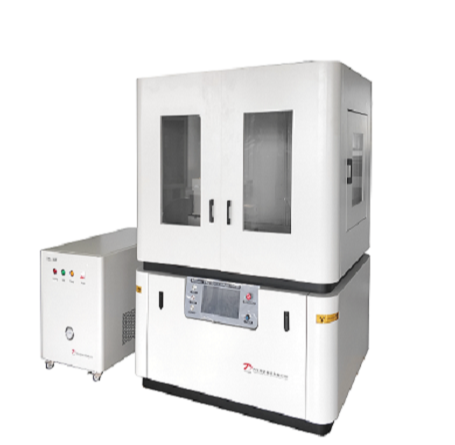
With the development of synchrotron radiation sources and advanced detection technologies, the sensitivity and resolution of XAS technology continue to improve, enabling its application in more complex systems and high-precision analyses. A core advantage of XAS technology lies in its sensitivity to the local atomic structure, making it an ideal tool for studying disordered materials, solutions, and in-situ reaction processes. In recent years, thanks to increased light source brightness and innovations in data analysis methods, this technology has been able to achieve dynamic tracking under real reaction conditions in systems such as catalysis and energy storage. By combining with imaging techniques, XAS can also reveal the structure-property relationship of materials at the microscopic scale, providing key experimental evidence for solving major scientific problems in fields like energy and the environment.

In the future, XAS technology will continue to play a significant role in scientific research and technological innovation, advancing our deeper understanding of both natural and artificial systems.