



Research Fields Suitable for Two-Dimensional X-Ray Diffractometer
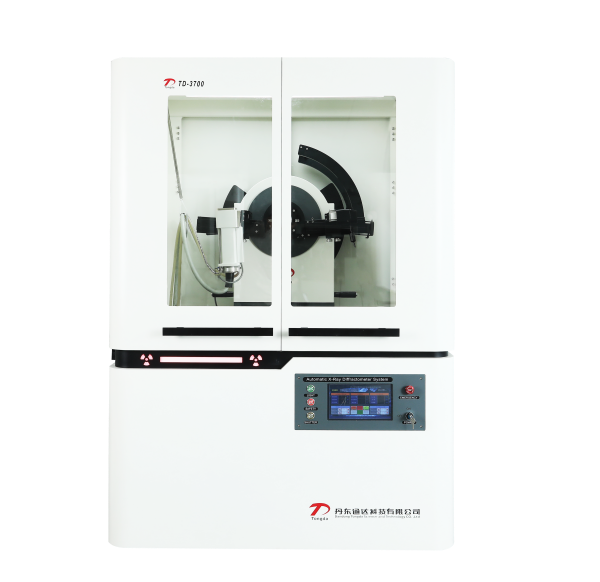
2026-02-27 10:04As a core precision instrument for material structural characterization, the two-dimensional X-ray diffractometer operates on the principle of X-ray diffraction and captures diffraction signals through a two-dimensional detector. Compared with traditional one-dimensional X-ray diffractometers, it offers advantages such as rapid data acquisition, high resolution, and the ability to simultaneously obtain multi-dimensional structural information. It enables precise analysis of key material parameters including crystal structure, phase composition, crystallinity, grain size, and crystal defects. Its non-destructive nature and high sensitivity make it widely applicable across various material research fields, encompassing metals, ceramics, nanomaterials, polymers, and more. The following sections elaborate on the material research areas suitable for its application based on the specific needs of each field, presented without tables while balancing technical rigor and practical applicability, tailored to real-world material research scenarios.
The field of metallic materials research represents one of the core application scenarios for two-dimensional X-ray diffractometers, particularly suited for structural characterization and performance optimization studies of metals and alloys. The mechanical properties and corrosion resistance of metallic materials are closely related to their crystal structure, texture distribution, and grain size. The diffractometer enables rapid qualitative and quantitative phase analysis of metallic materials, accurately identifying various phase compositions and their relative contents in alloys. Simultaneously, it efficiently determines texture orientation and residual stress in metallic materials, analyzing crystal structure changes during processing such as rolling and forging, thereby providing data support for optimizing metal processing techniques. Furthermore, for emerging metallic materials such as metal matrix composites and metallic nanocoatings, the diffractometer precisely characterizes interfacial structure and dispersion uniformity, contributing to the development and performance enhancement of novel metallic materials.
In the field of ceramics and inorganic non-metallic materials research, the two-dimensional X-ray diffractometeris highly suitable for meeting detection requirements. The high-temperature resistance and high-strength properties of ceramic materials depend on their well-ordered crystal structure and dense microstructure. The diffractometer accurately analyzes the crystallinity, crystal defects, and phase changes of ceramic materials, identifying issues such as impurity phases and lattice distortions that may arise during sintering processes. Whether for traditional structural ceramics, functional ceramics, or emerging inorganic non-metallic materials, it delivers efficient characterization. For instance, in perovskite oxide research, it precisely analyzes oxygen octahedral rotation characteristics; in ceramic thin film studies, it resolves film thickness and interface roughness through grazing incidence diffraction modes. Additionally, its non-destructive testing advantage enables comprehensive structural monitoring throughout the ceramic material preparation process, facilitating process optimization in ceramic materials development.
In the field of nanomaterials research, the two-dimensional X-ray diffractometer is an indispensable characterization tool, well-suited for the microstructural analysis needs of nanomaterials. The particle size and crystal morphology of nanomaterials are closely related to their physical and chemical properties. Traditional detection methods are prone to errors, while the diffractometer can accurately calculate the average particle size of nanoparticles using the Scherrer formula and capture the crystal structure characteristics of nanomaterials. Whether it is nanopowders, nanofilms, or nanocomposites, it can rapidly collect diffraction signals and analyze the crystalline integrity and crystal defects of nanomaterials. For example, in research on materials such as ZnO nanosheets and Au nanoparticles, it can precisely identify the loading effects and crystal structure changes. Furthermore, its rapid acquisition capability enables in-situ dynamic monitoring during the preparation process of nanomaterials, facilitating size control and performance optimization of nanomaterials.
In the field of polymer materials research, the two-dimensional X-ray diffractometer can effectively compensate for the shortcomings of traditional characterization methods and is well-suited for the analysis of crystalline structures in polymer materials. Polymer materials are mostly systems where crystalline and amorphous states coexist, and crystallinity directly affects their mechanical and thermal properties. The diffractometer can accurately determine the crystallinity of polymer materials and analyze crystal orientation and polymorphic structures. In the study of polymer materials such as plastics, fibers, and rubbers, it can analyze the arrangement of polymer chains through diffraction patterns and investigate the impact of processing techniques on the crystalline structure, thereby providing support for the modification and application of polymer materials. At the same time, it can be used for the structural characterization of polymer composites to analyze the compatibility and dispersion uniformity of the filler and matrix, promoting the research and development of high-performance polymer composites.
In addition, the diffractometer is also widely applicable to research fields such as geological mineral materials and pharmaceutical crystal materials. In geological mineral research, it can rapidly complete the phase identification and compositional analysis of minerals, aiding in the classification and study of geological samples. In pharmaceutical crystal research, it can precisely monitor the crystalline morphology of drugs, optimize drug preparation processes, and accelerate the development of new drugs. Its multi-mode optical path and high compatibility make it adaptable to samples in various forms such as powders, bulk materials, and thin films, meeting the diverse needs of different material research fields.
The two-dimensional X-ray diffractometer, with its core advantages of rapid acquisition, high resolution, and non-destructive testing, is widely applicable to multiple research fields including metallic materials, ceramic materials, nanomaterials, polymer materials, geological mineral materials, and pharmaceutical crystal materials. It can accurately capture the microscopic crystal structure information of materials, providing reliable data support for material research and development, process optimization, and performance enhancement. As technology continues to upgrade, its application fields will further expand, making it an indispensable core characterization tool in materials science research.