



Operating Procedures and Precautions for TD-3700 X-Ray Diffractometer
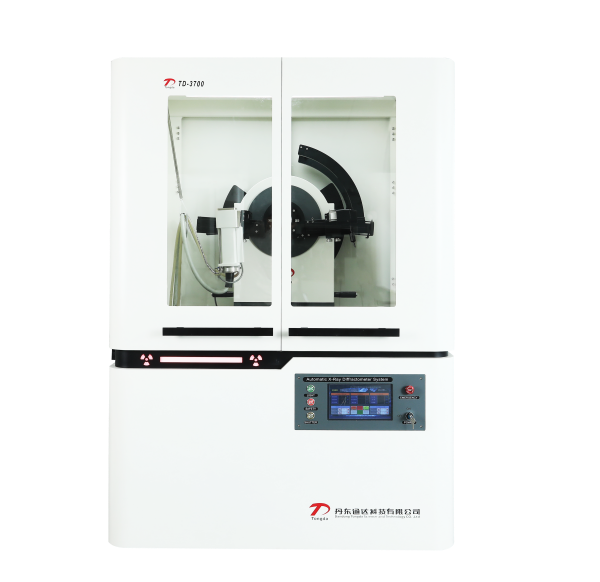
2026-01-23 09:25The following outlines the operating procedures and key precautions for the TD-3700 X-ray Diffractometer:
Operating Procedures
1. Startup Preparation
Turn on the laboratory air conditioner and exhaust fan to ensure a suitable testing environment.
Activate the voltage stabilizer in the correct sequence (input first, then output) to provide stable power to the instrument.
If the instrument is equipped with a water-cooling system, turn it on. Set the chiller to the appropriate temperature (e.g., 25°C) and check the inlet and outlet valves of the cooling water to ensure proper circulation.
2. Instrument Calibration and Blank Scan
Switch on the power of the X-ray diffractometer. The diffraction angle display should activate.
Close the instrument door and turn the key to the specified position as required. This will automatically adjust the voltage and current to preset values (e.g., θ angle at 25°, voltage at 30kV, current at 10mA; actual values may vary based on the instrument and experimental requirements). Verify all parameters are normal.
Open the dedicated computer software for instrument calibration. Ensure all parameters are set correctly during calibration, such as X-ray source wavelength and scan speed.
After calibration is complete, perform a blank scan to ensure no stray signals interfere with the experimental results.
3. Sample Preparation and Loading
Prepare the sample according to experimental requirements. The sample should be a solid powder or crystal, ensuring homogeneity and appropriate particle size.
Place the sample evenly on the sample stage, ensuring the surface is flat.
4. Experimental Operation and Data Acquisition
In the computer software, set the appropriate scan range and step size to ensure the diffraction pattern covers the desired angular range.
Start the X-ray generator to begin scanning. During the scan, X-rays will irradiate the sample, and the diffraction angles will vary according to the sample's lattice structure.
Observe the real-time data in the software and record the diffraction pattern. After scanning is complete, analyze the diffraction pattern using the computer software.
5. Data Analysis and Interpretation
Peak Position Analysis: Observe the peak positions in the diffraction pattern and use formulas such as Bragg's Law to calculate lattice parameters and crystal structure information.
Peak Area Analysis: Determine the relative content of substances or the degree of crystal defects by measuring the peak areas.
Compare the analysis results with known databases to identify the sample's chemical composition and phase constituents.
Precautions
1. Safe Operation
Operators must be professionally trained and familiar with the operating procedures and precautions of the TD-3700 X-ray diffractometer.
Before operation, check that the equipment casing is intact, inspect the lead glass protective shield for cracks, and ensure the door seal is not detached.
Operators must wear personal radiation dosimeters, protective glasses (with lenses containing no less than 0.5mm lead equivalent), long-sleeved lab coats, gloves, and other protective gear.
Keep the equipment door closed during operation. Use the camera monitoring system to observe the sample. It is strictly prohibited to open the protective cover while the equipment is running.
After the equipment's operation indicator light changes from red to green, wait for a period (e.g., five minutes) before opening the chamber door to confirm the X-ray tube has stopped operating.
2. Experimental Environment
Ensure the laboratory has a stable and reliable power supply and maintain a clean environment for the instrument.
Keep the floor dry and free of clutter to prevent slips and accidental contact with the equipment.
X-ray diffraction experiments should be conducted in a dry, clean laboratory environment to avoid external interference affecting the results.
3. Instrument Maintenance
Regularly inspect and maintain all components of the X-ray diffractometer, including guide rail lubrication, replacing deionized water in the cooling tank, etc., to ensure proper operation and accuracy.
If the equipment operates continuously for an extended period (e.g., four hours), it should be shut down for cooling, maintaining the cooling water temperature within a suitable range (e.g., 20±2°C).
Strictly implement a two-person operating system during equipment maintenance to ensure safety.
4. Experimental Operational Standards
Do not arbitrarily change experimental parameters to avoid affecting the results.
After use, promptly turn off the instrument power and computer software, and clean the laboratory environment.
During sample preparation, control the particle size of crystalline powders. Use appropriate tools (e.g., agate mortar) for grinding to avoid introducing impurities.
It is forbidden to touch the sample stage with bare hands. Always use tools such as anti-static tweezers for loading samples.
5. Emergency Response
If abnormal noises are heard or an ozone smell is detected from the equipment, immediately press the red emergency stop button, cut off the main power, and evacuate to outside the radiation containment area.
Regularly monitor and record the radiation dose levels in the laboratory.
Establish a radiation accident emergency plan and conduct regular simulation drills.
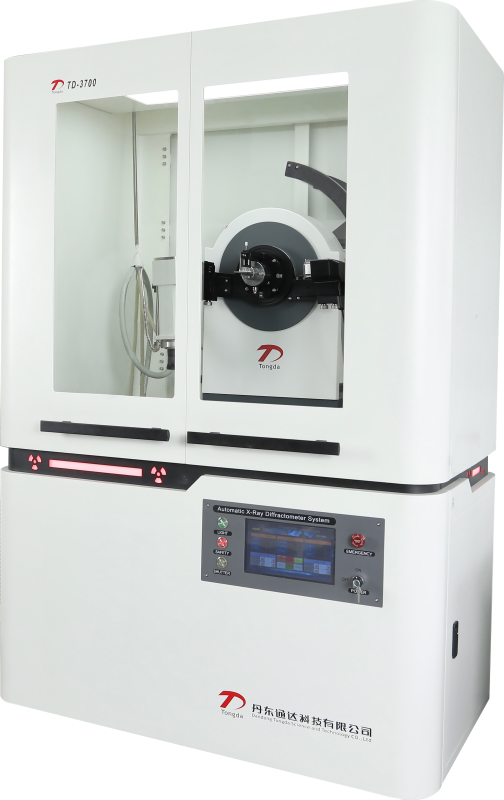
Please note that the TD-3700 X-ray Diffractometer may have specific operational details and precautions. Therefore, it is recommended to thoroughly review the instrument manual before actual operation and follow the operating guidelines and safety recommendations provided by the manufacturer.