



Daily Maintenance and Common Troubleshooting for XRD Diffractometers
2026-01-21 08:19Effective daily maintenance and troubleshooting of XRD diffractometers are crucial for maintaining instrument performance, extending service life, and ensuring the accuracy of analytical results. The following outlines the daily maintenance and common troubleshooting methods.
I. Daily Maintenance
Working Environment Management:
Humidity: The maximum relative humidity is recommended to be maintained between 20% and 60%, though it can be extended to 80% under certain conditions. However, high humidity environments may require more frequent maintenance.
Temperature: The ambient temperature should be kept between 10°C and 25°C. High-resolution instruments may require stricter temperature control, such as 22°C ± 1°C. During operation, temperature fluctuations should remain within ±5°C or change by less than 1°C per 30 minutes.
Other Environmental Requirements: Avoid direct sunlight, corrosive gases (acidic, saline), dust, magnetic interference, and vibration. The instrument table and surrounding environment should be kept clean.
Cooling System Maintenance:
Check the circulating cooling water system to ensure water purity (avoid using pure deionized water, as it may be acidic and corrosive) and sufficient flow rate.
Replace the circulating water regularly (typically every 3–6 months) and the filter resin/filter element (at least once a year) to prevent clogging and corrosion.
Clean the water tank and inspect hose connections for leaks each time the cooling water is replaced.
X-Ray Tube Maintenance:
Perform appropriate aging treatment on the X-ray tube based on usage.
Regularly check the connection status of the X-ray tube to ensure there is no loosening or damage.
Avoid touching the beryllium window to prevent damage or contamination.
Sample Handling and Instrument Cleaning:
Retrieve samples promptly after each test and clean the sample holder with appropriate solvents such as anhydrous ethanol.
Regularly clean the interior of the instrument, especially key components like the high-voltage generator and goniometer, to prevent dust accumulation from affecting performance.
Computer Workstation Maintenance:
Maintain a suitable working environment for the computer workstation, avoiding overheating and vibration.
Regularly back up data and systems to prevent data loss.
Other Maintenance Tasks:
To protect the molecular pump, allow at least 30 minutes between turning the instrument on and off or during vacuum pumping.
X-rays can be activated when the vacuum level is below a certain threshold (e.g., below 200 mV).
Activate the X-ray daily using a short-duration program to age the target. For prolonged periods of inactivity, use a long-duration aging program.
Replace vacuum pump oil, vacuum desiccant, and shutter desiccant at least once a year.
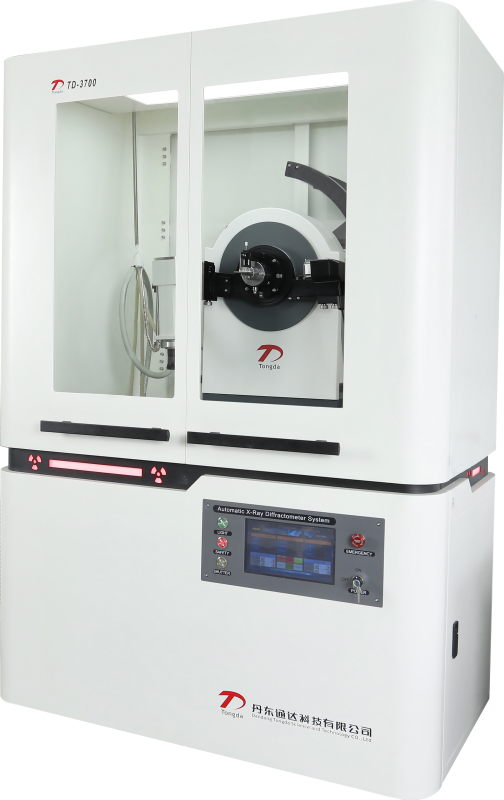
II. Common Troubleshooting for XRD Diffractometers
High Voltage Cannot Be Started:
Check the X-ray protection system, including warning lights and panel positions.
Inspect the circulating cooling water system to ensure water flow and quality meet requirements.
Check the high-voltage generator and X-ray tube for damage.
Shutter Cannot Open:
Check for loose screws at the shutter.
Verify the functionality of the microswitch.
Check for software command conflicts or other issues.
Goniometer Malfunction:
If the initial angle is abnormal, try restarting the instrument and checking the air pump pressure.
If the issue persists, further inspect the mechanical components and control system of the goniometer.
CW Alarm (Cooling Water-Related Alarm):
Check the pressure, temperature, and water valve status of the water chiller during operation.
Close the inlet and outlet valves of the water chiller and inspect whether the filter resin or filter element is clogged.
Clean the X-ray tube filter or the water channels of the rotating target.
Other Malfunctions:
For other unexplained issues, consult the instrument manual or contact the manufacturer’s technical support for diagnosis and resolution.
Daily maintenance and troubleshooting of XRD diffractometers require meticulous operation and accumulated experience. Regular maintenance and timely troubleshooting ensure stable instrument operation and accurate analytical results.