



Bridging the Nano-World: X-ray Diffractometers in Nanotechnology
2026-02-23 08:54In the vast field of materials science, the rapid advancement of nanotechnology is driving revolutionary changes across numerous sectors. As research into the unique properties of nanomaterials deepens, X-ray diffractometers (XRD)have become a vital bridge connecting the macroscopic world to the nanoscale.
Understanding Benchtop X-ray Diffractometry
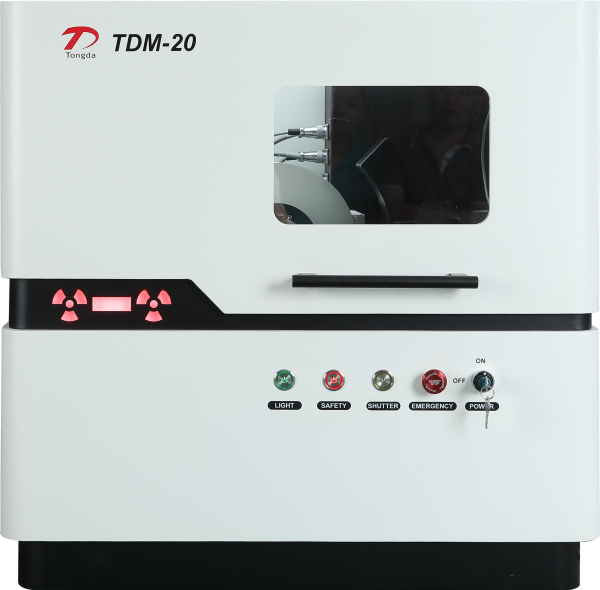
The benchtop X-ray diffractometer is an invaluable analytical technology that reveals a material's crystal structure and atomic arrangement. When X-rays interact with a material's lattice, they scatter. Different crystal structures scatter X-rays in unique ways, producing distinctive diffraction patterns. By interpreting these patterns, scientists can identify a material's phase composition, crystal orientation, grain size, lattice parameters, and more.
Why XRD is Critical for Nanotechnology
XRD is particularly crucial in nanotechnology, where materials often exhibit novel physical and chemical properties intrinsically linked to their microstructure. For instance, the small size and high surface-area-to-volume ratio of nanoparticles can lead to properties vastly different from their bulk counterparts. XRD provides precise measurements of structural parameters, helping researchers understand how reduced dimensions influence material performance.
During the synthesis of nanomaterials, various phases may form, each significantly impacting the final material's properties. XRD is highly effective in identifying and quantifying these phases, ensuring control and optimization of the synthesis process. In nanocomposite research, XRD serves as a powerful tool to reveal interactions between components and interfacial structures, providing key insights for designing high-performance composite materials.
Enhanced Capabilities for Modern Research
Technological advancements have continuously improved XRD's resolution and sensitivity, enabling the analysis of ever-smaller nanoparticles and more subtle structural changes. The use of synchrotron radiation sources, providing X-rays of higher intensity and narrower energy distribution, further enhances analysis precision and reliability.
Broad Applications Across Industries
In practical applications, XRD has become an indispensable tool in nanomaterial research. From pharmaceuticals and energy to electronics and environmental protection, XRD technology is helping unlock the immense potential of nanomaterials. For example:
In drug carrier design, XRD helps scientists precisely control drug molecule release rates.
In solar cell development, XRD optimizes the structure and efficiency of light-absorbing layers.
Looking to the Future
As a robust analytical tool, the benchtop X-ray diffractometer's importance in nanotechnology continues to grow. It not only provides researchers with a window for deep exploration into the nanoworld but also lays a solid foundation for the future development and application of advanced materials. As nanotechnology progresses, we anticipate XRD technology will continue to serve as a critical bridge, pushing the boundaries of science toward new frontiers.